Day 3 – Wrapping Up the 2019 Cohort

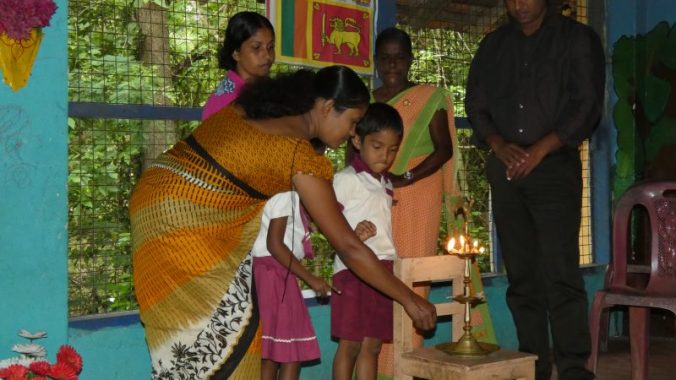
Lighting the oil lamp at Samagi preschool.

Our first stop was Samagi preschool, where we were pleased to see a very large contingent of parents attending. Together with the teachers, we took turns lighting a tall brass oil lamp, a traditional symbol of good fortune and prosperity in Sri Lanka. We were a bit nervous when they tried to hand the kids a match, but then it was decided it might not be quite such a good idea! Continue reading

Preschools Day 2: Or, how toilets can also be bridges!

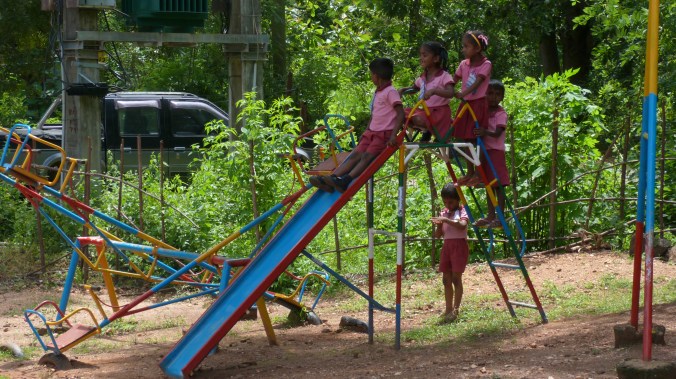
New slide at Nirmala Sigithi preschool.

The second day we were accompanied by a hard-working (and long-suffering) wildlife officer named Naveen. Not only was it an opportunity for us to meet the parents, but it was a rare chance for dialogue between the community and wildlife personnel, with whom there tends to be a strained relationship in areas where there are conflicts with elephants. Continue reading

Coexistence Project Preschools: Day 1

Merry-go-round

Children dressed in their finery for the year-end school concert at Chuti Tharu preschool go for a spin on the merry-go-round sponsored by the Coexistence Project.

We supported 12 pre-schools in 2019 as part of the Coexistence Project thanks to contributions from individual sponsors and the US Fish & Wildlife Asian elephant conservation funds. We visited each of the schools toward the end of the year to take stock of what was done and meet the parents of the children. We were also invited to attend the school play and other festivities, where we distributed small packs of school supplies for the kids.

The teachers universally appreciated that we had asked them to decide what was most needed in their pre-schools rather than doing so our ourselves, and the smooth process for receiving the assistance they had been promised. A series of posts this week and next provide a run-down of the improvements made at each school and our experiences at them; photos were taken with their permission to post. Continue reading

Why We Study The Asian Elephant

Guest post by Drs. Priya Davidar & Jean-Philippe Puyravaud, Sigur Nature Trust
All photos courtesy of Drs. Davidar & Puyravaud

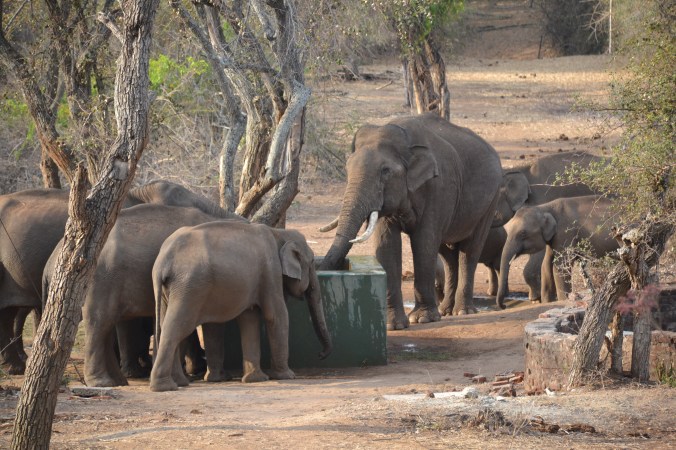
During the 2017 drought in Tamil Nadu, up to 25 elephants per day were coming to drink water in our water tank.

We were trained as plant ecologists but have made the decision of venturing into research on the Asian elephant. The reasons are two-fold: first, we have a lot of respect and affection for this animal, second is our concern about the demonization of the elephant by the media where it is held responsible for intentionally causing ‘conflicts’ that harm human interests and cause loss of human lives (1). Although the destruction of its habitat, increasing human density and expansion into forest areas are routinely mentioned in most publications, interventions to arrest the loss of habitat and population connectivity is rarely considered a mitigation issue. The human-elephant ‘conflict’ (HEC) mitigation however is given a high priority for funding agencies and research (2,3), although its not clear how successful these efforts have been. Our ultimate reason to get involved in conservation biology however is somehow self-centered. If people don’t learn now to live in harmony with nature, including elephants, then our civilization will alter the biosphere to such an extent that humanity itself will suffer. To us, this is an unacceptable but possible outcome that we attempt to fight. Continue reading

Militant exploitation vs. militant conservation – how far will this go?

By SdS

Protecting nature can be dangerous and messy. Two recent reports bring to light what seem to be flipsides of the same coin. On one side are those who heroically fight and even lose their lives defending their homes, wild places, and wild animals. Then there are those who take lives, for the same purpose. August 12th is World Elephant Day. Normally, I would say something about elephants. But I already did that in the last post. So today I want to reflect on the people who protect wildlife, in one way or another.

It’s been on my mind a long time, but particularly since a conference I attended a few years ago. It was supposed to be an academic conference, but the audience was a mix of scientists, conservation practitioners and activists. Alongside the sessions people would huddle around in their little cliques, chatting about the state of affairs on the ground. Some of the conversations were depressing, there was no hiding it. Here we were free to speak truth out loud, in an atmosphere of urgency that everyone present acknowledged. I had a palpable sense that some (perhaps even many) of those present acted as though we were at war. It was a mindset that people stewing in, breathing in, day in and day out. I imagined that this was not unlike how reporters felt, who had spent too long embedded in war zones – a creeping feeling that far from the comfortable lives that most of our colleagues and acquaintances led, an epic battle was raging. Continue reading

The Patels Visit Udawalawe

Guest post by Yogi & Nikita Patel

We traveled to Sri Lanka to work with Trunks & Leaves in support of schools surrounding the Udawalawe National Park. We first arrived in Negombo, Sri Lanka where we were met by Deepani, who works with Trunks & Leaves, and her friend Jocelyn. We traveled by car to Udawalawe where we were joined by Sameera, the project coordinator. We visited the first Montessori preschool, operated by Sameera’s sister, Chathurika. She was gracious in showing us the school, which was closed for the holidays. She had been hard at work painting furniture and cleaning the classroom and play area for her 18 students. Her school, which is attached to her home, is surrounded by many fruit trees. Her family members supported her passion for educating children in her town.
Our next stop was school teacher Shiromi’s home. We met with Shiromi who greeted us with her family and offered the most amazing homecooked treats. We chatted about her work in the village and her school, Dimuthu preschool. We met with Shiromi again the following day, where we observed the children in her classroom. The parents were very supportive of Shiromi and came to the school with their children even though they were supposed to be on holiday. We got to sing and dance the “hokey pokey”.
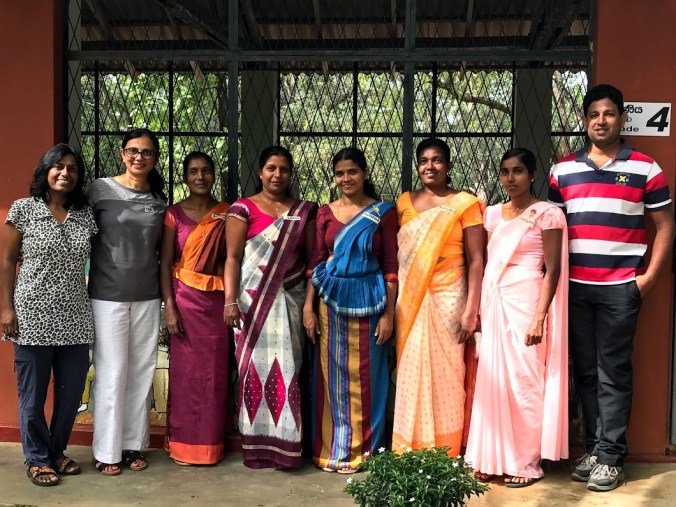
Deepani, Yogi and Sameera with the first cohort of preschool teachers whose schools received support from Trunks & Leaves’ sponsors (photo courtesy of Yogi Patel).

Continue reading

Envisioning The Future

As we wrote earlier, our newly launched Coexistence Project seeks to find ways that people and elephants can continue to share space while meeting the needs for security on both sides. For people, this means economic as well as physical safety. Continue reading

The Coexistence Project

Update June 20th: We are halfway through the campaign & on track with reaching halfway to our goals of raising $5000 from at least 40 people! Help us close the gap by multiplying your impact on Bonus Day, June 20th – the top 5% of fundraisers within that 24 hour period will be eligible for matching support from Global Giving! Donate now >

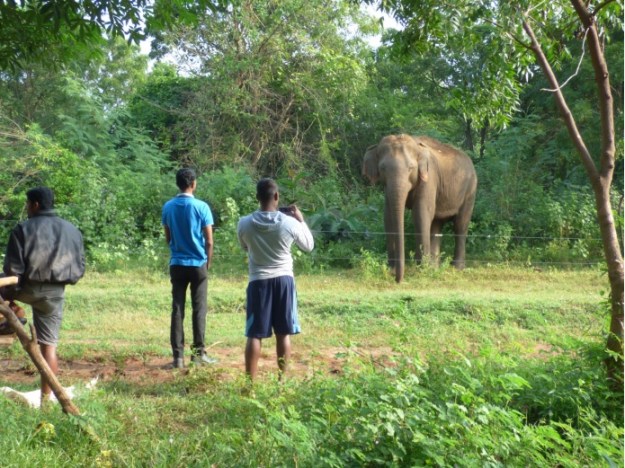
Elephant and people observe each other across an electric fence.

The Udawalawe Elephant Research Project (UWERP) started as an attempt to understand the behavior and ecology of elephants, and yield information useful for conservation of this elephant population, and perhaps even the species. But it was always evident to us that understanding the elephants’ side of the story was important, but only half the picture.

It has become fashionable in conservation to speak about the need for “coexistence” with wildlife, as opposed to conflict. Elephants are a prime example, being a conflict-prone species, with large area requirements. Because elephants can never survive purely within the confines of national parks and protected areas, this means finding ways that people and elephants can share their space. But you may wonder – elephants and people have been living on the same landscapes for thousands (if not millions) of years, how was this possible? Weren’t they already coexisting? Continue reading

Mind Over Matter

Those sneaky sneaks!

It was a perfectly framed shot of a young elephant breaking the electric fence, perhaps even looking a little gleefully smug about it. Still this was a relatively common incident, and while it was nice to catch at least one culprit in the act, the observation was hardly a breakthrough (pun intended). But as we watched on, it was what came next that was so beautifully, endearingly meaningful that we couldn’t help watching again, and again, and again. Continue reading

Morning walk

By Ilja Van Braeckel

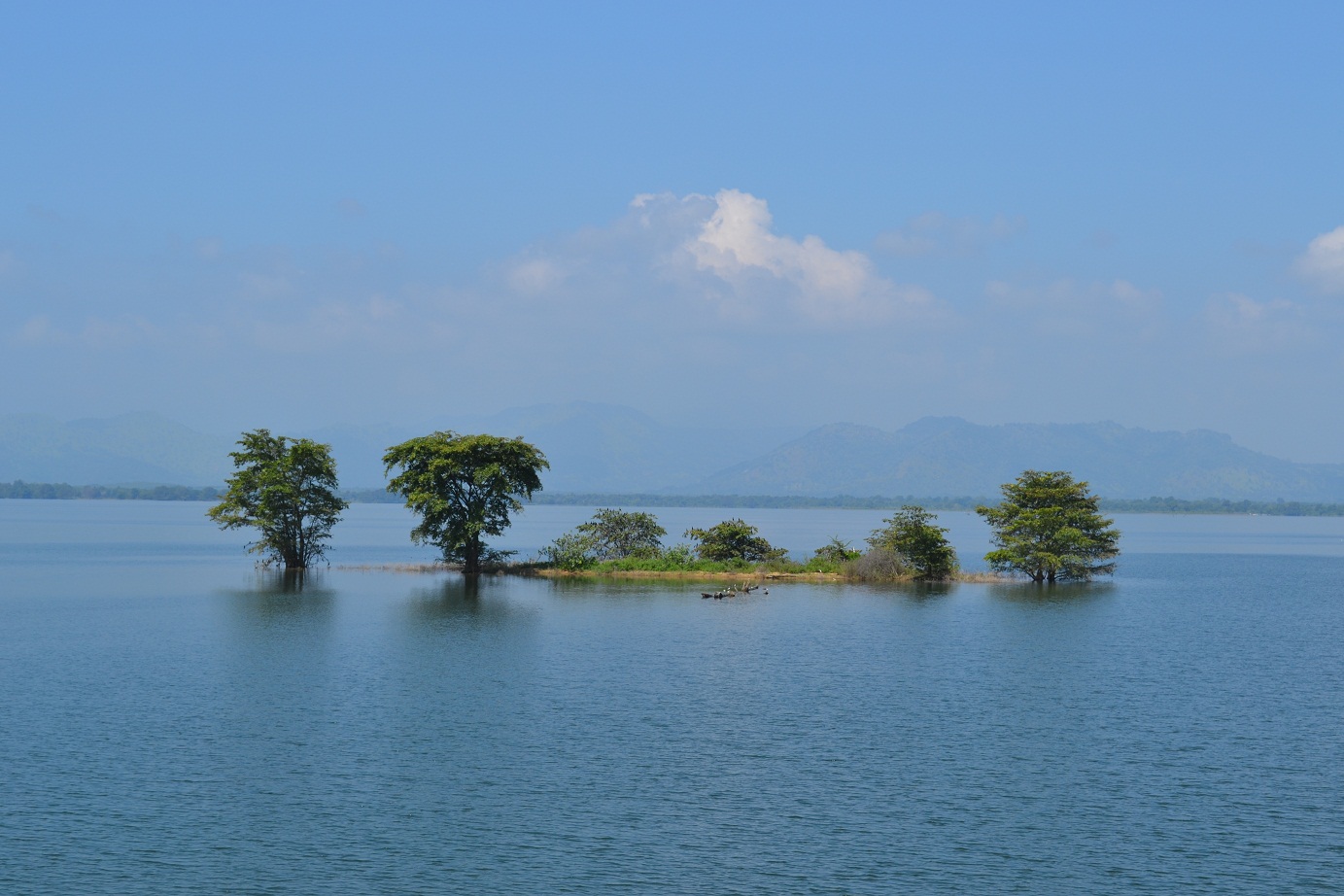
The island that is not an island.

The island that is not an island.

On a beautiful Sunday morning, I left for the Uda Walawe reservoir. I had traveled this way before, and I knew what to expect. This man-made reservoir is located within the national park’s boundaries, and is separated from the road by the electric fence. Being approximately 3400ha in size, it is a significant source of hydroelectricity, and I had high hopes for spotting wildlife. A good hour and my morning King coconut later, the first specks of reflected sunlight started to appear on the horizon between the trees. The sky was particularly clear and there wasn’t a sigh of wind. I quickened my steps, and, non-compliant to popular advice, kept walking towards the light in a steady pace. A few specks made way for hundreds, and then thousands, and with every step I gained, the view became more spectacular, as if the reservoir invited you kindly to acknowledge its splendor. Continue reading