Thinking like elephants

By: Lisa Barrett, Research Assistant – Think Elephants International, Inc.
Photos: Elise Gilchrist (c) 2014, Think Elephants International, Inc. www.thinkelephants.org
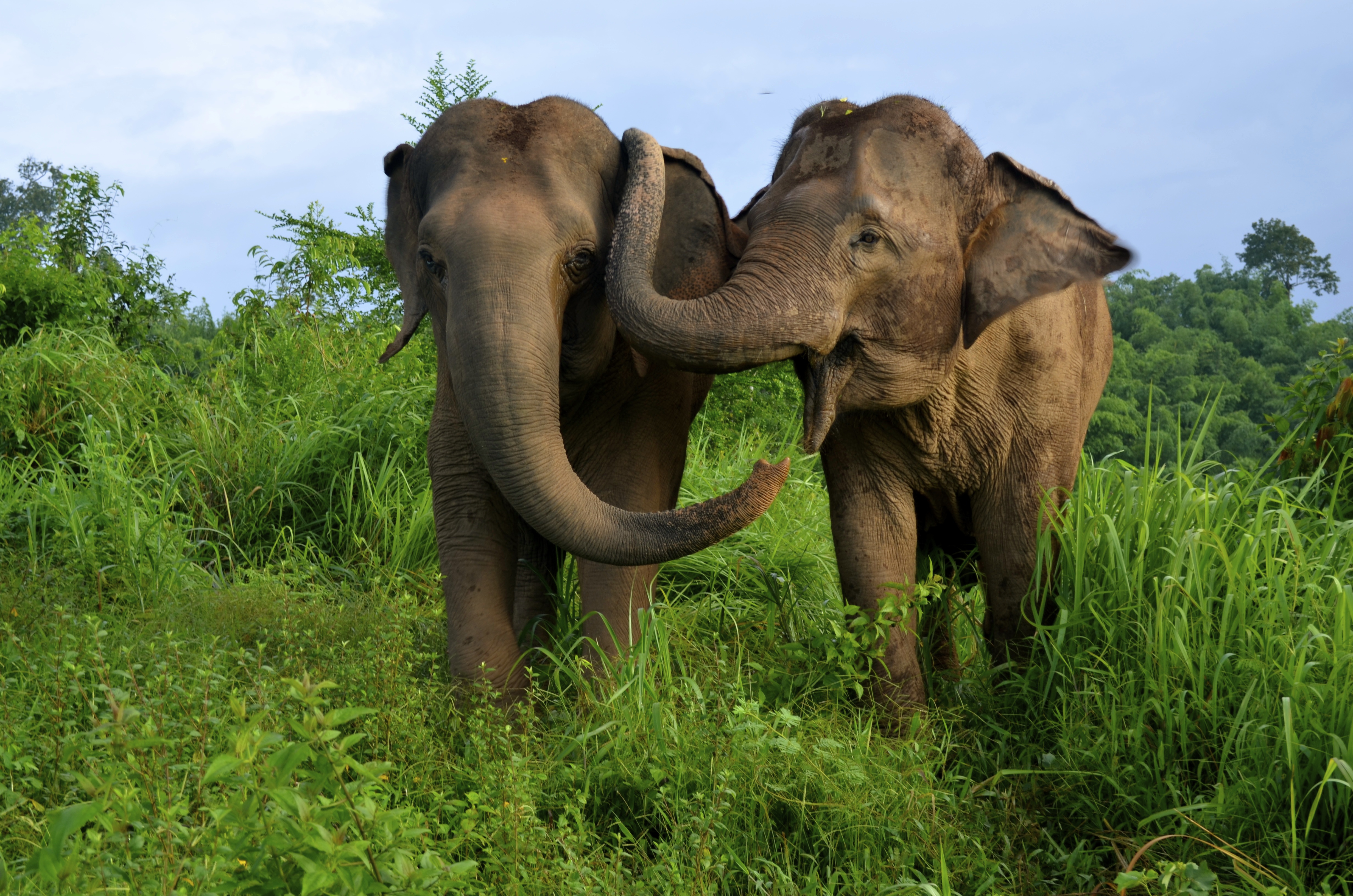
Plotnik3Think Science. Think Education. Think Elephants. That’s our motto at Think Elephants International (TEI), a nonprofit based in northern Thailand.  Founded by Dr. Joshua Plotnik in 2010, TEI’s aim is to conserve wild Asian elephants in Thailand by integrating elephant intelligence research with conservation education programming. We “think elephants” both because we think of elephants when we consider ways to help improve their conservation status, and we also think like elephants in designing our research paradigms. We use scientific research to understand how elephants “see” their world and how we can most effectively save their world. Dr. Plotnik has shown that elephants are both able to pass the mirror self-recognition task (Plotnik et al. 2006) and that they can cooperate together to complete a novel problem (Plotnik et al. 2011). In addition to demonstrating the amazing cognitive abilities of this species, we are also passionate about research that can directly impact conservation techniques to mitigate human-elephant conflict. Continue reading
A new arrival

By Michael Pardo, Cornell University

Monday, February 10:

IMG_0141

I gazed out on Uda Walawe National Park for the first time in over a year as our jeep trundled through the entrance gate.  I welcomed the cool morning air that I knew would swiftly turn hot as the sun climbed higher in the sky.  Dark clouds loomed threateningly overhead, but they were all bluff.  Uda Walawe is experiencing something of a drought this year—while we were driving to the park I noticed that the roaring river I remembered from last December had been replaced by a wide strip of boulders and trees.

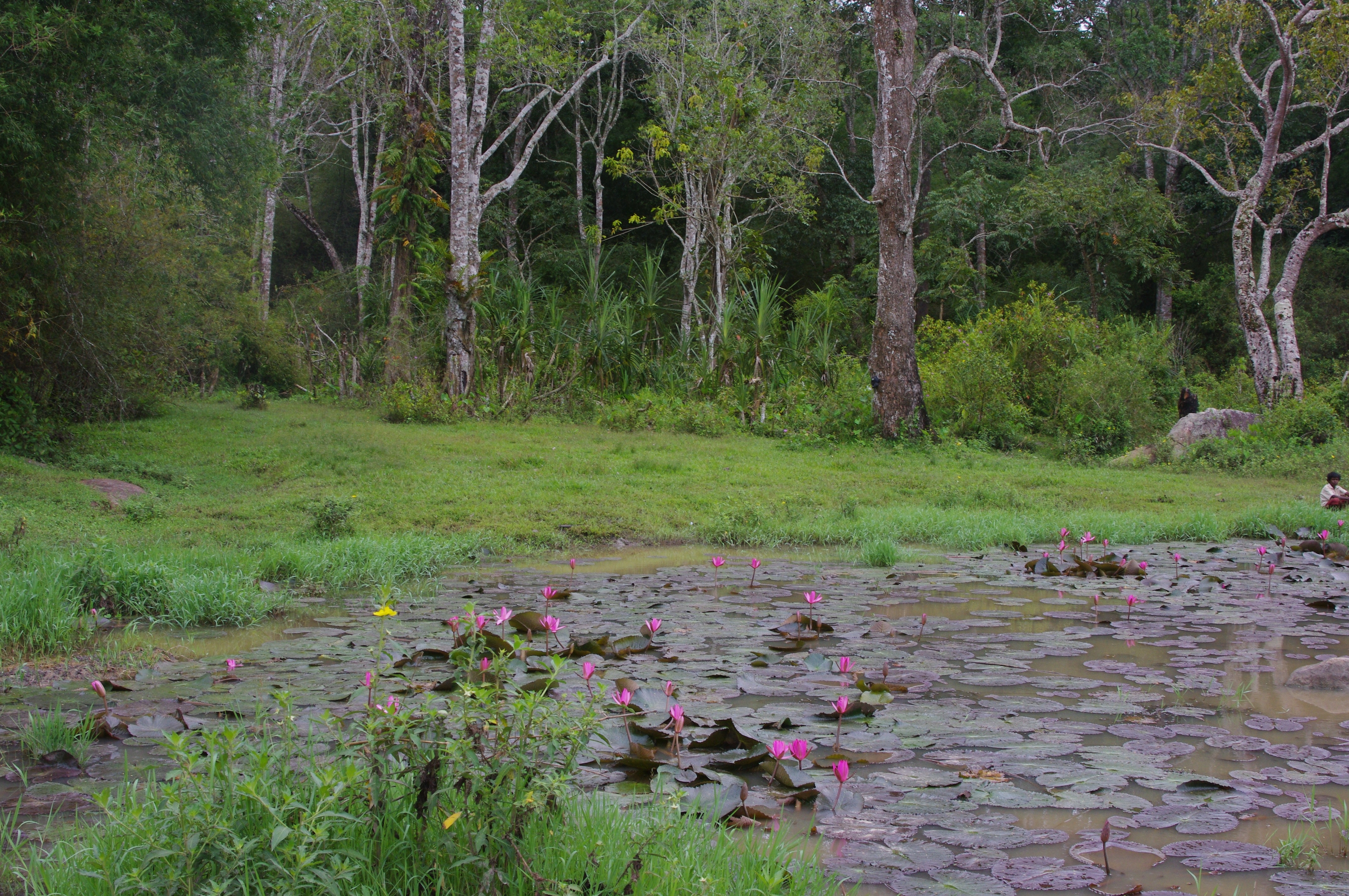
Drought does have its advantages though.  The ponds and reservoirs in the park had receded, baring flat, open areas that stood out in stark contrast to the dense shrubs and trees blanketing most of the habitat.  I knew that if we were lucky enough to encounter elephants at any of these waterholes, I would have a clear line of sight for behavioral observations. Continue reading

Field notes

Baretail’s Tale

By TV Kumara

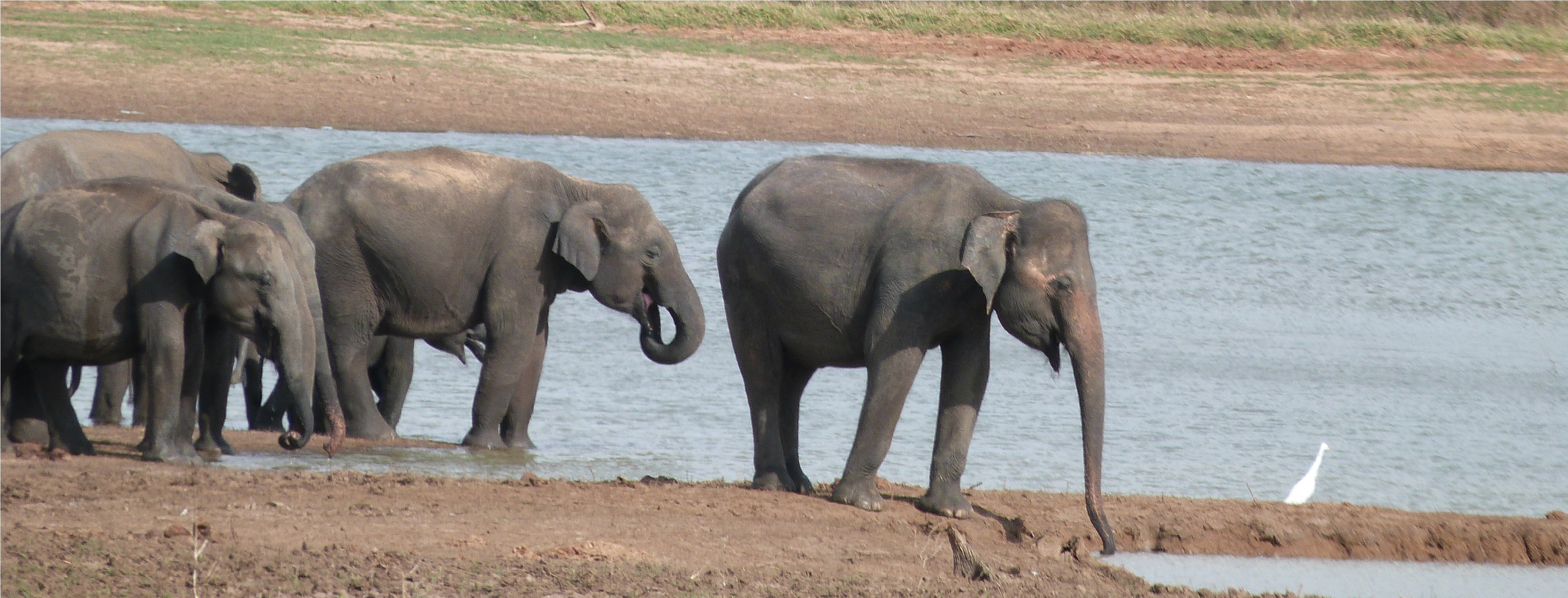
Baretail with the Bs at the Uda Walawe reservoir.

Baretail (right) with the Bs at the Uda Walawe reservoir.

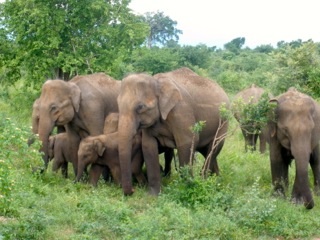
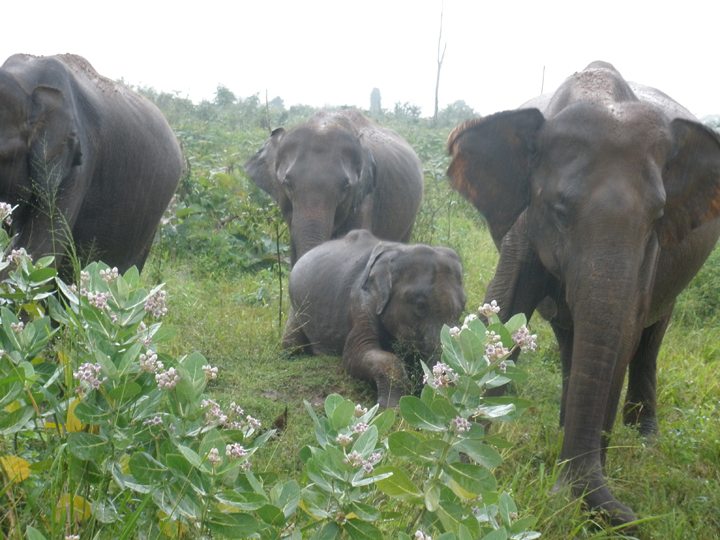
Baretail is a female elephant in Uda Walawe National Park (so named as her tail has no hair). She is a member of ‘B’ unit, because ‘B’ is the first letter in names – e.g. Baretail, Batik, Bali, Bashi, Blanche, Bitsy and Bianca. Continue reading

Help Support Michael Pardo’s “Elephant Grammar” Project!

By Michael Pardo, Cornell University

The first time I saw wild Asian elephants was last December, in Uda Walawe National Park, Sri Lanka.  As a first year Ph.D. student at Cornell University, I was trying to come up with a project, and was considering this park as a potential field site.  I was struck by the sheer variety of sounds that the elephants made.  Yes, they gave the well-known trumpets, but they also produced roars that carried for miles, rumbles so low-pitched that my human ears could barely detect them, and squeaks that sounded more like a dog’s chew toy than an elephant.  Why do these animals have so many different calls?  What do these calls mean?  The truth is, no one knows.  In fact, we know surprisingly little about how Asian elephants behave in the wild—even less than we know about their African cousins.  I’ve made it my business to uncover some of the secrets of Asian elephant communication—and hopefully get my Ph.D. in the process! Continue reading

The “Elephant Grammar” Project at Uda Walawe National Park

By Mickey Pardo, Cornell University

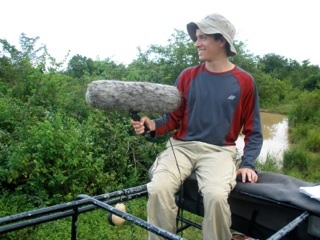
Do Asian elephants have grammar?  I aim to find out why Asian elephants combine different calls into sequences by recording vocalizations, playing them back to the elephants, and observing their responses.  From January to July 2014 I will collect video and audio recordings of the elephants in Uda Walawe National Park, Sri Lanka, and I will also conduct some preliminary playback experiments to determine the meanings of different calls.  However, this work is extremely expensive, and because my research is not covered by my advisor’s grants, I am responsible for funding 100% of my project on my own.  To help raise the money I need, I have started a crowd funding campaign on the platform Microryza.  The idea is to raise a significant amount of money via many small donations.  The funds that I raise through this campaign will be used to help pay for 4×4 vehicles that I need to transport myself, my field assistants, and my equipment inside the park.  If you donate to my campaign, I will send you periodic updates from the field, including photos and videos of the elephants I study.  Here is a link to my project:  https://www.microryza.com/projects/do-asian-elephant-calls-have-grammar-like-elements

You can find previous posts from the field at the links below:

Asian elephants distinguish the calls of feline predator species

In September, Vivek Thuppil and Dr. Richard G. Coss from UC Davis published a paper in the journal Biology Letters regarding wild Asian elephant behavior towards pre-recorded tiger and leopard growls while attempting to crop raid. They found out that elephants silently retreat from tiger growls, but aggressively vocalize their presence when confronted with leopard recordings. According to previous research, tigers tend to prey on elephant calves while leopards are essentially harmless. This study is the first to investigate the inner-workings of elephant antipredator behavior at night.

Direction in which elephants emerge from the forest to trigger playback (courtesy of Vivek Thuppil)

Continue reading

Morning walk

By Ilja Van Braeckel

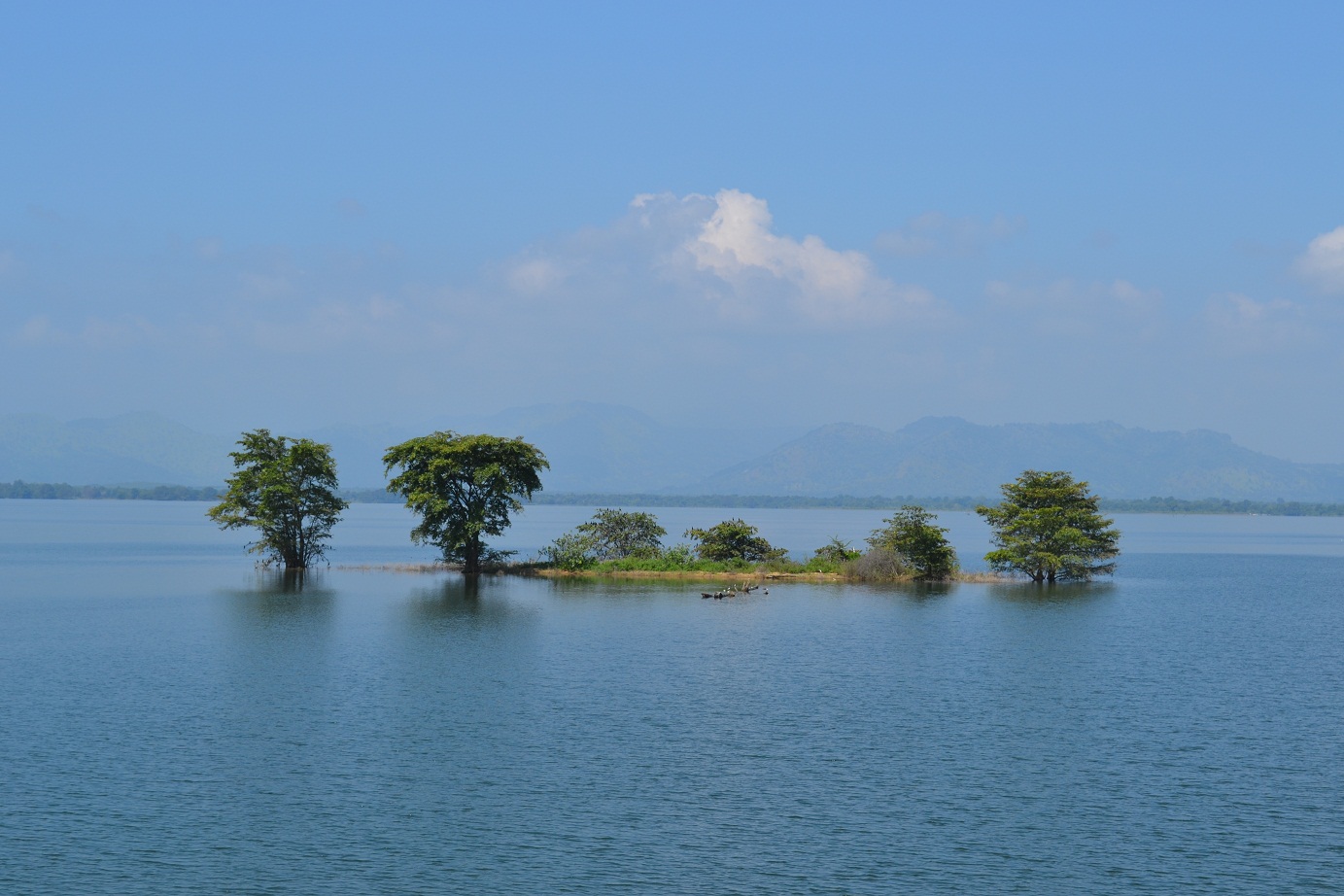
The island that is not an island.

The island that is not an island.

On a beautiful Sunday morning, I left for the Uda Walawe reservoir. I had traveled this way before, and I knew what to expect. This man-made reservoir is located within the national park’s boundaries, and is separated from the road by the electric fence. Being approximately 3400ha in size, it is a significant source of hydroelectricity, and I had high hopes for spotting wildlife. A good hour and my morning King coconut later, the first specks of reflected sunlight started to appear on the horizon between the trees. The sky was particularly clear and there wasn’t a sigh of wind. I quickened my steps, and, non-compliant to popular advice, kept walking towards the light in a steady pace. A few specks made way for hundreds, and then thousands, and with every step I gained, the view became more spectacular, as if the reservoir invited you kindly to acknowledge its splendor. Continue reading

Play Pandemonium

It was already a month ago I left Samburu!  The last day was a memorable one…

We headed out after lunch. As it was my last day, I was still hoping to catch a glimpse of cats.  I was hoping that we’d have a better chance being out in the afternoon.

Continue reading

Parting thoughts

Guest post by Michael Pardo, Cornell University

Friday, January 11, 2013

It’s hard to believe that this is my last day in the field.  The past month that I’ve spent at Uda Walawe seems to have gone by so quickly.  Part of me is eager to return to the US, where I will finally be able to sort through all the information that I have collected here.  But I do not want to leave the park and its elephants, and I resolve to savor this final day.

A juvenile plays on a mound.

A juvenile plays on a mound.

Continue reading

Recording elephants

Guest post by Michael Pardo, Cornell University

Monday, December 31, 2012

Batik

Batik and her calf

Last Monday, Sameera and I underwent a grueling six-hour bus ride (each way) to the capital city of Colombo.  Dr. Padmalal, UWERP’s collaborator for this project from the Open University of Sri Lanka, had managed to secure the approval of my research permit, and we went to pick up the document.  The long hours of sweltering heat devoid of any bathroom breaks and punctuated by the blaring of obnoxiously loud horns were worth it.  The permit allows me to record elephant vocalizations, which is, after all, why I came here.  There is only one problem:  the elephants have barely been vocalizing at all.  In fact, they seem to be doing precious little besides eating and walking.  I know that patience is key of course, but it is hard not to become a little discouraged as I wonder whether I will eventually be able to get enough sound recordings to complete my Ph.D. Continue reading