A multitude of birds are chirping outside in the trees overlooking the river that snakes through this duo of national reserves in Kenya. Samburu and Buffalo Springs sit almost squarely in the middle of Kenya. The landscape consists of low thorn bush, acacia trees, and a few grasses along the water’s edge. Strange multi-branched “doum palms” line the riverbanks, looking a bit like coconut trees trying to evolve into something else in a hurry (see my friend Andreas Gros’ beautiful photo here). Faint blue outlines of hills rise in the distance.
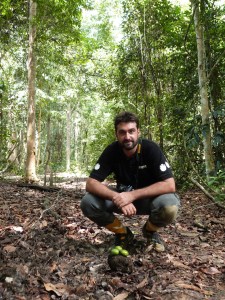
Who dunnit? Which animals are responsible for planting seeds throughout the forest?
My next stop is the University of Nottingham Malaysia campus, where I meet my colleague and friend Ahimsa Campos-Arceiz. A Spanish transplant in Malaysia, Ahimsa has spent the past year with great gusto setting up MEME (Management and Ecology of Malaysian Elephants). I recognize the energy, it’s the same enthusiasm shared by Benoit and George, my current supervisor. What all these people have in common is a firm belief in what they do, a single-minded determination that appears never to falter. Truly something to behold. Continue reading →
Sukau is a sleepy little town on the eastern side of Sabah, tucked along the Kinabatangan river. What brought me here is an unlikely acquaintance made via Facebook. A few years ago I got a message from one Nurzhafarina Othman saying she was studying the social organization of Bornean elephants, and she had come across my thesis – could I answer some questions for her? Of course, I said, and so began a little exchange of emails about studying elephants. I grew curious to meet Farina, who seems an unlikely candidate to be traipsing around the forest given her otherwise conservative Malay Muslim background. Since I too come from the Sri Lankan Malay community, it seemed we had a lot in common. Little did I know. Continue reading →
She has three daughters. They are all comfortably married (more or less), prefer grass to grapes, and have suffered their share of life’s sorrows and joys.
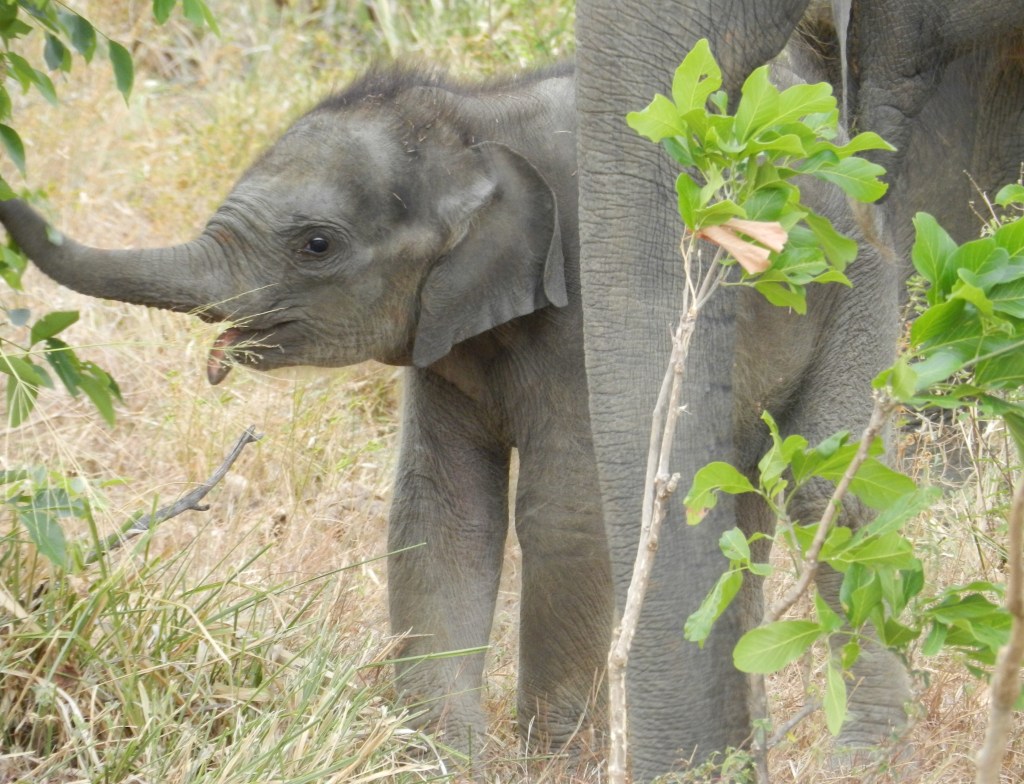
Undeniably the pride and joy of the household, at this moment, is Little One.
Little One is celebrating her first month on this planet. Her mother and aunts are wildly protective. As the Land Rover draws too close, they flank Little One on both sides, so that she is saved from our glances. Still, her curiosity cannot be suppressed, as she steals a glance at us from under her mother’s belly. Continue reading →
I spend a lot of time looking at elephant photos. Now and then, I see something that makes me smile. I just came across a set of pictures from back in May of 2009, which prompted this post.
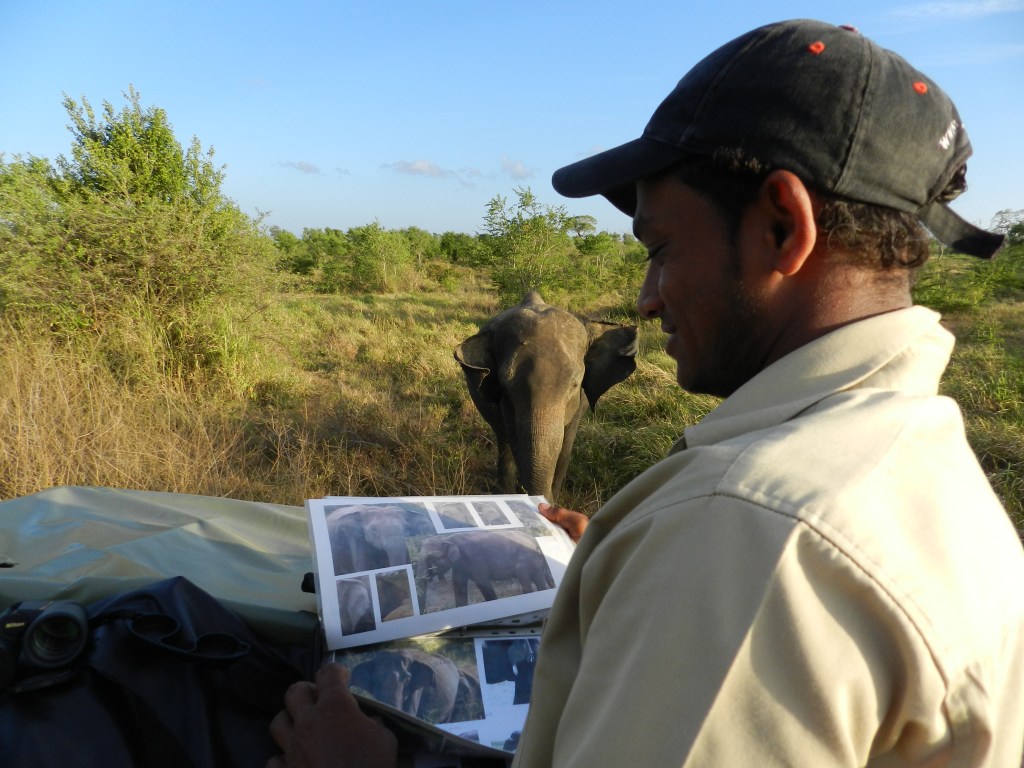
One of the neatest things about the elephants at Uda Walawe is how habituated many of them are. What does habituation mean? When studying an animal’s behavior, it’s important that the presence of an observer doesn’t change its behavior. It has to go about its business as if you weren’t there – or at least, not minding your intrusion. Unhabituated animals are fearful, and we can easily tell that some of the elephants in Uda Walawe are not used to people at all. But others we know very well – and maybe, they know us too?
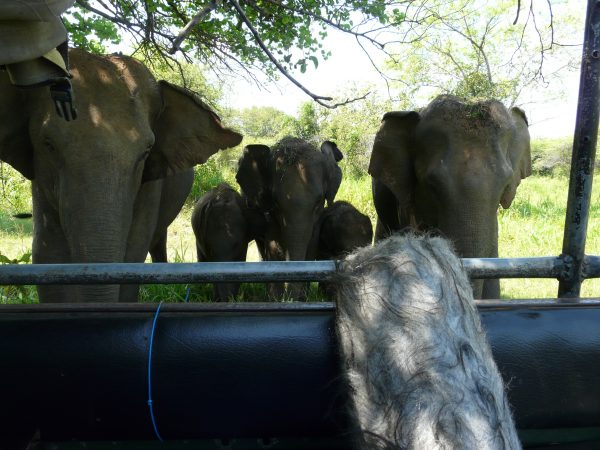
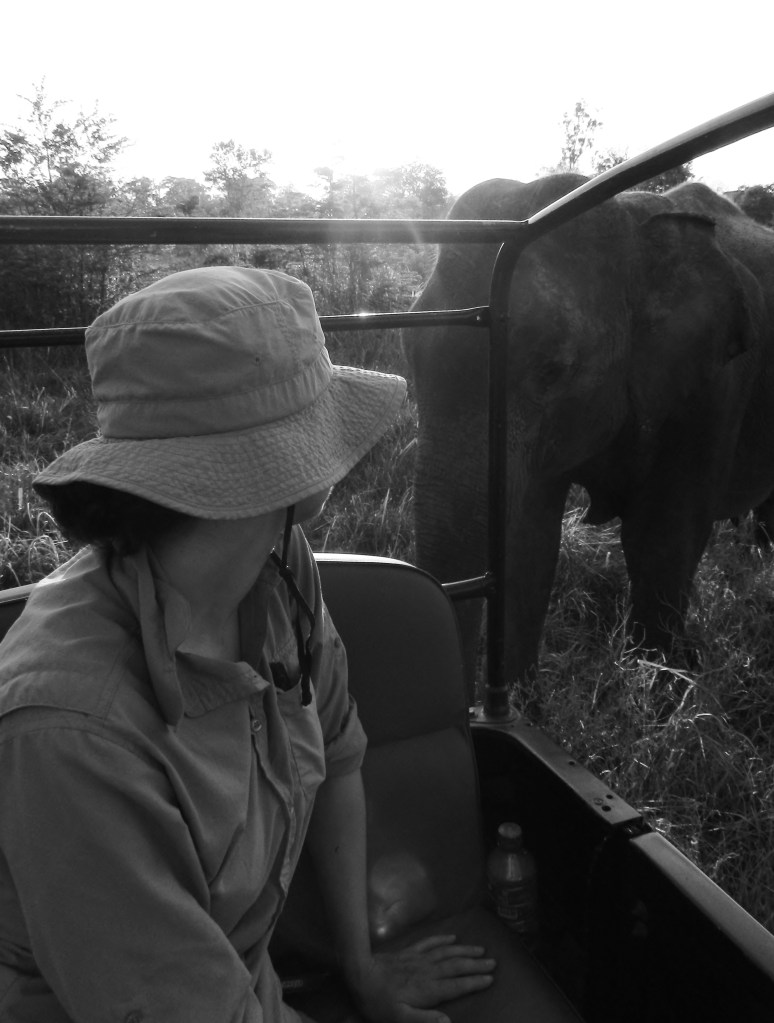
The S unit is one such group. The ‘S’ stands for Seenuggala, which is the name of a little reservoir inside the park around which we frequently see them. This is one of the largest social units in our study. One hot morning in May of 2009, we came across them scattered about under trees trying to avoid the sun, as elephants do in the middle of the day. We ourselves pulled up to some shade by the side of the road, from where we could watch them. We knocked off the engine and waited.
The ellies and we, escaping the heat beneath the same tree.
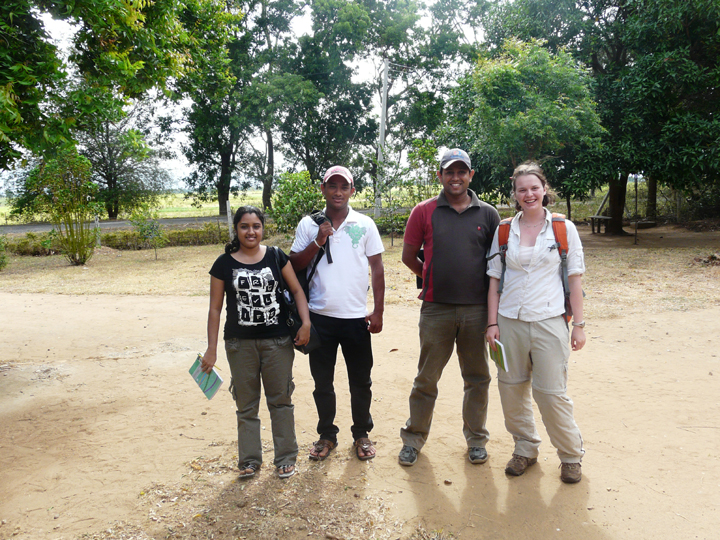
For the past month I have been visiting rural villages around Uda Walawe National Park conducting a survey on home gardens, farming habits and elephant crop raiding events. The survey team consists of Sameera, Tharanga, myself and occasionally Kumari, Ashoka’s sister. Ideally, Sameera and Kumari administer the questionnaire to the heads of household and Tharanga and I scout out the property, taking GPS points of property boundaries and gardens, and pictures of important things such as tap lines and toilets. Tharanga and I also compile a list of the crops that are cultivated on the properties. At first my identification skills were quite limited: coconut, mango, papaya, spinach, rice, and banana. Thanks to Sameera and Tharanga, I am now familiar with manioc, sweet potato, jack fruit, pomegranate, lime, orange, tamarind, drumstick, jasmine, anoda (custard apple), wood apple, ugurassa , and bread fruit. Continue reading →
Lizzie honing her elephant ID skills on Udawalawe’s calves
By Lizzie Webber
“Maybe your camera is as excited as you!!” Ashoka teased with a huge grin as I fiddled with my temperamental camera, trying to get it to work again. Tomorrow was to be my first day studying wild elephant calves, and after a year of planning, I just couldn’t keep my toes from wiggling in excitement!!
The Uda Walawe Elephant Research Project welcomes two new members: Tharanga and Lizzie.
Tharanga lives just down the road from the field station, barely a kilometer from the entrance of Uda Walawe National Park. He grew up in Uda Walawe his entire life but, like many, had never been inside this park – or any other in Sri Lanka for that matter. He’s dreamed of exploring it. After finishing his A-levels, he asked his brother, who drives a safari jeep, if he could arrange some way of getting him work inside the park. His brother knew Sameera and Ashoka and about the research project, and one day when we were short-handed, sent Tharanga to accompany us into the field. He loved it, we needed an extra pair of eyes, and there you go – our new trainee. He’s quick at learning to recognize the animals (the most difficult part of the job) and it looks as though he’s going to be a great fit for the project.
This is just as well, since we’ve just started a new project with Lizzie (Elizabeth) Webber, from the University of Stirling. As a student of Phyllis Lee, one of the researchers who has dedicated decades to studying the Amboseli elephants, it’s quite appropriate that Lizzie join us now to help us sort out the demographic structure of Uda Walawe. Lizzie will be doing a fascinating study that compares the behavior and development of elephant calves, both in the wild and in captivity, Asian and African. We hope this research helps improve the lives of animals in captivity, as well as giving us comparative insights on the similarities and differences between the two elephant species. Like the Amboseli study, we hope this study can carry on for many years, providing a wealth of information on wild Asian elephant calves that has never before been systematically collected.
Today we (Sameera & I) had a narrow escape from two big bulls who were in peak musth. It was the Kiral Ara road where the area is totally covered by large bushes, particularly Lantana. While we searching for elephants as usual, I smelled musth and was trying to find the musth males. There were lots of foot prints by a group of elephants and lots of broken branches by the road.
AVOID this elephant if you come across him.
At a bend in the road I saw a big male was crossing and I managed to identify it quickly. He was in peak musth & it was [M038], one who was attacking safari jeeps in 2008. I have seen him several times close to the jeep, but he was only aggressive one time.
I was reading of yet another unfortunate elephant incident in India:
“According to the forest officer’s account, the elephant was crossing the road when the car reached the spot. The family of three which was moving in the car tried to drive the jumbo away. Their efforts — blaring of horns and flickering dipper — were enough to agitate the animal which in a fit of rage flipped the car.” Article at the link below.

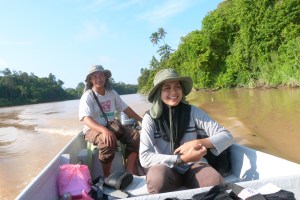 Sukau is a sleepy little town on the eastern side of Sabah, tucked along the Kinabatangan river. What brought me here is an unlikely acquaintance made via Facebook. A few years ago I got a message from one Nurzhafarina Othman saying she was studying the social organization of Bornean elephants, and she had come across my thesis – could I answer some questions for her? Of course, I said, and so began a little exchange of emails about studying elephants. I grew curious to meet Farina, who seems an unlikely candidate to be traipsing around the forest given her otherwise conservative Malay Muslim background. Since I too come from the Sri Lankan Malay community, it seemed we had a lot in common. Little did I know.

 Maximus