Guest post by Hannah Mumby, Myanmar Elephant Project / University of Sheffield
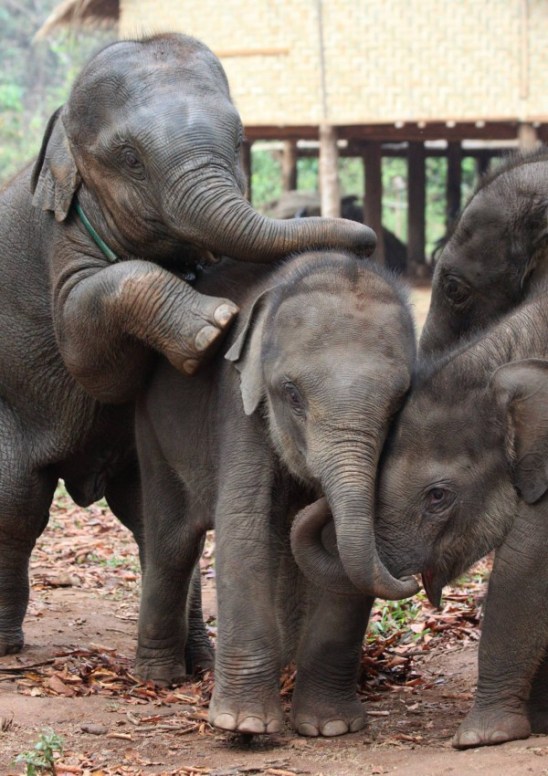
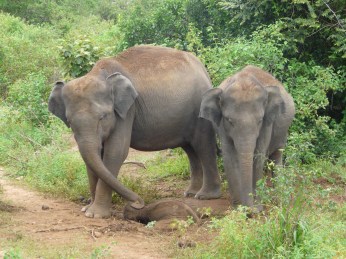
Elephant calves at a logging camp in Myanmar. Image courtesy of Hannah Mumby.
There are a great many reasons to study elephants; they’re endangered, highly social, quite frankly huge and hold a unique and central place in many cultures. They can also be very strong, sometimes dangerous and slow to do what you want. But that’s not enough to stop me from working on them! One of my interests is actually their life cycles. In the past I’ve studied humans and non-human primates and the fact that elephants evolved long lives, almost on a par with our own, but on a separate evolutionary trajectory was fascinating to me. Elephants also usually only have one calf at a time and each calf is dependent on its mother for many years. These characteristics allow us to test a lot of ideas underpinning theories of life history and ageing, including ones that have been primarily designed with humans in mind.
So why is this interesting? Continue reading
![[208] and calf](https://maximus.trunksnleaves.org/wp-content/uploads/2015/11/208andcalf.jpg?w=670&h=447)

 Columbian Mammoth in the George C. Page museum, Los Angeles



 Maximus