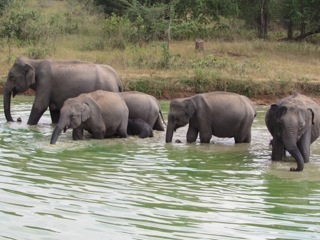
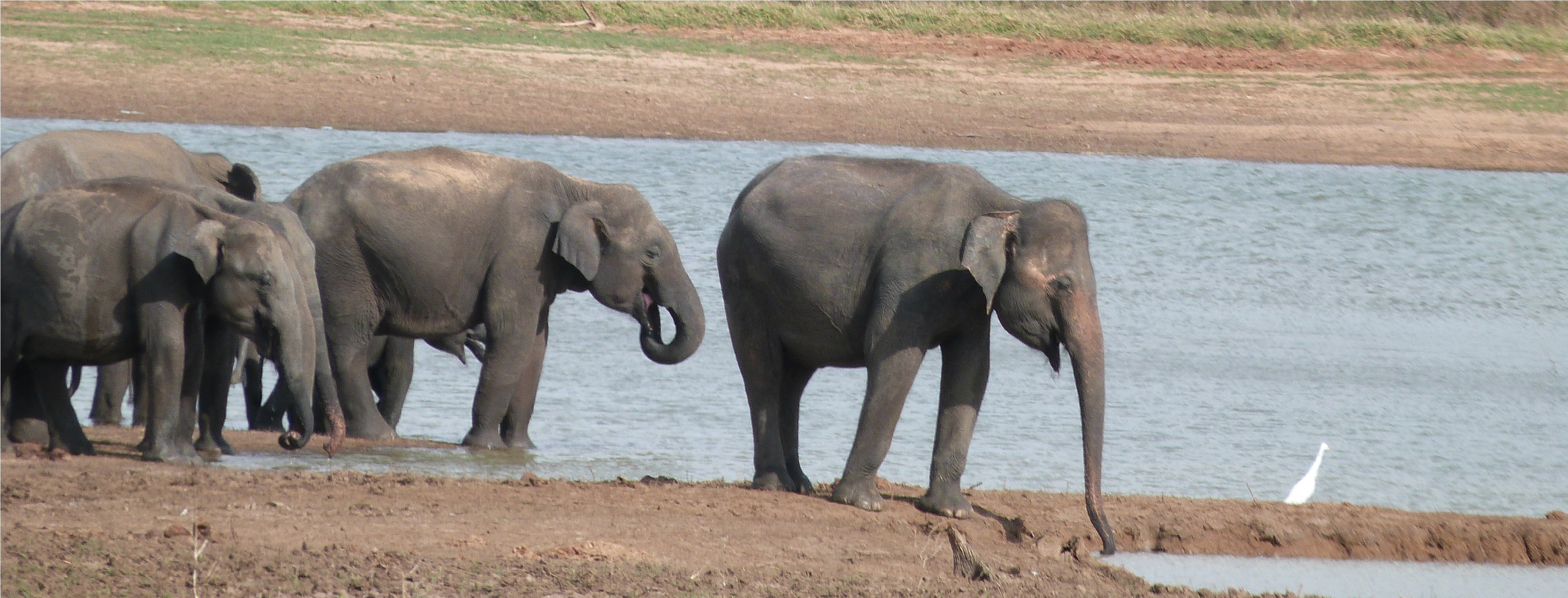
Dwarf elephant battles musth male!

16 June 2014 – S. de Silva
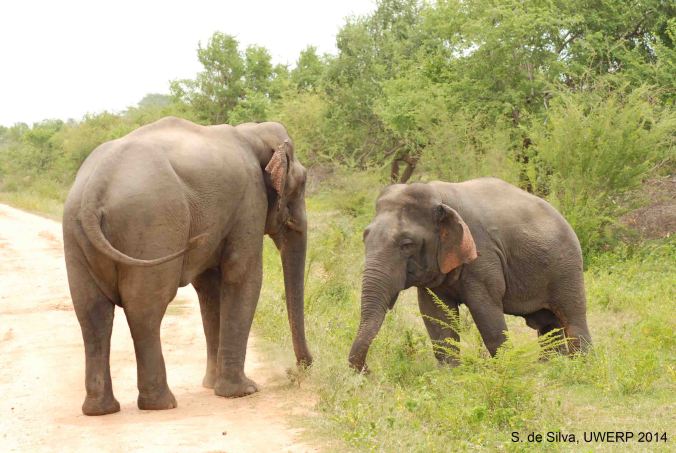
Battle1A clear sunny day, Lucy and Mickey are off in the park with Sameera while Kumara and I stay behind to catch up on office work. It’s mid-morning when Sameera calls to tell us Walawe Kota is back!  Walawe Kota is the nickname we’ve given the dwarf elephant of Uda Walawe.  This would be at least the third year now. What’s more, he’s in musth and reportedly fighting another male.  At first, the news is a bit confusing – there’s mention of a possible injury.

I’ve never seen him in the flesh though Kumara and Sameera have. I’ve only seen pictures and video clips, so I’m eager to try our luck. The park office reports he’s been spotted not far from the entrance, so we hop in our Jeep and dash off in hopes he’s still out in the open. Continue reading
My first playback trial!

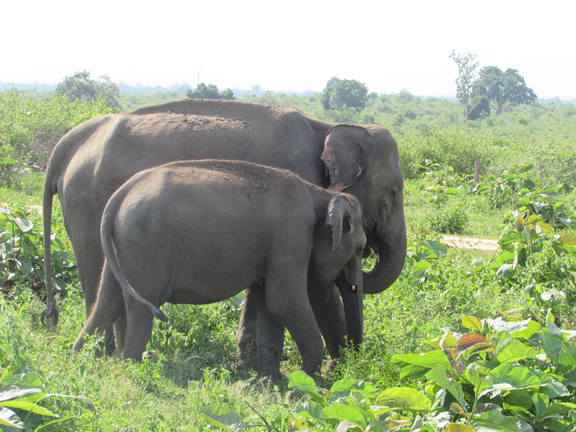
Bashi_&calf

By Mickey Pardo – Cornell University & Open University of Sri Lanka

Friday, May 23, 2014

Doing playback experiments with Asian elephants is harder than it would seem.  The basic idea is straightforward:  I want to know whether Asian elephants can distinguish between the calls of familiar and unfamiliar individuals, so I will play back recordings of familiar and unfamiliar elephants and see if the subjects react differently to them.  But in order to do a playback, so many factors must align at the same time.  The right subject must be present, the original caller must not be present, the group can’t have been exposed to a playback for at least a week, the elephants have to be stationary, they have to be clearly visible and within 50 meters of the road, there can’t be any tourists nearby, and all of these requirements must hold true for at least 15 minutes straight.  Sometimes, it seems about as likely as having your winning lottery ticket reduced to cinders by a lightning bolt.

Continue reading

Where Are You? I’m Here!

 By Michael Pardo, Cornell University & Open University of Sri Lanka

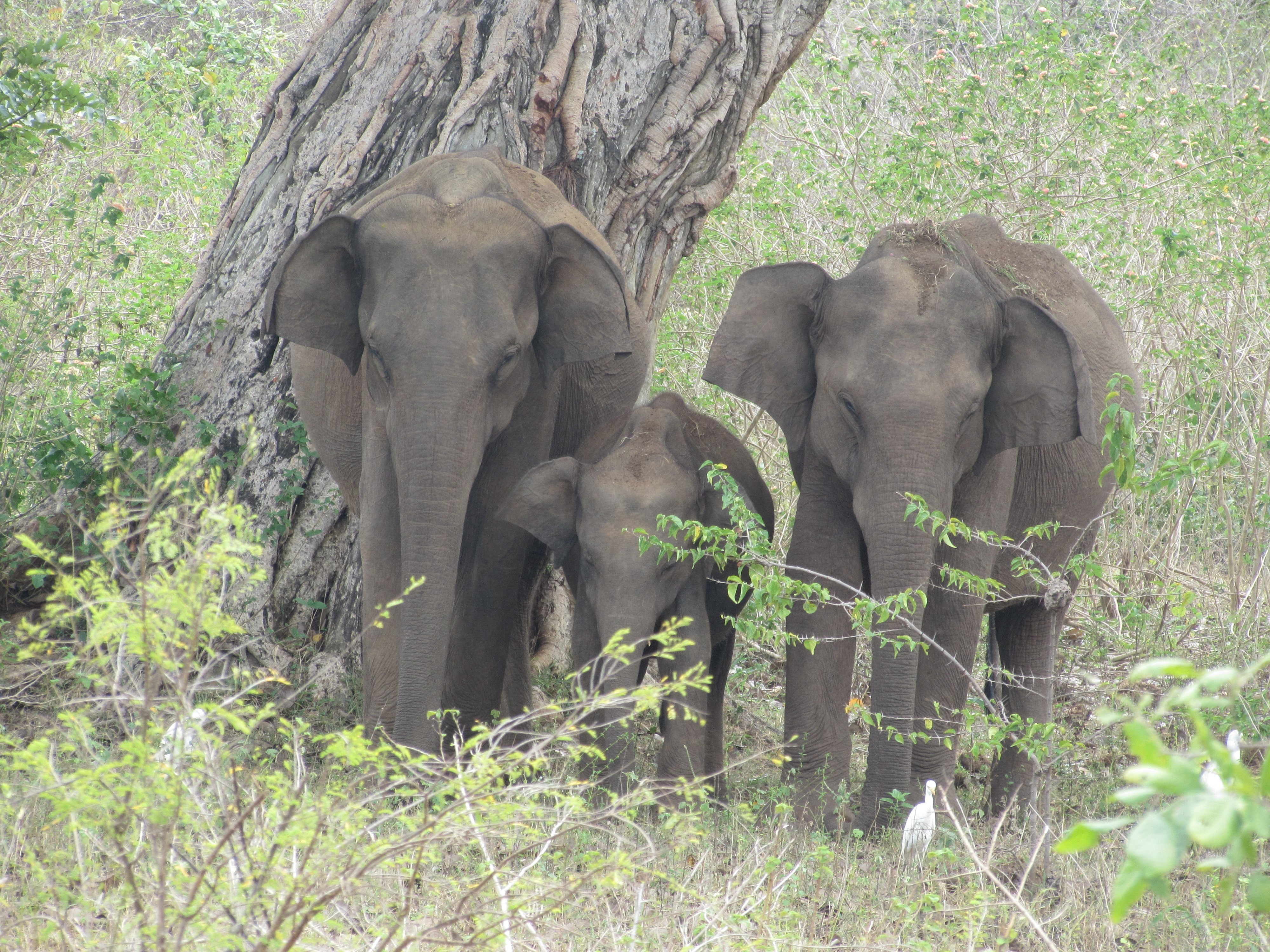
From left to right: [802], [802]’s four-year old calf, and a sub-adult female resting (this was before they moved to join Tulita under the maila tree)

Tulita, [802], [802]’s calf, and a sub-adult female stood nearly motionless under the low-hanging canopy of the maila tree.  Their heads drooped low and their trunks rested on the ground as they huddled together in the shade, seeking respite from the blazing noonday sun.  The only movement was the occasional swish of a tail, in an attempt to swat away some pesky insect.  A group of jabbering tourists pulled up in a small caravan of jeeps, but the elephants paid them no heed. Suddenly, two low growls echoed across the road over the noise of the human onlookers—deep, rumbling sounds like the purring of a truck-sized cat.  They were followed by two roar-rumbles, more urgent-sounding vocalizations where a loud bellow precedes the softer rumbling component.  One more call emanated from the tall undergrowth before the sub-adult female finally answered it.  Her response was immediately answered in turn, initiating a brief exchange of vocalizations between the unseen elephant and the sub-adult under the maila tree.  As I scanned the shrubs expectantly, they soon parted, revealing the dust-covered forehead of a small female elephant.  The newcomer stepped fully out of the thorny vegetation, displaying ears with a noticeable flap in front and a long, narrow lobe.  It was Continue reading

Elephant Ecosystems – An Earth Day Special!

Rob Nelson of Untamed Science helped us realize this long-time goal to create little animated eco-messages about elephants.  Here’s the first installment!

Elephant Ecosystems

Or: Why do we need large wild animals?

Teachers, students and would-be conservationists: you can download this video and translate it into your own language! Be sure to let us know so we can upload it to Trunks & Leaves’ channel on YouTube.  Get the animation and script hereYou’ll also find links to the scientific papers that inspired this video.

(See it in Malay here!)

Related post: Who misses the mega-fauna, if they dissappear?

Who misses the mega-fauna, if they disappear?

Guest post & graphics by Nitin Sekar, Princeton University

DSC03329

A seedling germinates from elephant dung.

All around the planet, the world’s largest animal species are becoming very rare. Whether we speak of giant tortoises, large wild cows like gaur, rhinoceroses, hippos, tigers, or whales, local extinction or extreme reductions in range size and population are the norm for species that are too big or too slow-reproducing to withstand human conflict or the human hunter. Most people would probably agree that it is a shame to lose these species. But what about functionally? Are the largest animals critical to any ecological processes? When there are declines in honey bee populations, human agriculture suffers; if nitrogen fixing plants are absent from a forest, other plant species may be affected. When the largest animal species go missing, do any other species miss them? Aside from a few cases, we don’t know! This is an active area of research.

We decided to explore the role of Asia’s largest land mammal—the Asian elephant (Elephas maximus)—in seed dispersal, which helps maintain the diversity of tropical forests. Continue reading

How does empathy help elephants?

By SdS

P1490826 P1490832

P1490840

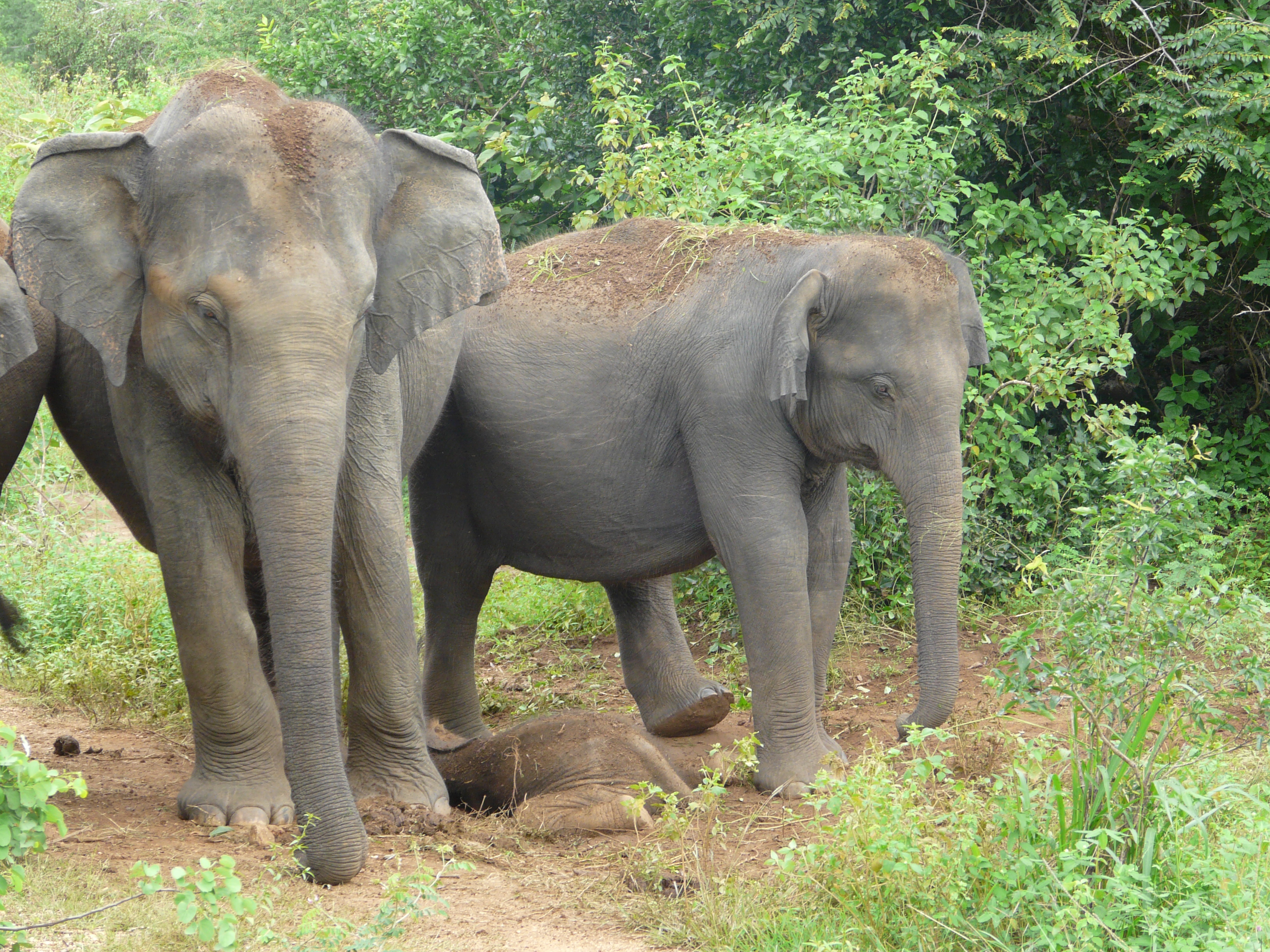
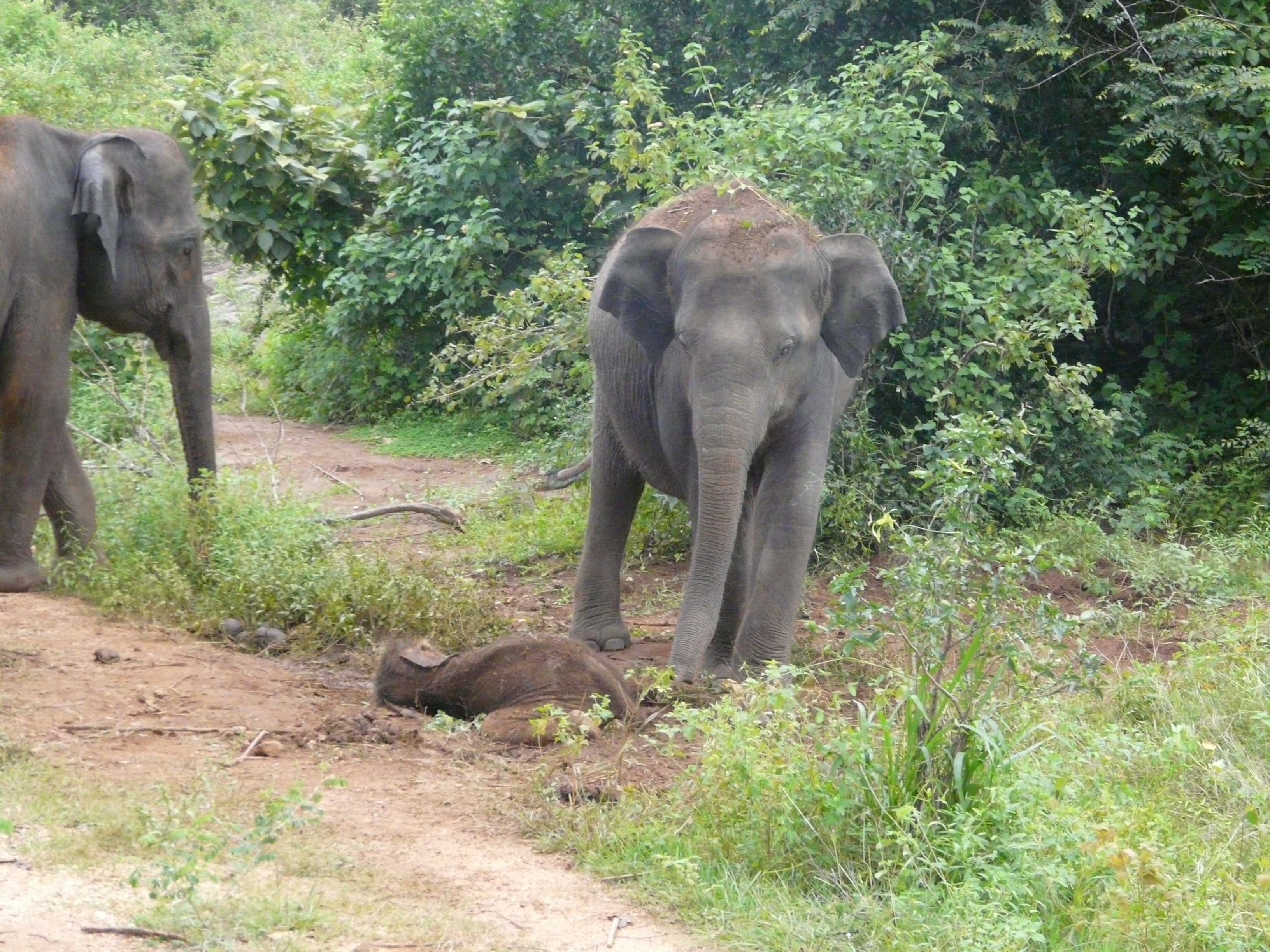
A small family of elephants in Uda Walawe wanders upon a dead calf which does not belong to them. Yet they show great interest, touching and hovering over the body for hours, refusing to let any observers near until they finally decide to move off. Photos: UWERP

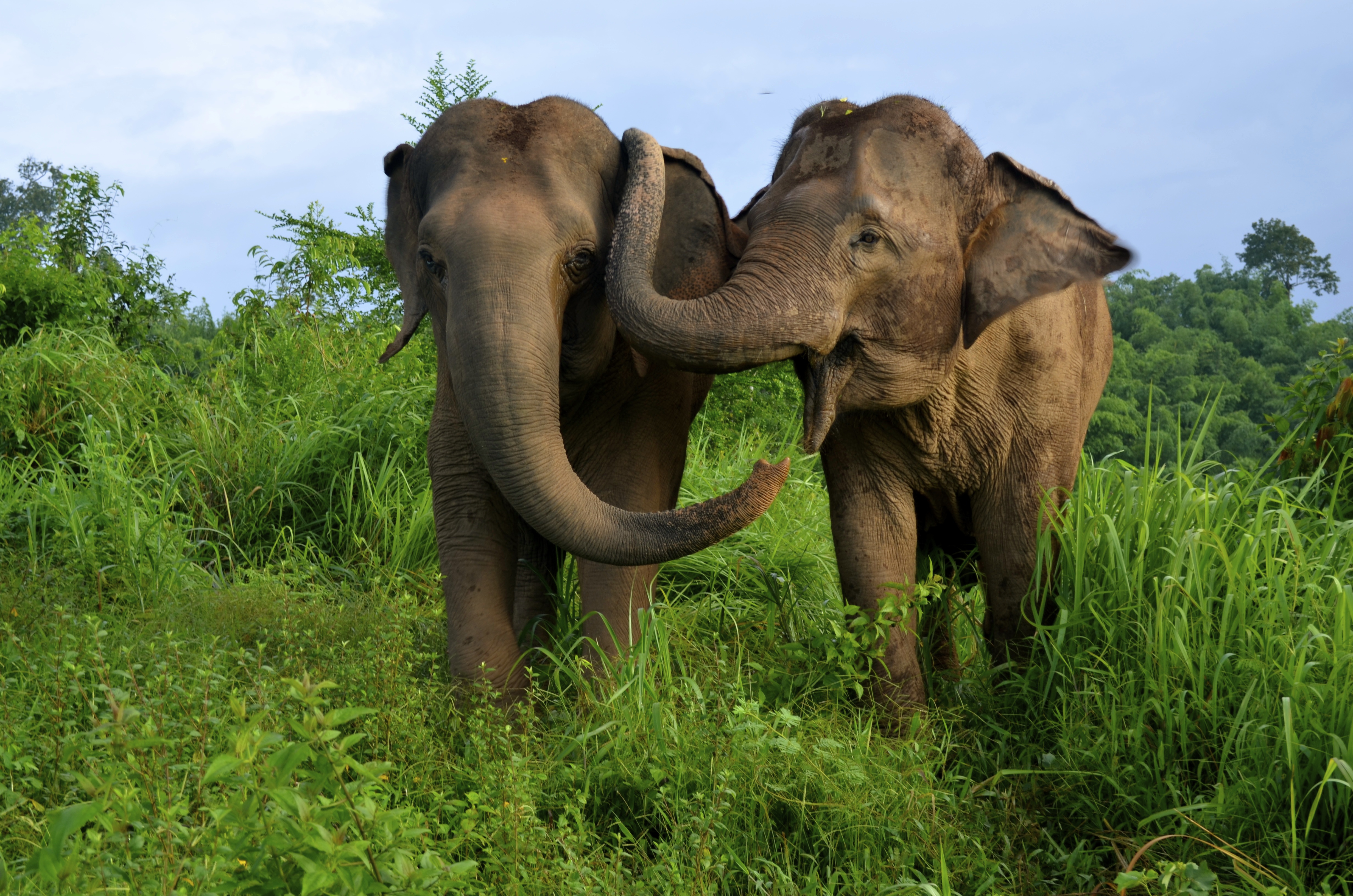
In the past week a paper on reassurance behavior in elephants by Plotnik et al. in PeerJ has been generating quite a bit of buzz. The study, which you can learn more about from the researchers themselves here, collected a series of observations on a group of captive elephants in Thailand documenting how they reacted when one of their companions was distressed.  It showed that when some individuals were disturbed in some way and expressed their distress, other individuals approached them and interacted in ways (such as touching, vocalizing) that suggested that they might be trying to comfort or console their companion.  Such behavior would indicate that elephants have the capacity for empathy, along with a handful of other species.

The title of this post is meant to work on at least two levels. First, we might wonder at a biological level – what is the function of the curious  behavior elephants sometimes show toward others in distress? Why might it have evolved? Whom does it benefit? Second, we might wonder at a practical level – should the capacities of elephants endow them with additional conservation value? Should it matter on the ground? So today, the first ever World Wildlife Day, I’d like to examine these two sets of questions, which are very distinct. Continue reading

Thinking like elephants

By: Lisa Barrett, Research Assistant – Think Elephants International, Inc.
Photos: Elise Gilchrist (c) 2014, Think Elephants International, Inc. www.thinkelephants.org

Plotnik3Think Science. Think Education. Think Elephants. That’s our motto at Think Elephants International (TEI), a nonprofit based in northern Thailand.  Founded by Dr. Joshua Plotnik in 2010, TEI’s aim is to conserve wild Asian elephants in Thailand by integrating elephant intelligence research with conservation education programming. We “think elephants” both because we think of elephants when we consider ways to help improve their conservation status, and we also think like elephants in designing our research paradigms. We use scientific research to understand how elephants “see” their world and how we can most effectively save their world. Dr. Plotnik has shown that elephants are both able to pass the mirror self-recognition task (Plotnik et al. 2006) and that they can cooperate together to complete a novel problem (Plotnik et al. 2011). In addition to demonstrating the amazing cognitive abilities of this species, we are also passionate about research that can directly impact conservation techniques to mitigate human-elephant conflict. Continue reading

A new arrival

By Michael Pardo, Cornell University

Monday, February 10:

IMG_0141

I gazed out on Uda Walawe National Park for the first time in over a year as our jeep trundled through the entrance gate.  I welcomed the cool morning air that I knew would swiftly turn hot as the sun climbed higher in the sky.  Dark clouds loomed threateningly overhead, but they were all bluff.  Uda Walawe is experiencing something of a drought this year—while we were driving to the park I noticed that the roaring river I remembered from last December had been replaced by a wide strip of boulders and trees.

Drought does have its advantages though.  The ponds and reservoirs in the park had receded, baring flat, open areas that stood out in stark contrast to the dense shrubs and trees blanketing most of the habitat.  I knew that if we were lucky enough to encounter elephants at any of these waterholes, I would have a clear line of sight for behavioral observations. Continue reading

Field notes

Baretail’s Tale

By TV Kumara

Baretail with the Bs at the Uda Walawe reservoir.

Baretail (right) with the Bs at the Uda Walawe reservoir.

Baretail is a female elephant in Uda Walawe National Park (so named as her tail has no hair). She is a member of ‘B’ unit, because ‘B’ is the first letter in names – e.g. Baretail, Batik, Bali, Bashi, Blanche, Bitsy and Bianca. Continue reading

Help Support Michael Pardo’s “Elephant Grammar” Project!

By Michael Pardo, Cornell University

The first time I saw wild Asian elephants was last December, in Uda Walawe National Park, Sri Lanka.  As a first year Ph.D. student at Cornell University, I was trying to come up with a project, and was considering this park as a potential field site.  I was struck by the sheer variety of sounds that the elephants made.  Yes, they gave the well-known trumpets, but they also produced roars that carried for miles, rumbles so low-pitched that my human ears could barely detect them, and squeaks that sounded more like a dog’s chew toy than an elephant.  Why do these animals have so many different calls?  What do these calls mean?  The truth is, no one knows.  In fact, we know surprisingly little about how Asian elephants behave in the wild—even less than we know about their African cousins.  I’ve made it my business to uncover some of the secrets of Asian elephant communication—and hopefully get my Ph.D. in the process! Continue reading