Parting thoughts

Guest post by Michael Pardo, Cornell University

Friday, January 11, 2013

It’s hard to believe that this is my last day in the field.  The past month that I’ve spent at Uda Walawe seems to have gone by so quickly.  Part of me is eager to return to the US, where I will finally be able to sort through all the information that I have collected here.  But I do not want to leave the park and its elephants, and I resolve to savor this final day.

A juvenile plays on a mound.

A juvenile plays on a mound.

Continue reading

On a roll

Guest post by Michael Pardo, Cornell University

Monday, January 7, 2013

We’ve been on a roll this last week.  Or maybe the elephants have.  Either way, I’ve heard far more vocalizing in the past week than in both of my first two weeks combined, and have managed to record some of it as well.  I hope for our luck to continue as we gather our equipment this morning and pile into the jeep.

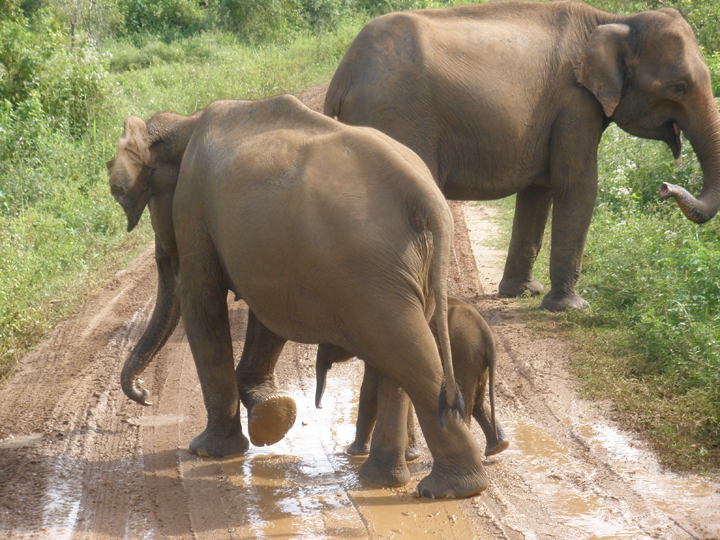
Baby on the road

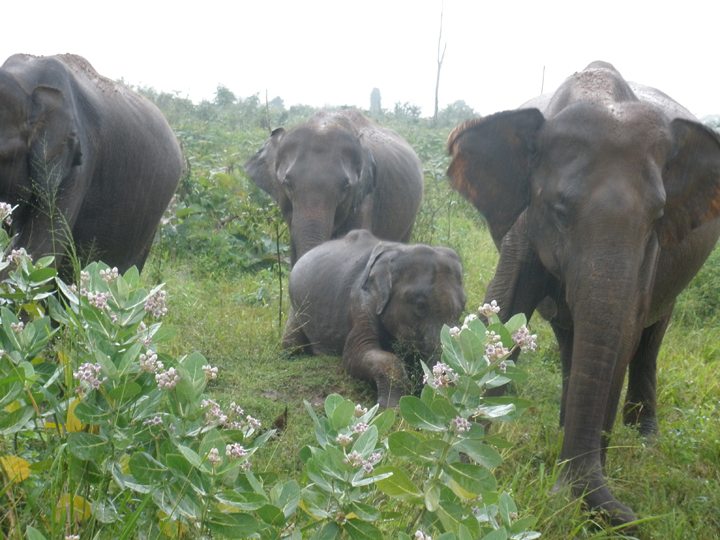
Before long we see [474]’s group, and almost immediately hear a rumble.  Unfortunately Kumara and I are still busy setting up the recording equipment, but I wait in the hopes of catching another call.  As I watch the elephants, I notice that they seem unusually “touchy-feely” today, for lack of a better word.  Continue reading

Where have all the big boys gone?

“It is absurd for a man to kill an elephant. It is not brutal, it is not heroic, and certainly it is not easy; it is just one of those preposterous things that men do like putting a dam across a great river, one tenth of whose volume could engulf the whole of mankind without disturbing the domestic life of a single catfish.”

– Beryl Markham, West With The Night

DSC_0132

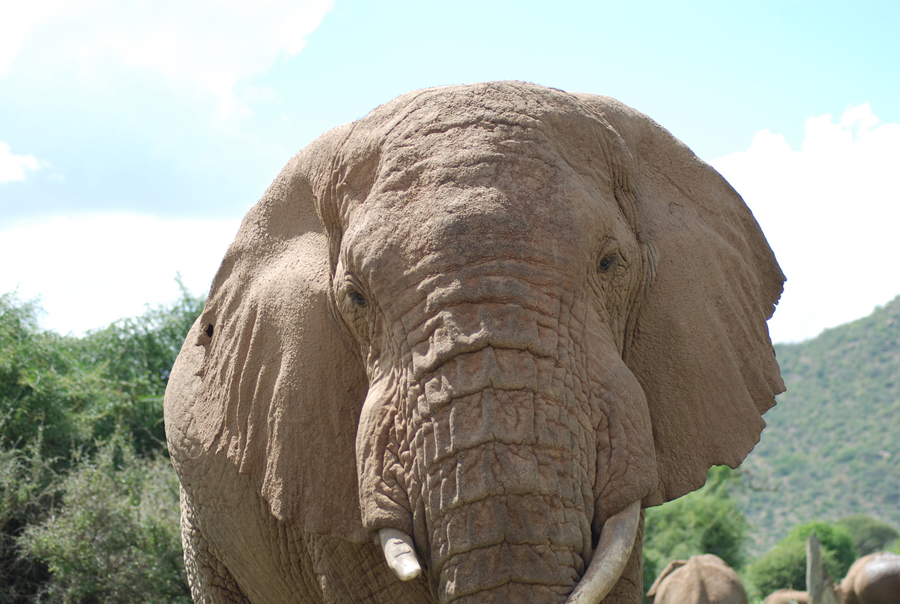
The sight of an old bull elephant is something few of us have the privilege to experience.  His features are broad and craggy, the outlines of his ears as frayed as the edges of a battle flag.  Not as beautiful as the handsome younger fellows who strut around, but magnificent and grand nonetheless.
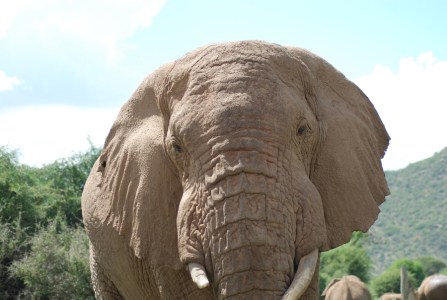
DSC_0143On my second day out in Samburu, we encountered a bull who had not been seen for at least two years.  He had short, a-symmetric tusks and a great wide head with tattered ears. After some asking around, he turned out to be Napoleon – one of the few over forty in this population, and known for many years. One rainy day we came upon the sight of Napoleon in solemn company with not one, not two, but three other equally distinguished elders.  They were Obama, Edison, and Kenyatta. I noticed they all had rather small or broken tusks. In the mix were two younger bulls.  All were peacefully munching, and eventually moved off, trailing one another into the misty downpour. Why were they gathered together in this spot and why did they leave together? Mysterious. Continue reading

Recording elephants

Guest post by Michael Pardo, Cornell University

Monday, December 31, 2012

Batik

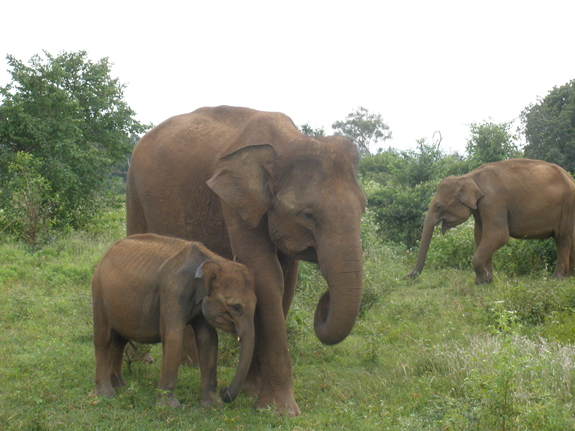
Batik and her calf

Last Monday, Sameera and I underwent a grueling six-hour bus ride (each way) to the capital city of Colombo.  Dr. Padmalal, UWERP’s collaborator for this project from the Open University of Sri Lanka, had managed to secure the approval of my research permit, and we went to pick up the document.  The long hours of sweltering heat devoid of any bathroom breaks and punctuated by the blaring of obnoxiously loud horns were worth it.  The permit allows me to record elephant vocalizations, which is, after all, why I came here.  There is only one problem:  the elephants have barely been vocalizing at all.  In fact, they seem to be doing precious little besides eating and walking.  I know that patience is key of course, but it is hard not to become a little discouraged as I wonder whether I will eventually be able to get enough sound recordings to complete my Ph.D. Continue reading

Mating pandemonium

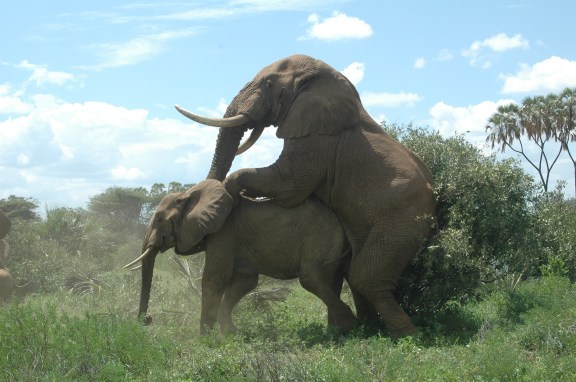
Leakey mounts

Leakey, one of the largest old bulls to appear in the Samburu population, mates with Nicky of The Artists.

Male elephants continue to grow throughout their lives, getting bulkier and broader. Older males enjoy a greater competitive advantage and higher reproductive success. Many have a characteristic time of year when they are seeking mates, and as they get older they increasingly advertise their state with strong-smelling chemical signals in their urine and temporal secretions in a condition termed ‘musth’. Younger bulls, who don’t appear to be signaling consistently or at all, may also try their chances when a receptive female is available.  But they are prone to being chased off by the bigger, more dominant males.

Continue reading

First day

Guest post by Michael Pardo, Cornell University

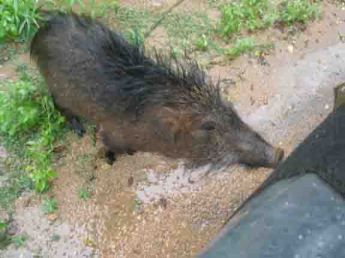
Wild boar

Curious boar.

December 18, 2012

A breathtaking expanse of bushes peppered with trees.   That is my first impression of Uda Walawe National Park as we pass through the entrance gate in the early hours of the morning.  The shrubs grow densely packed on either side of the ochre-colored road, like a vertically challenged forest.  They are interspersed with teak saplings, a reminder of the days when this park was a timber plantation.  Towering banyan trees soar above the surrounding vegetation, peacocks perched in their uppermost branches.  In the distance, I can see the blue mountains and waterfalls of Nuwara Eliya, and above them, a steely sky striated with rain-laden clouds.  A grey mongoose crosses the road ahead of us, stopping briefly to stare at our jeep before disappearing into the wall of greenery.  Flocks of Common Mynas and Spotted Doves spring into the air as we rumble past.

Continue reading

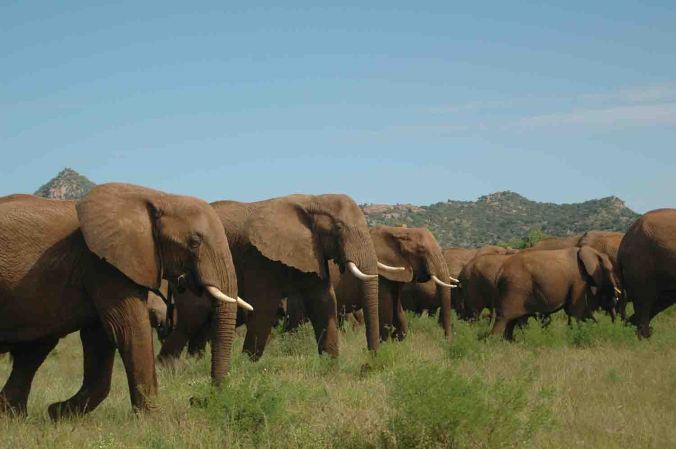
A wall of elephants

December 9 2012, Samburu

A rainstorm fills the Ewaso Nyiro river. True to its name, the water is a rich orange-brown and as thick as Thai iced tea. It gurgles alongside the camp, snaking past wide sandy banks with steep sides like miniature beaches bordered by miniature cliffs.

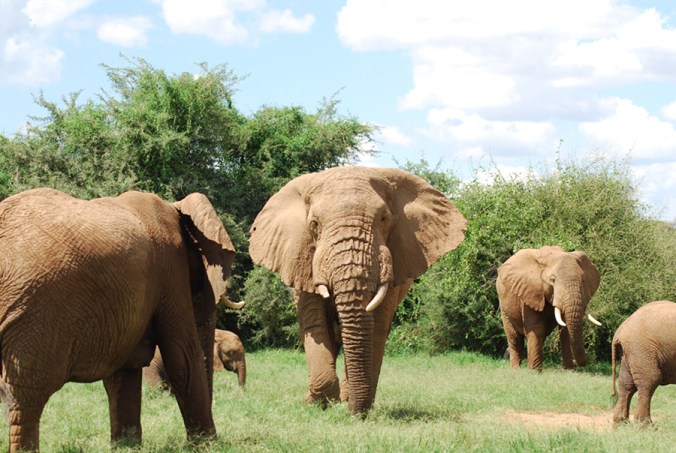
To see the elephants, the river and its shaded woodland border is the place to be in the dry season.  But these days, with water puddling up everywhere elephants are ranging further from it. The other day we came upon a vast herd on the bank. Gathered in its ranks were multiple families, but on the following days hardly anyone came down again except to cross to the other side.

A vast herd marches in unison.

A vast herd marches in unison.

Continue reading

Savannah elephants in Samburu

27 November 2011

Samburu, Kenya

A multitude of birds are chirping outside in the trees overlooking the river that snakes through this duo of national reserves in Kenya.  Samburu and Buffalo Springs sit almost squarely in the middle of Kenya. The landscape consists of low thorn bush, acacia trees, and a few grasses along the water’s edge.  Strange multi-branched “doum palms” line the riverbanks, looking a bit like coconut trees trying to evolve into something else in a hurry (see my friend Andreas Gros’ beautiful photo here). Faint blue outlines of hills rise in the distance.

Peek-a-boo!

Continue reading

Elephants, engineers of the forest

October 2012

Who dunnit?  Which animals are responsible for planting seeds throughout the forest?

Who dunnit? Which animals are responsible for planting seeds throughout the forest?

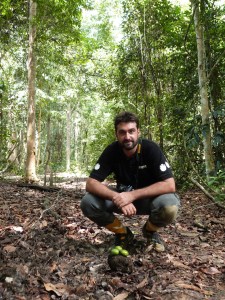
My next stop is the University of Nottingham Malaysia campus, where I meet my colleague and friend Ahimsa Campos-Arceiz.  A Spanish transplant in Malaysia, Ahimsa has spent the past year with great gusto setting up MEME (Management and Ecology of Malaysian Elephants).  I recognize the energy, it’s the same enthusiasm shared by Benoit and George, my current supervisor. What all these people have in common is a firm belief in what they do, a single-minded determination that appears never to falter. Truly something to behold. Continue reading

Borneo by boat

October 2012

Sukau, Sabah province – Borneo, Malaysia

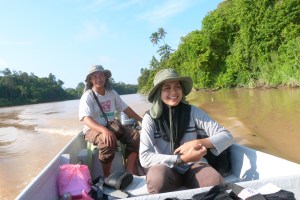
Farina_boatSukau is a sleepy little town on the eastern side of Sabah, tucked along the Kinabatangan river.  What brought me here is an unlikely acquaintance made via Facebook.  A few years ago I got a message from one Nurzhafarina Othman saying she was studying the social organization of Bornean elephants, and she had come across my thesis – could I answer some questions for her? Of course, I said, and so began a little exchange of emails about studying elephants.  I grew curious to meet Farina, who seems an unlikely candidate to be traipsing around the forest given her otherwise conservative Malay Muslim background.  Since I too come from the Sri Lankan Malay community, it seemed we had a lot in common.  Little did I know. Continue reading