The Patels Visit Udawalawe

Guest post by Yogi & Nikita Patel

We traveled to Sri Lanka to work with Trunks & Leaves in support of schools surrounding the Udawalawe National Park. We first arrived in Negombo, Sri Lanka where we were met by Deepani, who works with Trunks & Leaves, and her friend Jocelyn. We traveled by car to Udawalawe where we were joined by Sameera, the project coordinator. We visited the first Montessori preschool, operated by Sameera’s sister, Chathurika. She was gracious in showing us the school, which was closed for the holidays. She had been hard at work painting furniture and cleaning the classroom and play area for her 18 students. Her school, which is attached to her home, is surrounded by many fruit trees. Her family members supported her passion for educating children in her town.
Our next stop was school teacher Shiromi’s home. We met with Shiromi who greeted us with her family and offered the most amazing homecooked treats. We chatted about her work in the village and her school, Dimuthu preschool. We met with Shiromi again the following day, where we observed the children in her classroom. The parents were very supportive of Shiromi and came to the school with their children even though they were supposed to be on holiday. We got to sing and dance the “hokey pokey”.
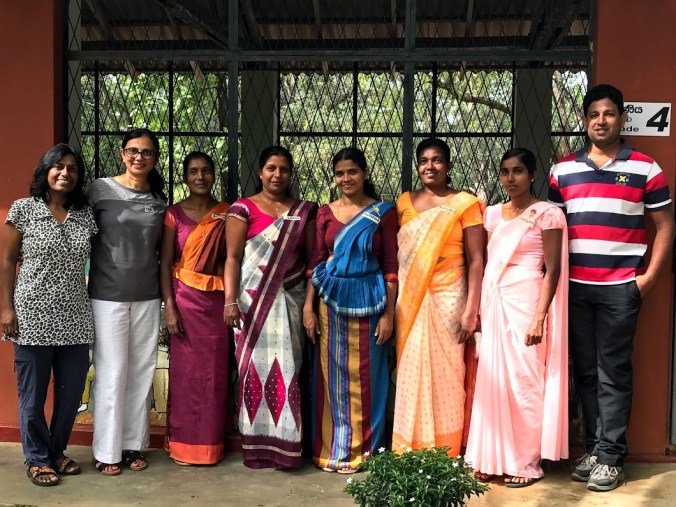
Deepani, Yogi and Sameera with the first cohort of preschool teachers whose schools received support from Trunks & Leaves’ sponsors (photo courtesy of Yogi Patel).
Continue reading

The Brief Life of [T212]

By SdS & USW

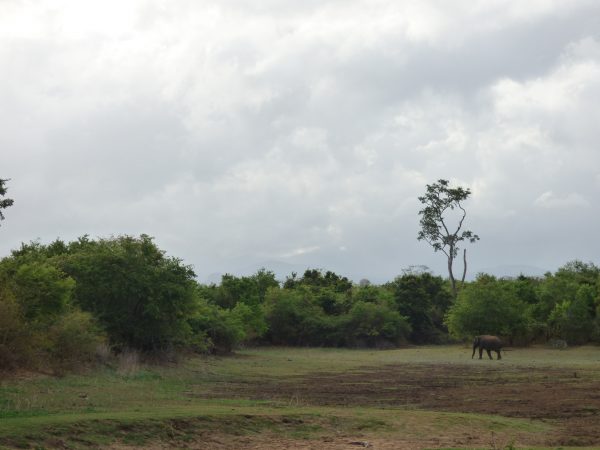
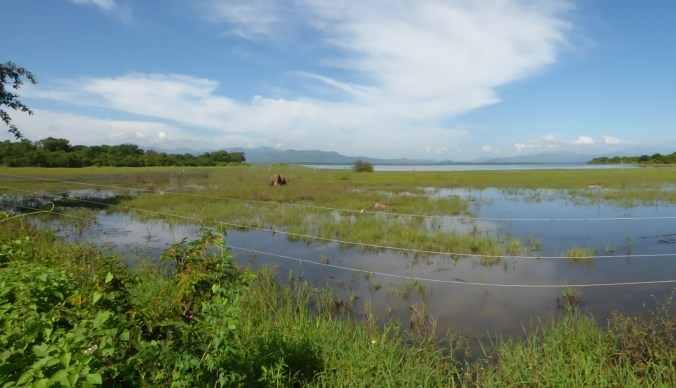
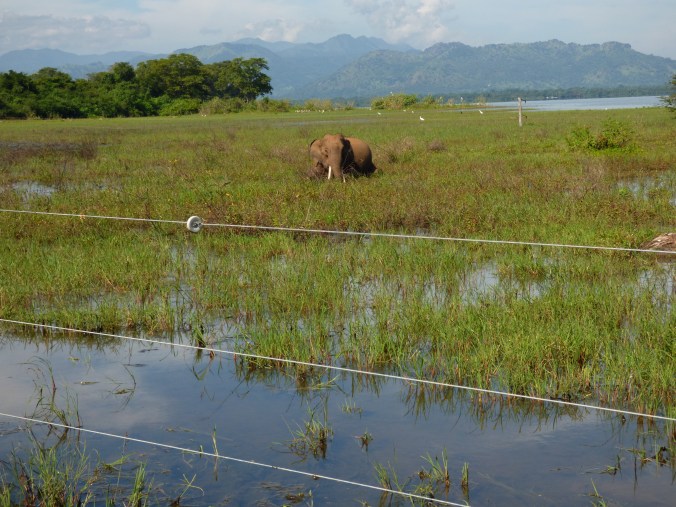
All looks peaceful…


…until you look closer.

He looked as though he were sitting down, surrounded by grass and reeds, his back against the intense blue sky, reflected in the mirror of the reservoir. Countless people had passed by, assuming he was just resting as he ate. You could see him easily from the road, just a few tens of meters from the electric fence along park boundary, close to the spillway.

But hours later, when he still hadn’t moved, someone realized something was wrong. Continue reading

Stake-out, Part 1: Where did all the elephants go?

by SdS

A lone male at the reservoir was all we saw…

Back in 2007, 2008 and 2009 UWERP devoted intensive effort to surveying all parts of the park in order to make an estimate of the elephant population. Ten years on, it is time to re-do this exercise. What that means is that for a few specific months each year, we have to try and cover the park more evenly in space and time than we normally do when studying behavior. The trouble was, the elephants were missing. For much of the preceding weeks elephants had been scarce, so much so that guests were leaving annoyed. This was not unusual – I remembered that during the hottest and driest months, elephants usually stayed in the shade until late afternoon even back then. I supposed they were resting and conserving their energy until nightfall. But we could never know for sure. Continue reading

Investing in The Next Generation

By SdS

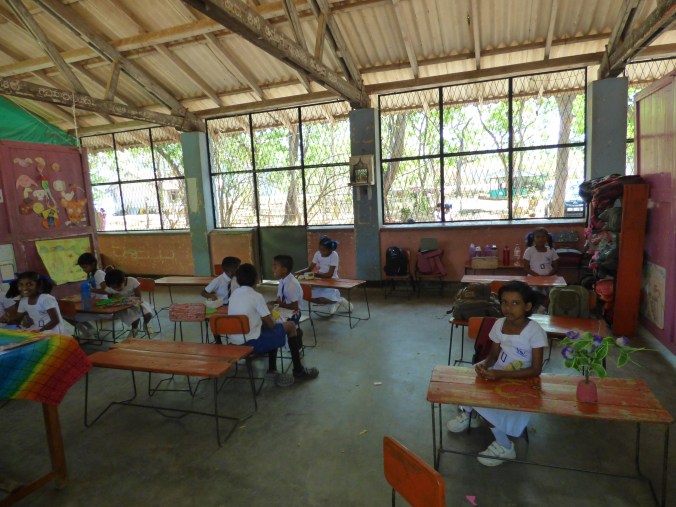
Students at Kalawelgala elementary school can now learn in peace thanks to the metal grilles installed on the windows, which prevent monkeys and other animals from getting in.

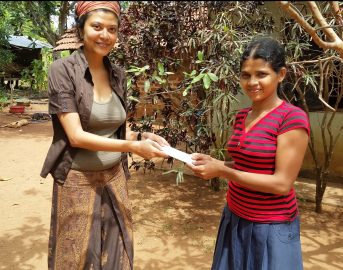
Back in June we held a crowdfunding campaign to support our work with some of the villages bordering Udawalawe National Park and the Wetahirakanda corridor. Thanks to our sponsors, we were able to raise $6000 for improvements at five pre-schools (Montessories) and an elementary school. We re-visited each of the schools in July to confirm their needs. In August it was my pleasure to visit with each of the teachers in order to provide the initial installments of funds. As the schools were on break, we visited several at their homes. Each teacher undertook individual accountability for showing that work was progressing and funds were being spent as intended.

Ms. Lakshimini accepts the sponsorship.

The first stop was with Ms. Lakmini of Pubudu Pre-school. Continue reading

The Folly of Fences

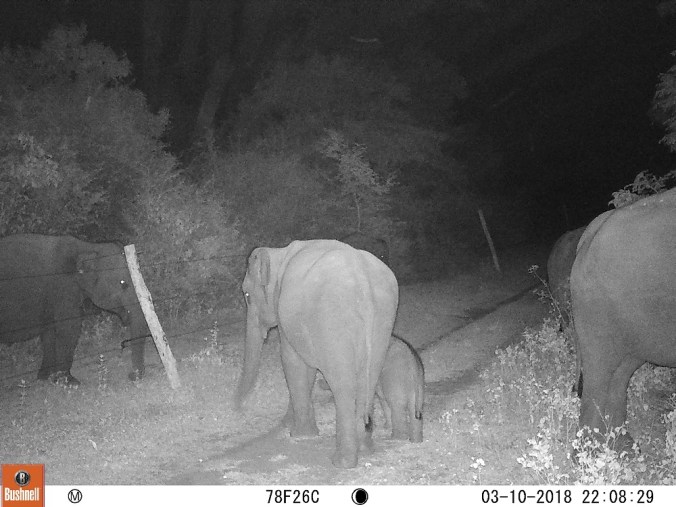
Electric fences that split forested habitat are all too common. As a result, occurrences like this are frequent.

Sri Lanka is part of the ancestral home of Asian elephants and a skeleton traced to this population now serves as the definitive “type” specimen. They existed before settlers colonized and cultivated, before the ancient tanks were built, before the kings and kingdoms, colonizers and governments. This was their land long before humankind set foot on it to set about defining visible and invisible boundaries for ourselves and everything else. Yet here we are, and we are here to stay, so our fates are now linked. An elephant is more than a mere animal or symbol. It is the most un-ignorable occupant of a swiftly vanishing world that harbors an infinitely old and precious natural heritage. It is also a force of nature that annually claims human lives. Therein lies the crux of the difficulty. There’s just one question we need to ask ourselves: do we want elephants (and their bretheren) to persist on this little island, or not? I pose this question on World Elephant day because we are at a juncture that will decide the outcome. Continue reading

Envisioning The Future

As we wrote earlier, our newly launched Coexistence Project seeks to find ways that people and elephants can continue to share space while meeting the needs for security on both sides. For people, this means economic as well as physical safety. Continue reading

The Coexistence Project

Update June 20th: We are halfway through the campaign & on track with reaching halfway to our goals of raising $5000 from at least 40 people! Help us close the gap by multiplying your impact on Bonus Day, June 20th – the top 5% of fundraisers within that 24 hour period will be eligible for matching support from Global Giving! Donate now >

Elephant and people observe each other across an electric fence.

The Udawalawe Elephant Research Project (UWERP) started as an attempt to understand the behavior and ecology of elephants, and yield information useful for conservation of this elephant population, and perhaps even the species. But it was always evident to us that understanding the elephants’ side of the story was important, but only half the picture.

It has become fashionable in conservation to speak about the need for “coexistence” with wildlife, as opposed to conflict. Elephants are a prime example, being a conflict-prone species, with large area requirements. Because elephants can never survive purely within the confines of national parks and protected areas, this means finding ways that people and elephants can share their space. But you may wonder – elephants and people have been living on the same landscapes for thousands (if not millions) of years, how was this possible? Weren’t they already coexisting? Continue reading

Mind Over Matter

Those sneaky sneaks!

It was a perfectly framed shot of a young elephant breaking the electric fence, perhaps even looking a little gleefully smug about it. Still this was a relatively common incident, and while it was nice to catch at least one culprit in the act, the observation was hardly a breakthrough (pun intended). But as we watched on, it was what came next that was so beautifully, endearingly meaningful that we couldn’t help watching again, and again, and again. Continue reading

Save Our Skins

“The use of elephant skin in Asia is not new. Surveys by the nongovernmental organization Traffic found elephant skin openly on sale in Mayanmar’s Mong La market in 2006,2009, and 2014, with ever larger quantities on show each year. Yet these findings, and their implications for Asian elephant conservation, were overshadowed by the conservation world’s focus on the poaching of elephants for ivory and, as a result, solely on efforts to save African elephants.”

Skinned: The growing appetite for Asian elephants. Report by Elephant Family, April 2018

If you ask people what the leading threat to elephants is, most will likely respond: “ivory poaching”.  But if you take a look at the pictures posted throughout this blog, you will see that this does not pose a risk to the majority of Asian elephants, which have no tusks.  All females and most calves are tuskless, and some males as well. Instead, Asian elephants are threatened by habitat loss, conflicts with people, smuggling of live babies and now lately – poaching for skin.

Warning: this post contains graphic content. Continue reading

Elephant Evening in San Diego

If you are in San Diego or La Jolla Saturday May 19th, swing by the National Geographic Gallery and join us for the 2nd ever Elephant Evening. In honor of #EndangeredSpeciesDay we will screen the documentary from 5:30-6:30pm and follow up with a Q&A until 7:30pm.  Kid friendly and alcohol-free!