Wildlife-Viewing is Not Thrill-Seeking

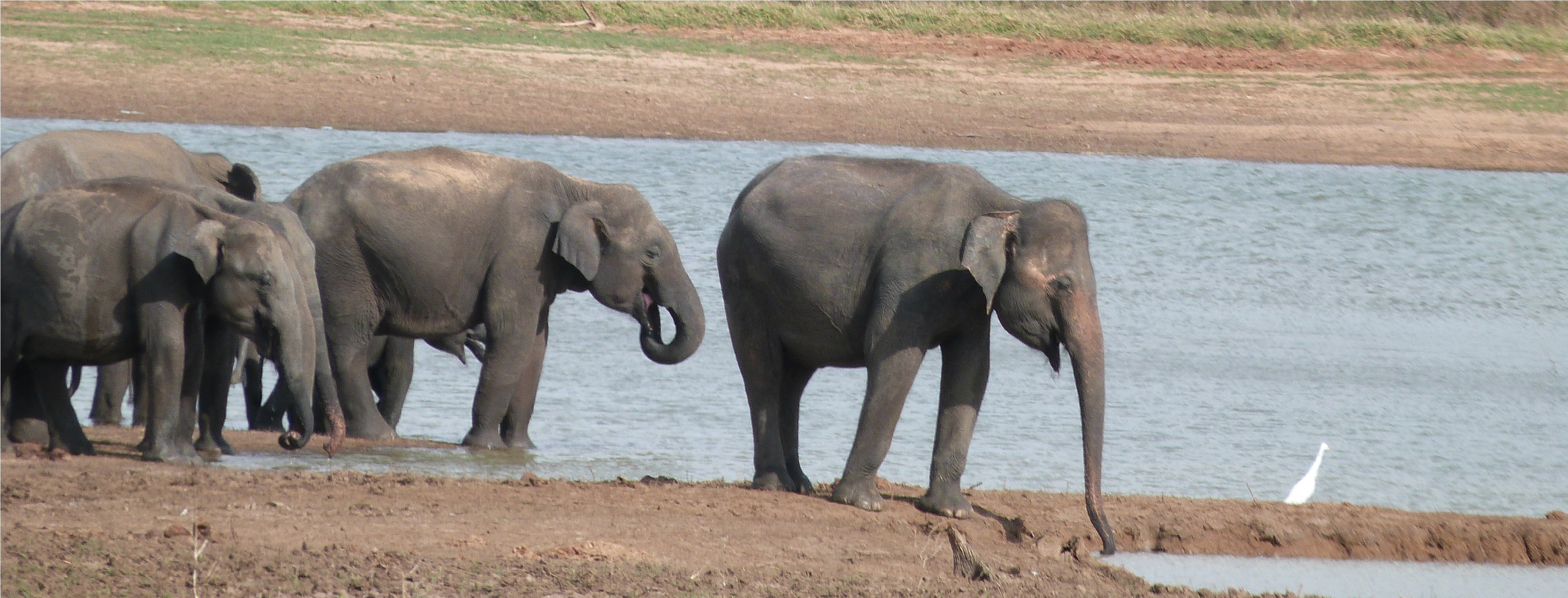
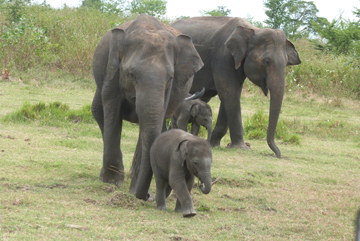
Baretail and Batik with their newborns.

Baretail and Batik with their newborns.

We sometimes forget how fortunate we are to be able to watch peaceful, calm, habituated elephants in Udawalawe.  It’s easy to take for granted when they stand there, threshing their grass en masse, as though it were the most natural thing in the world to have a horde of humans gawking at them from a few meters away. This post may seem self-evident to a younger generation of wildlife watchers, who have grown up in a world packed to the breaking point with human beings and who realize that wilderness is an increasingly rare and precious thing.  But it may challenge the thinking of some, particularly those of an older generation, for whom wilderness was a vast and ominous space teeming with dangerous things.  For the latter, seeing wildlife might satisfy the need for a thrill in the same way as watching a frightening movie or visiting an amusement park – especially if that wildlife acts fierce and ferocious, such as charging elephant might do. This view still prevails among more than a handful of people today, who might think that seeing the “tame” elephants of some national parks is not as much fun as getting a much more “wild” experience in more secluded areas where the animals elicit more mutual terror.

If this is you, or someone you know, then read on and share. This post is for you.
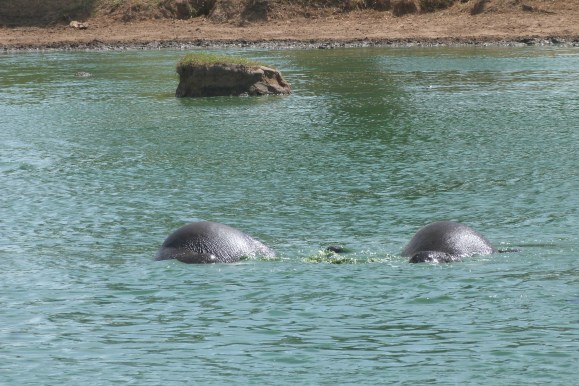
Loch Ness monster?

Loch Ness monster?

Continue reading

Elephant Ecosystems – An Earth Day Special!

Rob Nelson of Untamed Science helped us realize this long-time goal to create little animated eco-messages about elephants.  Here’s the first installment!

Elephant Ecosystems

Or: Why do we need large wild animals?

Teachers, students and would-be conservationists: you can download this video and translate it into your own language! Be sure to let us know so we can upload it to Trunks & Leaves’ channel on YouTube.  Get the animation and script hereYou’ll also find links to the scientific papers that inspired this video.

(See it in Malay here!)

Related post: Who misses the mega-fauna, if they dissappear?

Who misses the mega-fauna, if they disappear?

Guest post & graphics by Nitin Sekar, Princeton University

DSC03329

A seedling germinates from elephant dung.

All around the planet, the world’s largest animal species are becoming very rare. Whether we speak of giant tortoises, large wild cows like gaur, rhinoceroses, hippos, tigers, or whales, local extinction or extreme reductions in range size and population are the norm for species that are too big or too slow-reproducing to withstand human conflict or the human hunter. Most people would probably agree that it is a shame to lose these species. But what about functionally? Are the largest animals critical to any ecological processes? When there are declines in honey bee populations, human agriculture suffers; if nitrogen fixing plants are absent from a forest, other plant species may be affected. When the largest animal species go missing, do any other species miss them? Aside from a few cases, we don’t know! This is an active area of research.

We decided to explore the role of Asia’s largest land mammal—the Asian elephant (Elephas maximus)—in seed dispersal, which helps maintain the diversity of tropical forests. Continue reading

How does empathy help elephants?

By SdS

P1490826 P1490832

P1490840

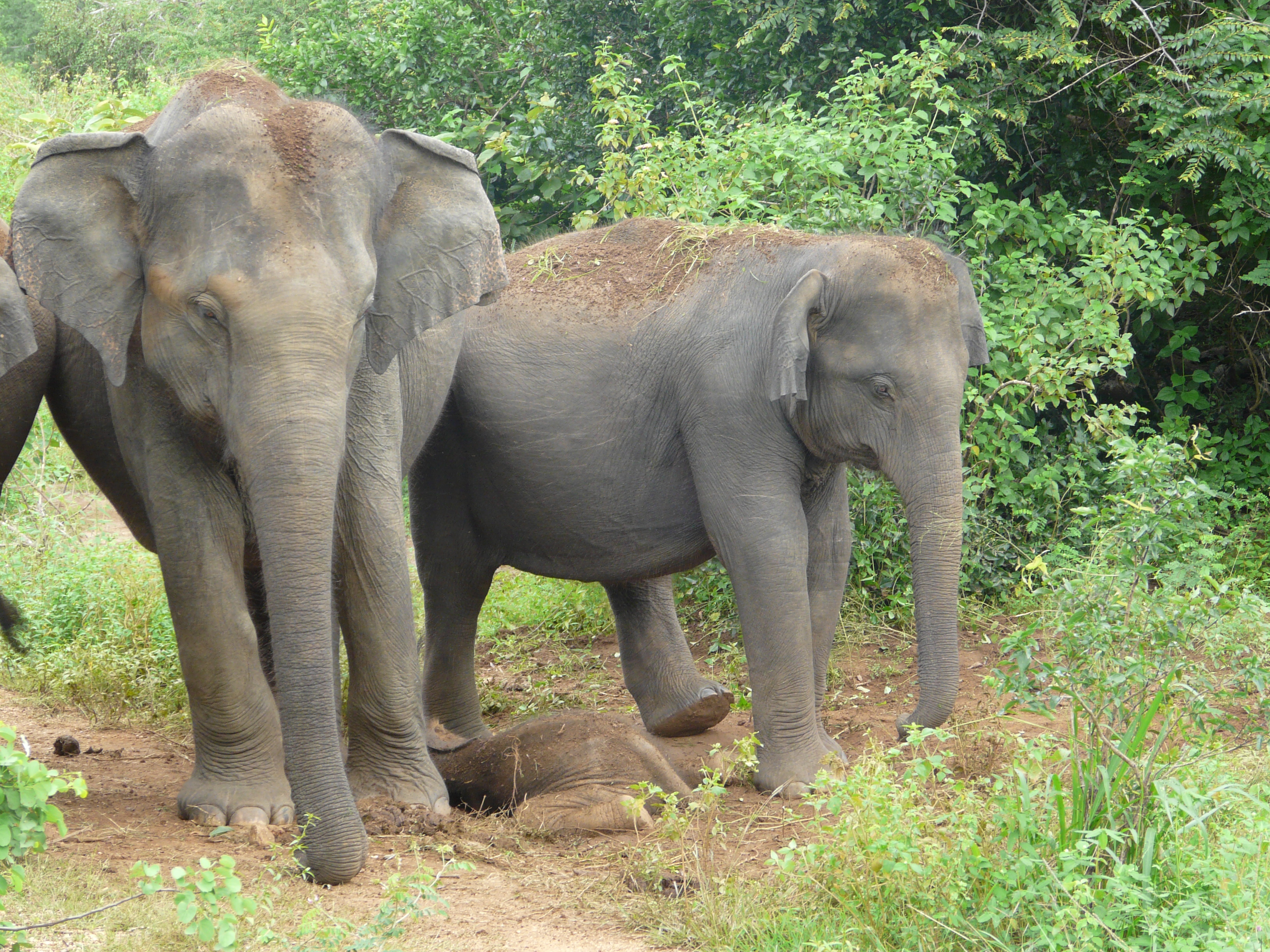
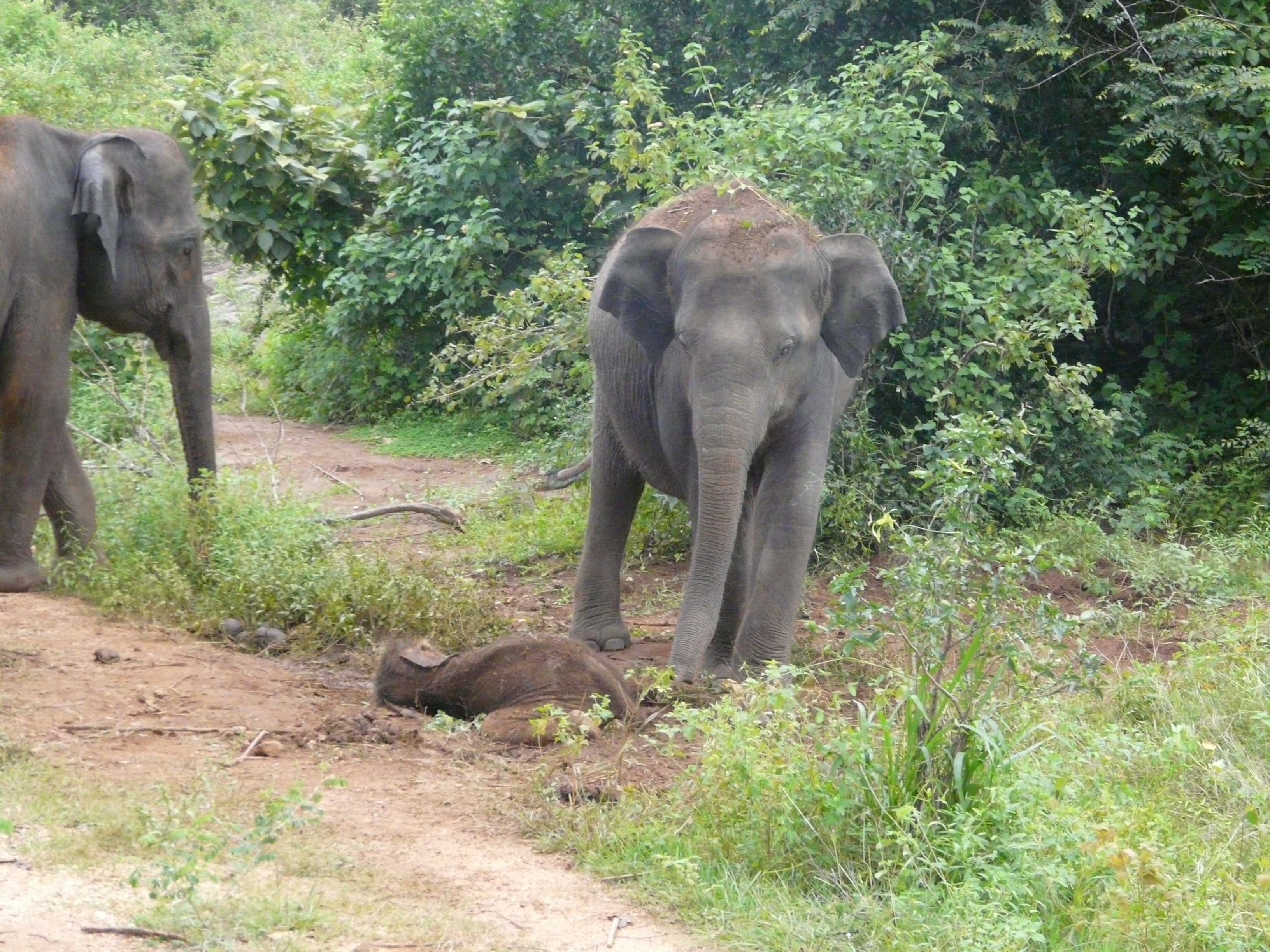
A small family of elephants in Uda Walawe wanders upon a dead calf which does not belong to them. Yet they show great interest, touching and hovering over the body for hours, refusing to let any observers near until they finally decide to move off. Photos: UWERP

In the past week a paper on reassurance behavior in elephants by Plotnik et al. in PeerJ has been generating quite a bit of buzz. The study, which you can learn more about from the researchers themselves here, collected a series of observations on a group of captive elephants in Thailand documenting how they reacted when one of their companions was distressed.  It showed that when some individuals were disturbed in some way and expressed their distress, other individuals approached them and interacted in ways (such as touching, vocalizing) that suggested that they might be trying to comfort or console their companion.  Such behavior would indicate that elephants have the capacity for empathy, along with a handful of other species.

The title of this post is meant to work on at least two levels. First, we might wonder at a biological level – what is the function of the curious  behavior elephants sometimes show toward others in distress? Why might it have evolved? Whom does it benefit? Second, we might wonder at a practical level – should the capacities of elephants endow them with additional conservation value? Should it matter on the ground? So today, the first ever World Wildlife Day, I’d like to examine these two sets of questions, which are very distinct. Continue reading

Six year update on the Uda Walawe elephants

The Uda Walawe Elephant Research Project is now approaching eight years, a unique study of Asian elephants.  Because elephants are such long-lived animals, it takes a long time to understand them – particularly for important variables like who reproduces and how often.  Studies of wild African elephants have been conducted at multiple sites over 10 years or more (in some cases as many as 40!), but this has not been the case for the Asian species in the wild. There have been long-term records of Asian elephants  populations in captivity from places like Myanmar, where they have long been used in timber camps, and it’s interesting to see how the two compare.

This past December we published a comprehensive paper analyzing six years of data on the wild Asian elephants of Uda Walawe National Park, Sri Lanka. This paper is one of a kind as it has been difficult for researchers to successfully monitor wild Asian elephants due to the difficulty of their habitats, and the logistical challenges of conducting steady research over longer time periods.

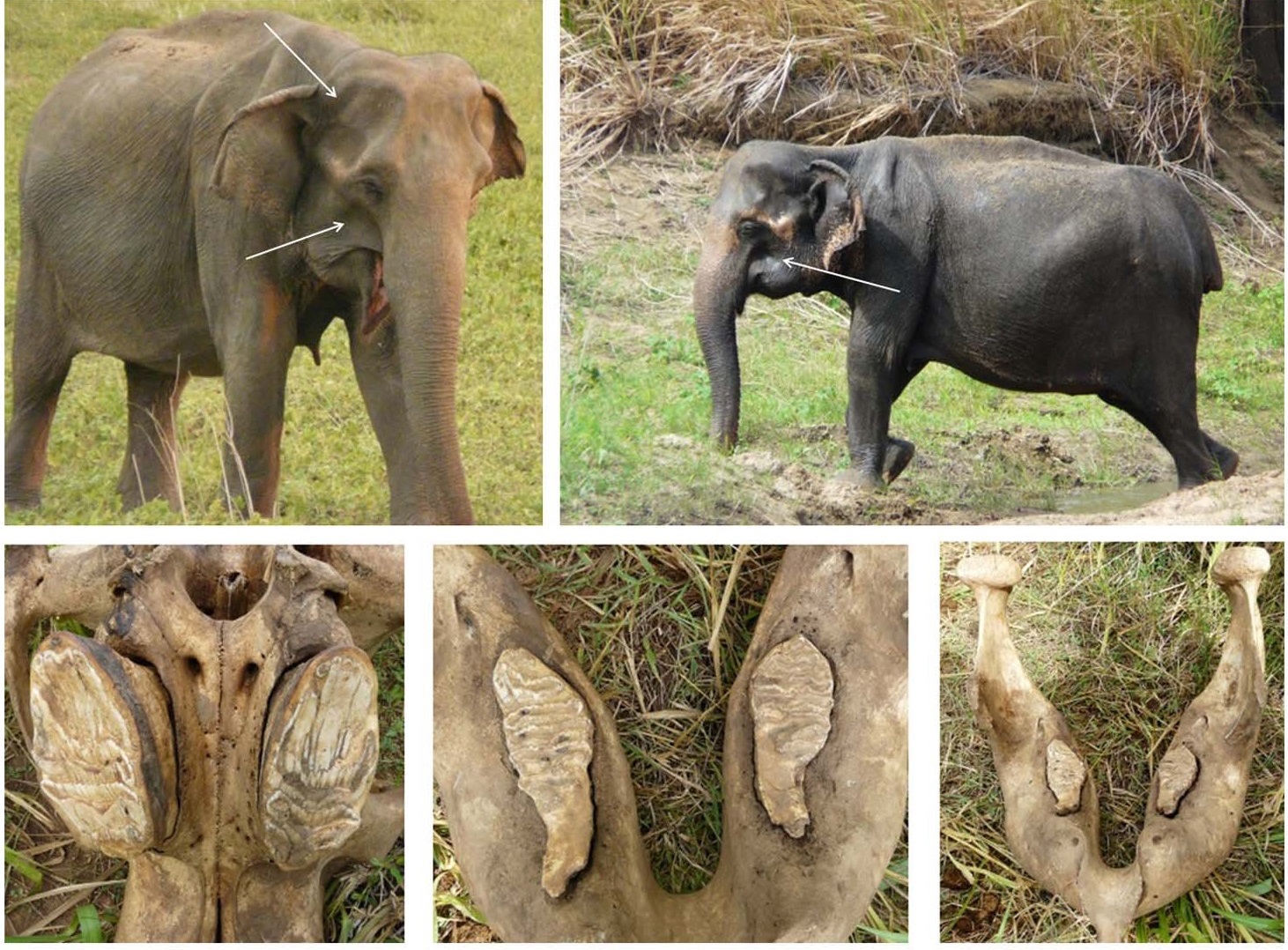
Tailless was one of the venerable elders of our population. She was especially important for this study for two reasons: she was unmistakable even after dying due to her uniquely broken tail, and her jaw was recoverable. The wear on her teeth showed her age to be around 60 or more, meaning female elephants in Uda Walawe can potentially live out their full lifespans.

Tailless was one of the venerable elders of our population. She was especially important for this study for two reasons: she was unmistakable even after dying due to her uniquely broken tail, and her skull and jaw were recoverable. The wear on her teeth showed her age to be around 60 or more, meaning female elephants in Uda Walawe can potentially live out their full lifespans. We aged other females in the population relative to Tailless.

Continue reading

Field notes

Baretail’s Tale

By TV Kumara

Baretail with the Bs at the Uda Walawe reservoir.

Baretail (right) with the Bs at the Uda Walawe reservoir.

Baretail is a female elephant in Uda Walawe National Park (so named as her tail has no hair). She is a member of ‘B’ unit, because ‘B’ is the first letter in names – e.g. Baretail, Batik, Bali, Bashi, Blanche, Bitsy and Bianca. Continue reading

Asian elephants distinguish the calls of feline predator species

In September, Vivek Thuppil and Dr. Richard G. Coss from UC Davis published a paper in the journal Biology Letters regarding wild Asian elephant behavior towards pre-recorded tiger and leopard growls while attempting to crop raid. They found out that elephants silently retreat from tiger growls, but aggressively vocalize their presence when confronted with leopard recordings. According to previous research, tigers tend to prey on elephant calves while leopards are essentially harmless. This study is the first to investigate the inner-workings of elephant antipredator behavior at night.

Direction in which elephants emerge from the forest to trigger playback (courtesy of Vivek Thuppil)

Continue reading

Elephants and electricity

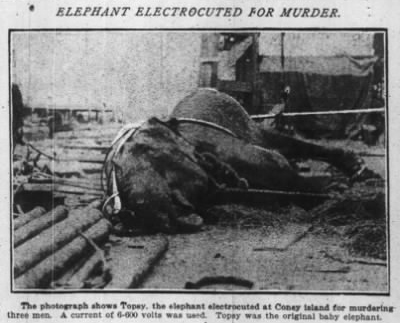
Topsy the circus elephant, electrocuted in 1903 by Thomas Edison's technicians in carrying out her death sentence while demonstrating the dangers of AC current.

Topsy the circus elephant, electrocuted in 1903 by Thomas Edison’s technicians in carrying out her death sentence while demonstrating the dangers of AC current. Photo: Chicago Tribune

By Ilja Van Braeckel

New York, anno 1903. The city stirs as dawn breaks. Woken up by the distant rumble in the neighboring tenement, you might join the breakfast table. You might appreciate your morning cup of chicory root coffee and nibble on some hard-earned buttered toast. You might scratch your head and raise an eyebrow or two as you open the newspaper and read how none other than Thomas Edison electrocuted Topsy, the 28 year female Asian elephant. You might learn how the murderous ‘beast died without a trumpet or a groan’, in Edison’s slanderous attempt to discredit his rival’s discovery of alternating current, per demonstration of its potential hazard.

Uda Walawe today, some 14 000 km and 110 years away. Neither Topsy nor Edison outwitted the tusk of time and all that remains of the unfortunate elephalectric turn of events is the original video footage and the alternating current that proved innovative. In fact, electricity is now commonly used to separate humans from other animals and this is no different in Uda Walawe, where the national park is delimited by an electric fence line. In reality, however, frequent power cuts make its efficiency questionable to say the least and the elephants, keen creatures that they are, seem to have learned to jostle over the fence poles. Continue reading