EARS ID Database released

ears

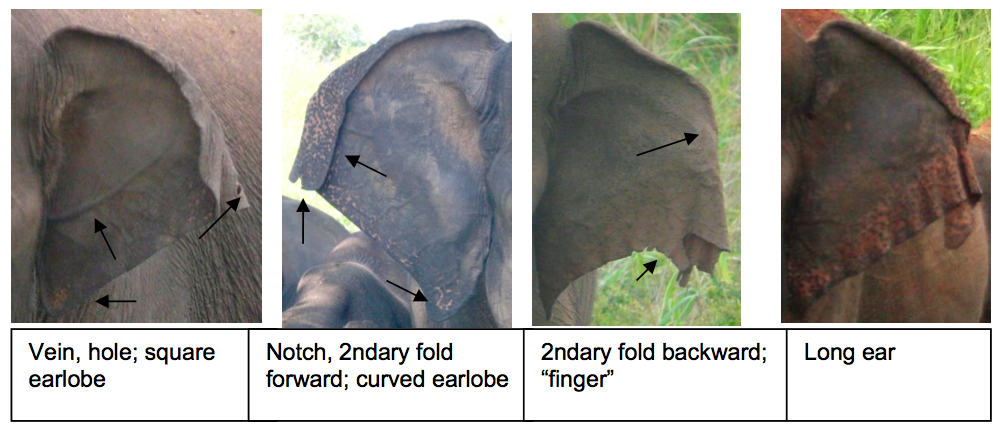
We are pleased to release EARS (Elephant Attribute Recording System), designed by intern Ilja Van Braeckel. EARS is an MS Access database that permits quick searching of elephant ID photos. Users enter new ID features using a simple Excel worksheet which can be copied directly into Access. They can then query the database with a set of check-boxes for prominent natural features of individuals, which returns matching IDs and photos.  This should narrow the search substantially and cut down search time.  We recommend that a separate set of high-resolution ID photo files are maintained in parallel at another location and that once the search is narrowed final identifications are confirmed using these external files. The idea is for the database to aid, not replace, more detailed photos and human memory.

We share this tool freely hoping it will help others conduct individual-based studies of Asian elephants, and modifications may be made as required. Variations of it may also be useful for other species and contexts.

The database, excel sheet and a user manual can be found at:

http://trunksnleaves.org/resources.html

de Silva S, Webber CE, Weerathunga US, Pushpakumara TV, Weerakoon DK, et al. (2013) Demographic Variables for Wild Asian Elephants Using Longitudinal Observations. PLoS ONE 8(12): e82788. doi:10.1371/journal.pone.0082788
Asian elephants distinguish the calls of feline predator species

In September, Vivek Thuppil and Dr. Richard G. Coss from UC Davis published a paper in the journal Biology Letters regarding wild Asian elephant behavior towards pre-recorded tiger and leopard growls while attempting to crop raid. They found out that elephants silently retreat from tiger growls, but aggressively vocalize their presence when confronted with leopard recordings. According to previous research, tigers tend to prey on elephant calves while leopards are essentially harmless. This study is the first to investigate the inner-workings of elephant antipredator behavior at night.

Direction in which elephants emerge from the forest to trigger playback (courtesy of Vivek Thuppil)

Continue reading

A Trunkful of Puzzles

By Lizzie Webber, University of Stirling 

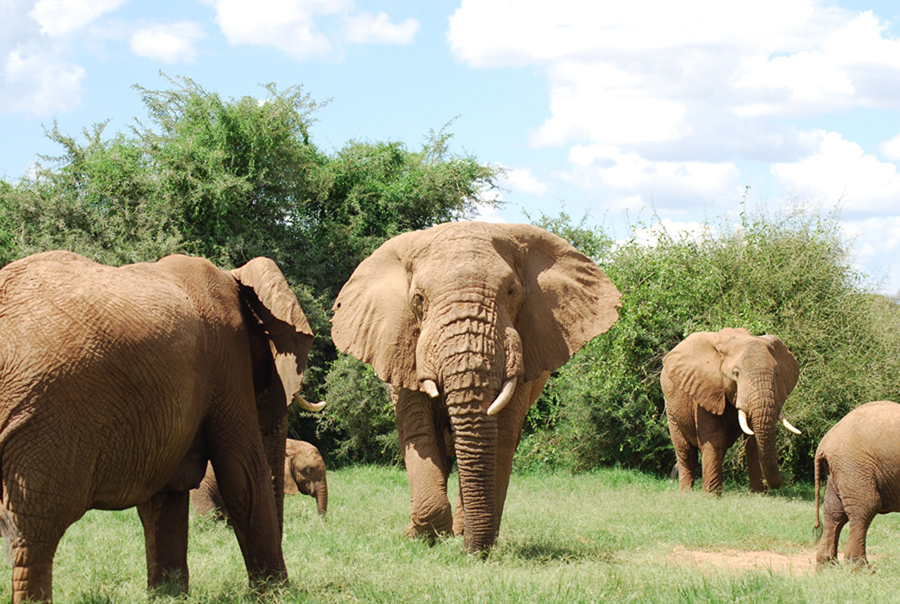
2013: Sub-adults trunk wrestling with [t458] and [c458_12] nearby

2013: Sub-adults trunk wrestling with [t458] and [c458_12] nearby.

After studying the elephants in Uda Walawe National Park (UWNP) for three field seasons, many of their IDs and personalities are now firmly rooted in my memory. This has allowed me to continue unravelling some identity puzzles in my study while bridging together my field seasons from 2011, 2012 and 2013.

In 2013, [c458_12] (the calf of [458], born in 2012) was one of the most playful characters of the season. A male calf, he was often off with the older crew of juveniles and sub-adults (possibly cousins) who hung out with his family unit. Continue reading

Elephants and electricity

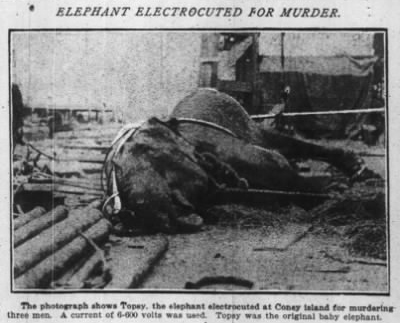
Topsy the circus elephant, electrocuted in 1903 by Thomas Edison's technicians in carrying out her death sentence while demonstrating the dangers of AC current.

Topsy the circus elephant, electrocuted in 1903 by Thomas Edison’s technicians in carrying out her death sentence while demonstrating the dangers of AC current. Photo: Chicago Tribune

By Ilja Van Braeckel

New York, anno 1903. The city stirs as dawn breaks. Woken up by the distant rumble in the neighboring tenement, you might join the breakfast table. You might appreciate your morning cup of chicory root coffee and nibble on some hard-earned buttered toast. You might scratch your head and raise an eyebrow or two as you open the newspaper and read how none other than Thomas Edison electrocuted Topsy, the 28 year female Asian elephant. You might learn how the murderous ‘beast died without a trumpet or a groan’, in Edison’s slanderous attempt to discredit his rival’s discovery of alternating current, per demonstration of its potential hazard.

Uda Walawe today, some 14 000 km and 110 years away. Neither Topsy nor Edison outwitted the tusk of time and all that remains of the unfortunate elephalectric turn of events is the original video footage and the alternating current that proved innovative. In fact, electricity is now commonly used to separate humans from other animals and this is no different in Uda Walawe, where the national park is delimited by an electric fence line. In reality, however, frequent power cuts make its efficiency questionable to say the least and the elephants, keen creatures that they are, seem to have learned to jostle over the fence poles. Continue reading

Morning walk

By Ilja Van Braeckel

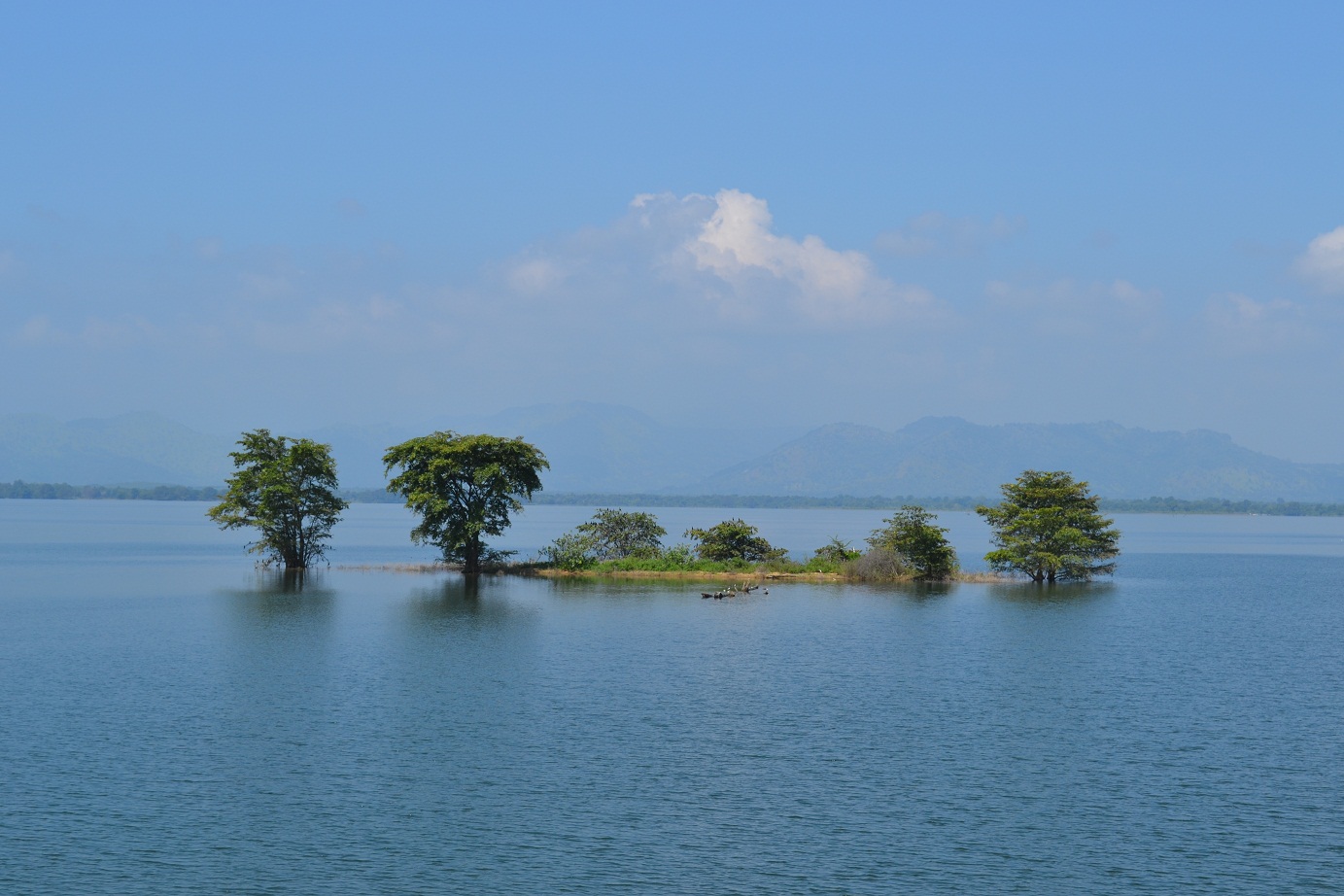
The island that is not an island.

The island that is not an island.

On a beautiful Sunday morning, I left for the Uda Walawe reservoir. I had traveled this way before, and I knew what to expect. This man-made reservoir is located within the national park’s boundaries, and is separated from the road by the electric fence. Being approximately 3400ha in size, it is a significant source of hydroelectricity, and I had high hopes for spotting wildlife. A good hour and my morning King coconut later, the first specks of reflected sunlight started to appear on the horizon between the trees. The sky was particularly clear and there wasn’t a sigh of wind. I quickened my steps, and, non-compliant to popular advice, kept walking towards the light in a steady pace. A few specks made way for hundreds, and then thousands, and with every step I gained, the view became more spectacular, as if the reservoir invited you kindly to acknowledge its splendor. Continue reading

Where have all the big boys gone?

“It is absurd for a man to kill an elephant. It is not brutal, it is not heroic, and certainly it is not easy; it is just one of those preposterous things that men do like putting a dam across a great river, one tenth of whose volume could engulf the whole of mankind without disturbing the domestic life of a single catfish.”

– Beryl Markham, West With The Night

DSC_0132

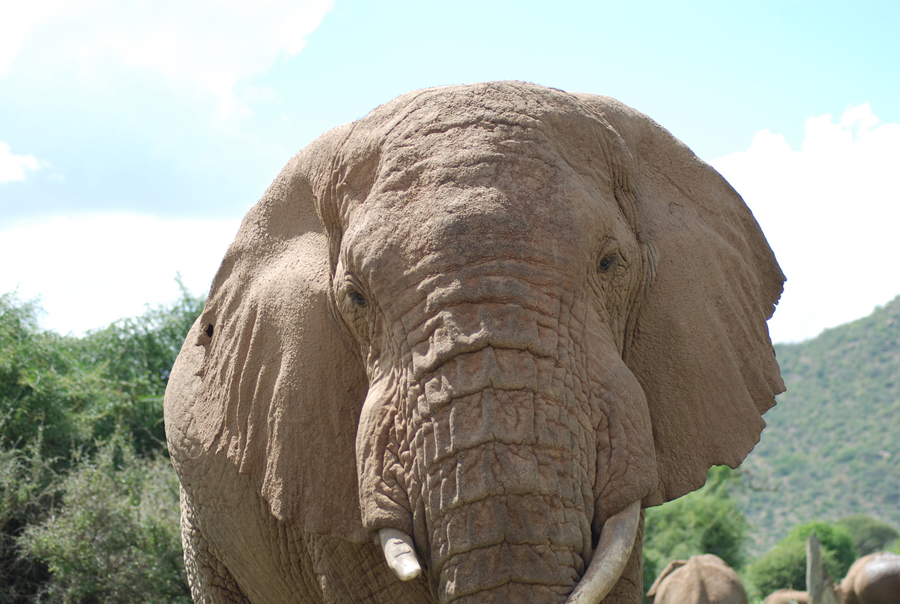
The sight of an old bull elephant is something few of us have the privilege to experience.  His features are broad and craggy, the outlines of his ears as frayed as the edges of a battle flag.  Not as beautiful as the handsome younger fellows who strut around, but magnificent and grand nonetheless.

DSC_0143On my second day out in Samburu, we encountered a bull who had not been seen for at least two years.  He had short, a-symmetric tusks and a great wide head with tattered ears. After some asking around, he turned out to be Napoleon – one of the few over forty in this population, and known for many years. One rainy day we came upon the sight of Napoleon in solemn company with not one, not two, but three other equally distinguished elders.  They were Obama, Edison, and Kenyatta. I noticed they all had rather small or broken tusks. In the mix were two younger bulls.  All were peacefully munching, and eventually moved off, trailing one another into the misty downpour. Why were they gathered together in this spot and why did they leave together? Mysterious. Continue reading

Elephants, engineers of the forest

October 2012

Who dunnit?  Which animals are responsible for planting seeds throughout the forest?

Who dunnit? Which animals are responsible for planting seeds throughout the forest?

My next stop is the University of Nottingham Malaysia campus, where I meet my colleague and friend Ahimsa Campos-Arceiz.  A Spanish transplant in Malaysia, Ahimsa has spent the past year with great gusto setting up MEME (Management and Ecology of Malaysian Elephants).  I recognize the energy, it’s the same enthusiasm shared by Benoit and George, my current supervisor. What all these people have in common is a firm belief in what they do, a single-minded determination that appears never to falter. Truly something to behold. Continue reading