Fencing the conflict

by DJ and USW

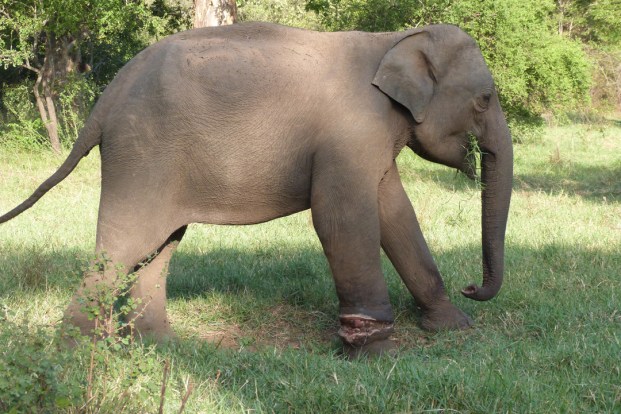
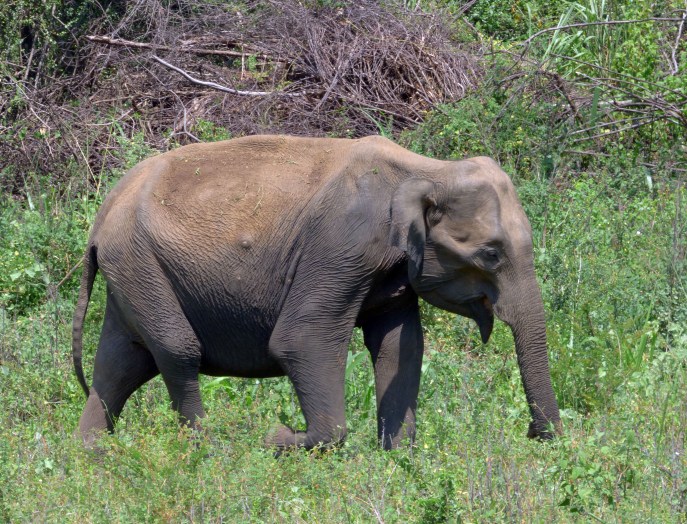
A female elephant was seen on the corridor - note the gut shot wounds

A female elephant was seen on the corridor – note the raised bumps on the skin, which are suspected to be old gunshot wounds.

Uda Walawe elephants have access to nearby protected areas (managed by the Department of Wildlife Conservation) through two separate “corridors;” Dahayyagala, connecting the park to the proposed Bogahapattiya Sanctuary on the northern boundary and Wetahirakanda, connecting it to Lunugamwehera National Park on the eastern border. Elephants can be found outside the park pretty much all along the border except for the southern section. The identified corridors, however, are too narrow at some places (500-1000m). Corridor boundary is marked by electric fencing. The existing fences sometimes run too close to human settlements and at other times they run through forested habitats leaving elephant needs (like water holes) outside the corridor. In such cases, those who maintain electric fences have to walk into elephant habitats for a few kilometres daily and that doesn’t sound practical (as a result, some parts of the fence easily go non-functional).  Given the inefficiency of fenced boundaries and escalating human elephant conflict in the area, the Department has taken a very timely decision to re-define corridors and upgrading electric fences to better serve both humans and elephants. The plan is that eventually the corridors will be broadened while the existing fences will be lengthened and strengthened. Continue reading
Changing Shades of Green

by DJ and USW

p1550668_vegetation_year2011

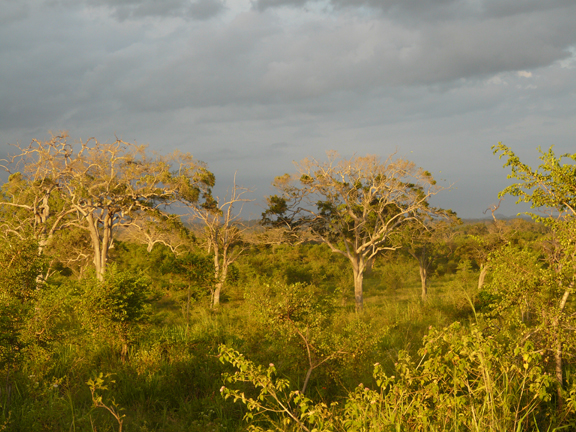
Picture taken in 2011 shows scattered trees and grass species in between

If your garden is left unattended it grows wild after several seasons. Eventually, there will be a mini-forest of a few species carefully chosen by a natural process. This is an ecological succession. The same takes place in the wild. Once a habitat is disturbed but then left undisturbed by humans, it goes through a series of structural changes in the vegetation with time. Continue reading

Evolving A More Egalitarian Elephant

coverphoto

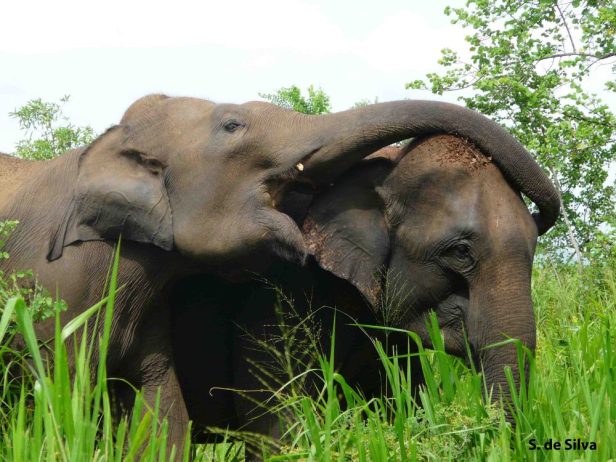
A young female named Right Hole puts her trunk over the head and back of another female of similar age with the ID [458]. The two are from different social groups, though they know each other.

Elephants are commonly thought to live in matriarchal societies which rely on the strong leadership and wisdom of elders, with strong age-based dominance hierarchies. Our new study in the journal Behavioral Ecology overturns this view, finding that in fact Asian elephants, unlike African savannah elephants (Loxodonta africana), do not exhibit clear dominance hierarchies or matriarchal “leadership” [1]. Continue reading

Collateral Damage Part 2 – Bycatch

By DJ & SdS

14192771_178500402579219_622052972801954950_n

In the fishing industry, the term “bycatch” refers to species that are entrapped in fishing nets that are not the intended target species.  Such victims, many of whom may die and simply be discarded overboard, represent a terrible waste of life.

Well, in Uda Walawe the bycatch this time was an elephant. Continue reading

Collateral Damage Part 1 – Snares

By DJ & SdS

An adolescent at Minneriya National Park with a snare injury on his right foreleg.

An adolescent at Minneriya National Park with a snare injury on his right foreleg.

A snare is a hunting device resembling a wire noose. It’s the cheapest and easiest way to trap wild animals. In Sri Lanka, such poached bushmeat consists of wild boar, porcupine and lesser members of the deer family and is mostly locally consumed. Hunting non-protected species (wild boar and porcupine, which are considered as vermin) is not illegal but other species like deer are protected by the local Fauna and Flora Ordinance.

Locals say snare traps are often meant for wild boars. Unfortunately, these traps do not discriminate, they also make victims of species like leopard and elephant. During the last five years, more than ninety percent of the leopard deaths occurred in hill country, Sri Lanka was due to physical injuries of ensnaring. Our observations in Uda Walawe and Minneriya National Parks suggest that it is usually less-experienced juvenile elephants are the victims of snare traps, though adults may sometimes show signs of old wounds. Trunk injuries show the animals are vulnerable even during grazing, not just while walking. Perhaps calves’ natural curiosity makes them especially vulnerable. Continue reading

Imagining Human-Elephant Coexistence on World Elephant Day

by DJ & SdS

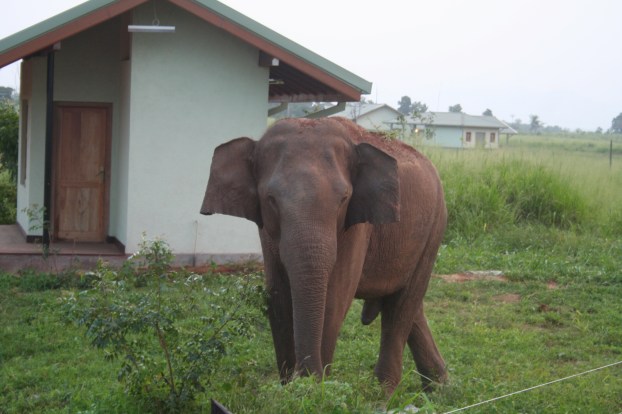
This elephant is on the wrong side of the fence at Uda Walawe National Park.

This elephant is on the wrong side of the fence at Uda Walawe National Park.

Human-wild elephant interactions usually bring negative outcomes. The friction stems from the never ending competition of resources, mainly land. A conflict is defined as a state of mind in which an individual experiences a clash of opposing feelings. When the two species fail to share common resources, a conflict naturally takes place.The discussion must invariably focus on those who live alongside elephants. Their relationships with wild elephants vary. While some think total rejection is the answer, others considers having elephants around is fine as long as they don’t disturb their basic lifestyle.

Is human-elephant coexistence ever possible? Continue reading

Wildlife officers see what “evidence” means.

By DJ & SdS

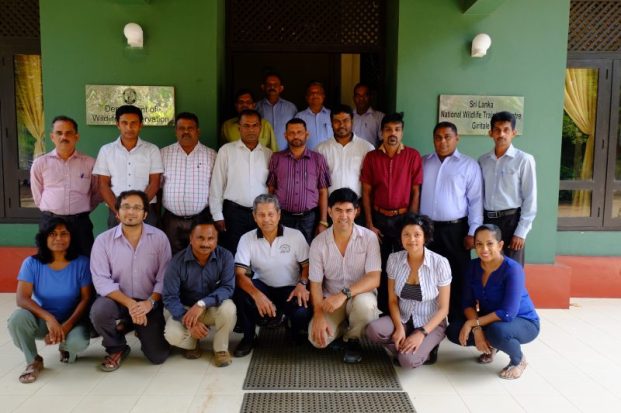
Workshop participants

Officers from the DWC (middle and back rows) along with workshop facilitators (front row).

Decision making in wildlife management is always challenging; some may bias towards wildlife and others towards human needs. This conflict can be resolved only by making decisions based on facts or scientific data, which constitute a form of “evidence.” Thus, evidence-based decision making is considered the best approach to managing wildlife and habitats around the world. The opposite of this is management based on emotion, political agendas, or even expert opinion (which can often be wrong). Continue reading

Ethimali Finds Her “Forever Home” In The Wild

by DJ, USW, and SdS (Photos by DJ &UWERP)

The female orphaned elephant calf found in Ethimale, Southern Sri Lanka rescued and brought to Elephant Transit Home (ETH), Udawalawa was later named Ethimali. After several years of rehabilitation, she was released to Uda Walawe National Park in March 2004, when she was about 4 years old, with another 10 rehabilitated juveniles.

Some young females at the ETH show an array of maternal or allomothering characters from an early age, despite being orphans themselves. They seem to select calves out of new arrivals and try to be as attentive to them as possible. She frequently checks whether her orphan is alright and will be the first to respond if the orphan screams or is attacked by another calf. She keeps continuous company for the orphan and with time, it starts to follow her most of the day. When the orphan seeks comfort she allows it to suck on her – in the absence of real milk, even the tip of an ear will do!

Ethimali (wearing a belt around the neck) with Mahee, a wild adult female and her calf.

Ethimali (wearing a belt around the neck) with Mahee, a wild adult female and her calf in 2004.

Continue reading

Justice For Elephants in Sri Lanka: Dead or Alive

By DJ, edited by SdS

Is the future more promising?

Monks pay tribute to the slain elephants. Photo by Sanka Vidanagama

Monks pay tribute to the slain elephants. Photo by Sanka Vidanagama

Sri Lanka has been in the international news for her views towards elephants, native and exotic. Animal lovers and conservationists remain hopeful for a promising future.

January 26th marked International Customs Day. Sri Lanka destroyed nearly 1.5 tons of ivory confiscated in 2012 by the local customs, becoming the first to do so in South Asia. The shipment was en route to Dubai from Kenya and contained tusks of African elephants killed by bullets. DNA tracking later sourced the origin of tusks as Mozambique and Tanzania, which are known elephant killing fields. Despite many requests from locals to donate part of the seized stock to Buddhist temples as ornaments, customs was stern with their decision to destroy the total shipment of “Blood Ivory.” Continue reading

Feeding Our Waste to Wildlife

By DJ, USW, and SdS

Baby_at_garbage

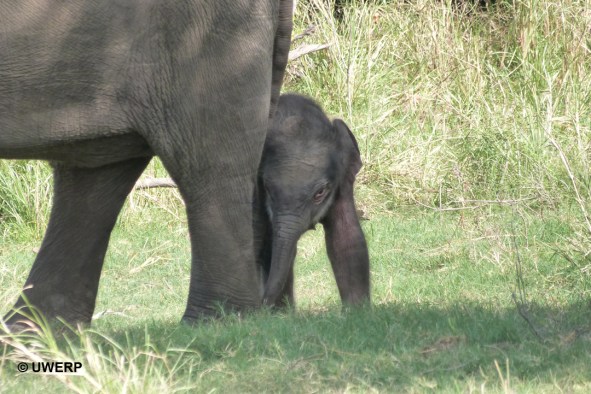
A two day old baby, with its mother and companions spotted at a dump near Minneriya National Park.

A study conducted in 2012 revealed that Sri Lankans dispose of 15 million polythene lunch sheets a day and 20 million plastic shopping bags a month. Part of this, along with other household wastes, goes to landfills. The majority is piled up in urban and remote areas at garbage dumps as identified by the Central and Local Governments. Sometimes, local residents decide the ‘best’ places to start a garbage dump. It usually starts with a single person or a one family and a small bag of waste and then the rest of the community gradually follows. Continue reading