Shared History Ties Humans and Elephants: A Tale of Two Nations

By Sateesh Venkatesh – PhD student, UCSD

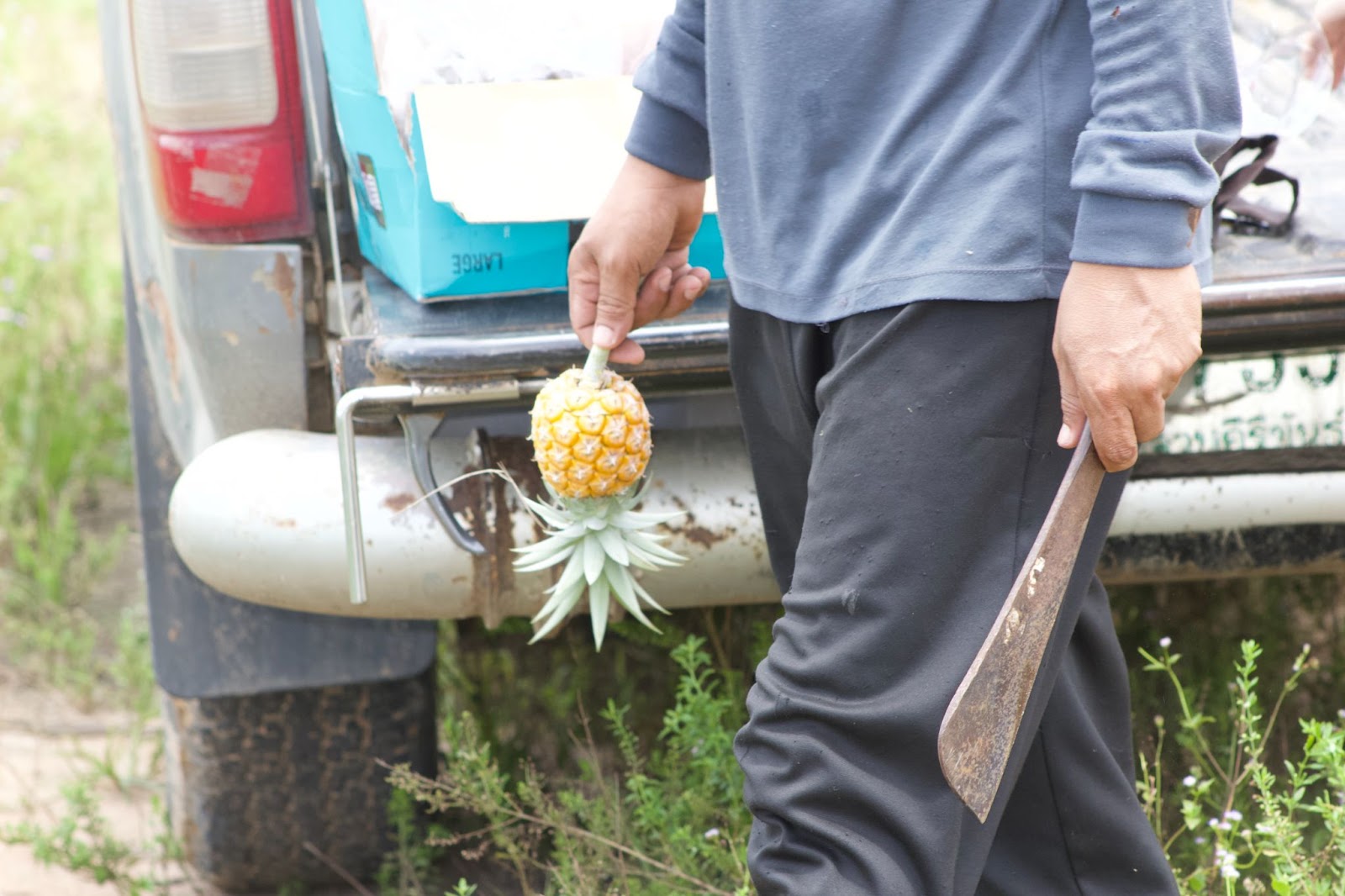
The air is fresh, there is a light dew on the leaves, and the first shafts of the morning sun pierce the tree cover as our team heads out to the field. These calm mornings in the field typically start the same way, but they disguise the complexity and challenges faced at night by many of the farmers we are off to meet. Mornings for these farmers mean an interlude between nights spent defending their crops from elephants and days of hard work maximizing the production of the same crops.  
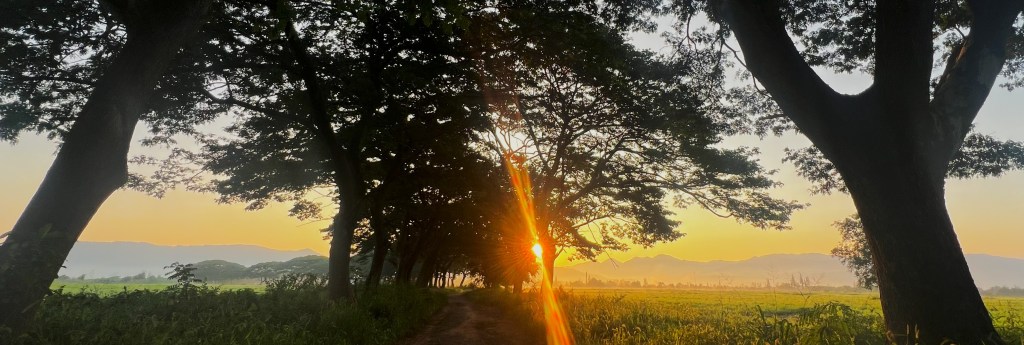
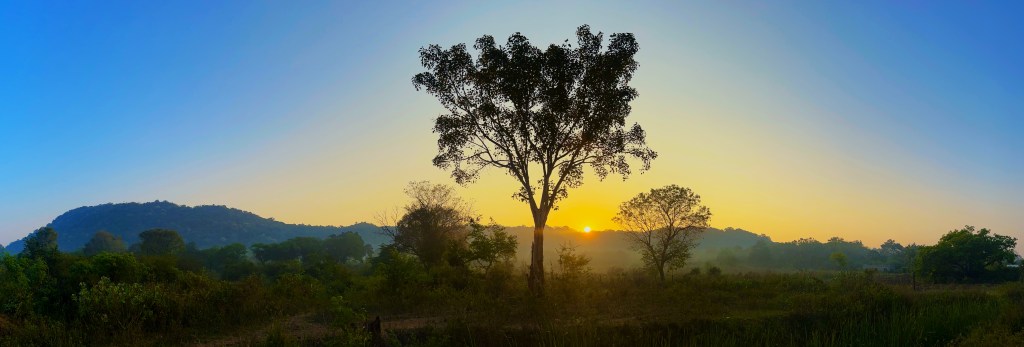
Thailand sunrise
Thailand sunrise
Sri Lanka sunrise

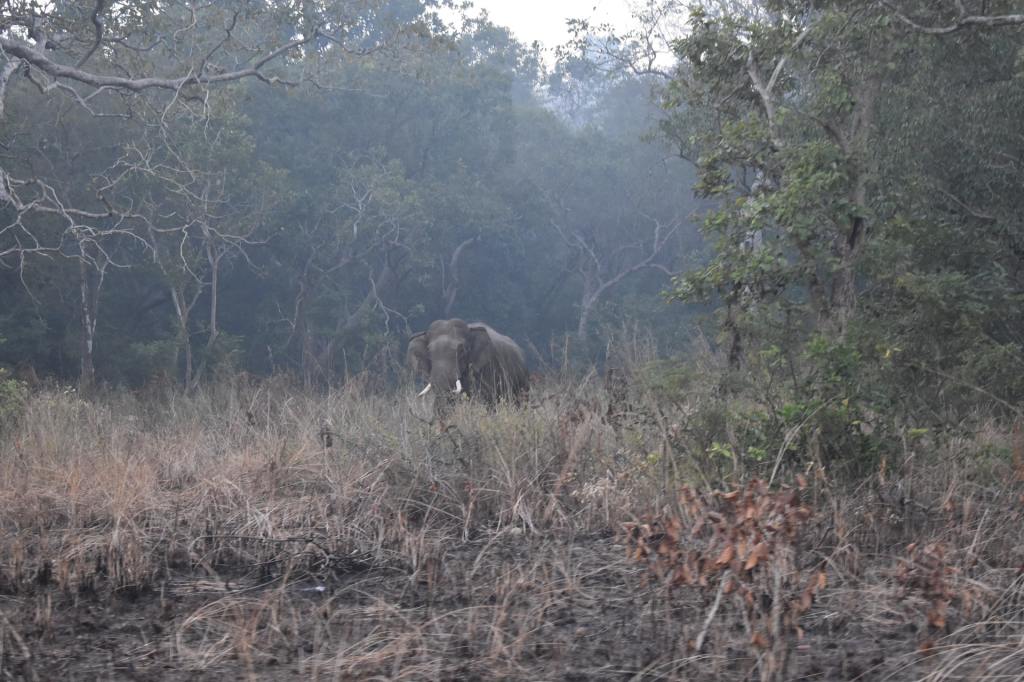
My research covers two locations with remarkably similar problems, even though an ocean separates them. Outside of Thailand’s Kui Buri National Park, farmers spend their mornings preparing pineapple fields for harvest, while across the Indian Ocean in Sri Lanka, farmers near Udawalawe National Park set out to monitor a variety of different crops. Though separated by thousands of miles, these communities share a common challenge: finding ways to thrive alongside Asian elephants in an increasingly crowded landscape. 
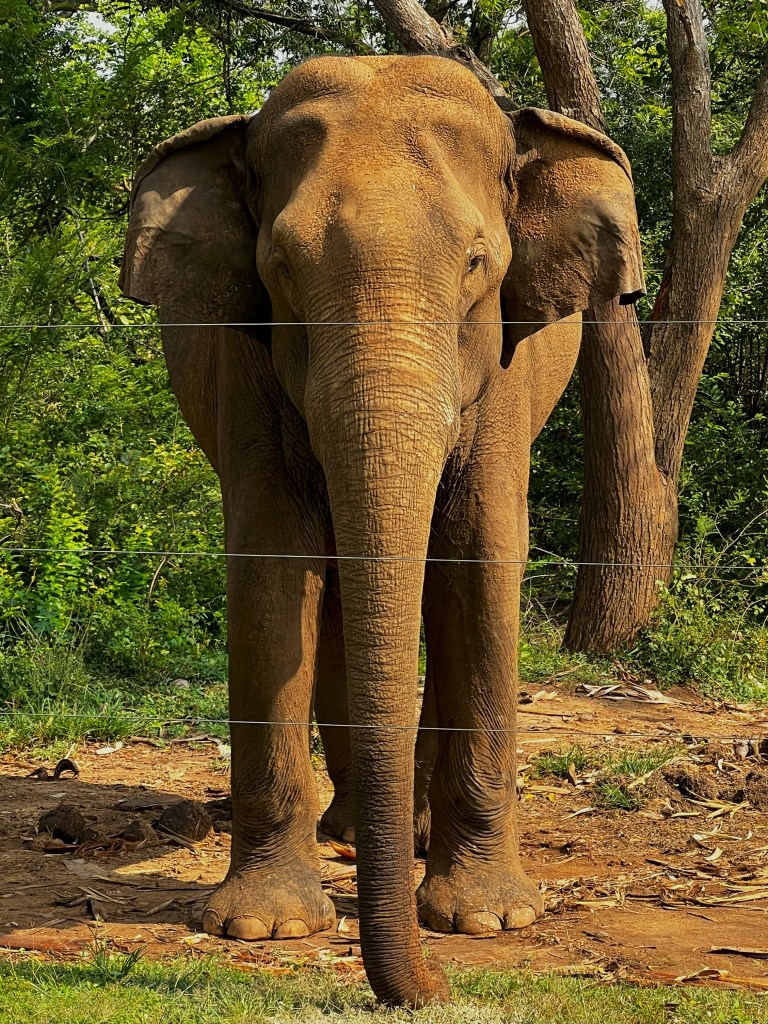
A wild Asian elephant waiting behind the Udawalawe National Park’s electric fence – for fruit from passing tourists.

As an elephant researcher working across these two distinct regions, I have a unique opportunity to compare how variations in historical contexts and cultural structures shape human-elephant interactions in real-time. While most scientific studies rely on comparing methods and results from published literature, our research teams simultaneously monitor these two sites to understand better how anthropogenic change, climatic variation, and regional stressors impact the complex and changing relationship between humans and elephants.  

Research Sites and Local Partnerships

Our research spans two carefully selected field sites, each offering distinct insights into how humans and elephants are currently co-existing. In Sri Lanka, we work at a site established by Dr. Shermin de Silva in 2006, situated just outside Udawalawe National Park, which covers 308km2. Our Thailand field site borders Kui Buri National Park – a protected area more than three times larger at 969km2 – where our partners at Bring The Elephant Home (BTEH) have built strong community relationships over two decades. In both locations, Asian elephants and humans share resources, particularly in agricultural areas, but the historical context of these interactions varies dramatically. 
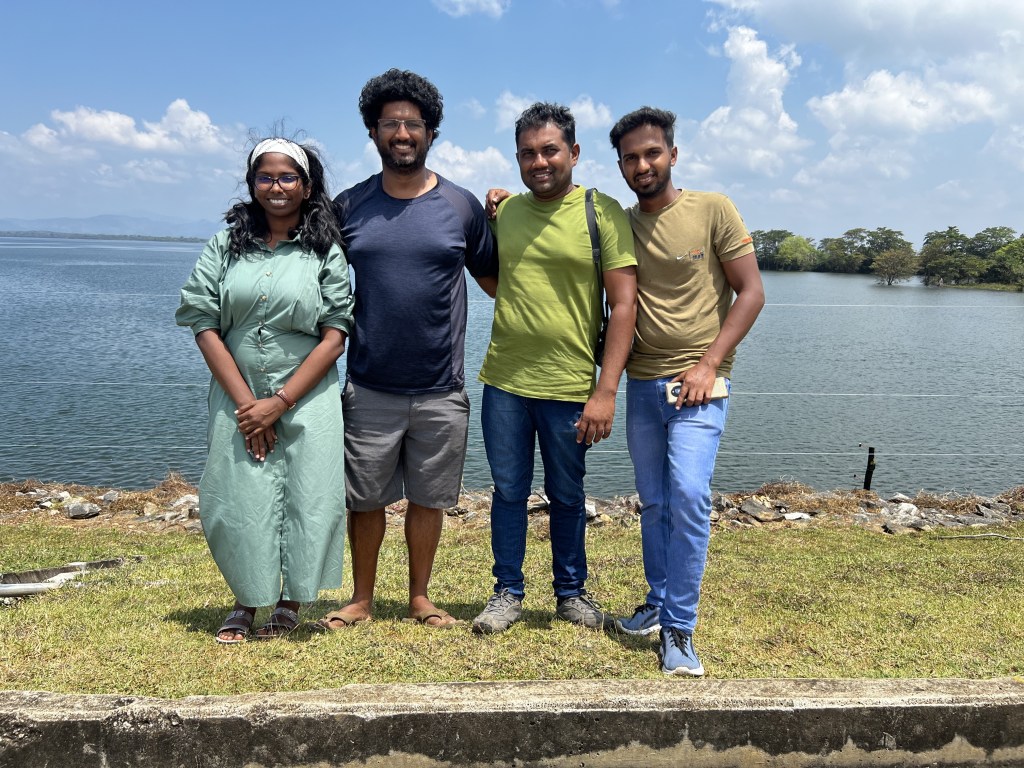
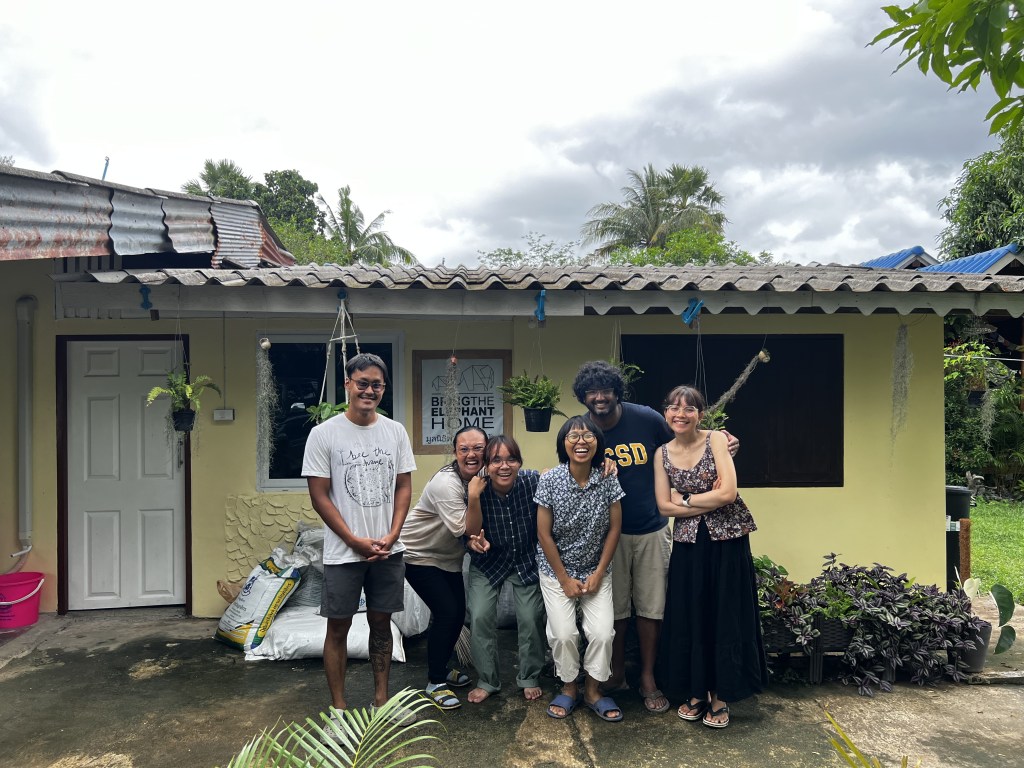
Above: Sateesh with the Sri Lankan UWERP team by Udawalawe reservoir. Below: Sateesh with the Thai BTEH team outside their field station.

A Tale of Two Histories

In Sri Lanka’s Udawalawe area, people have farmed alongside elephants for generations. The construction of the Udawalawe reservoir in 1972 led to the establishment of the national park. The area that became the park had primarily been a teak plantation rather than farmland, which meant that establishing the protected area didn’t require relocating large areas of farming communities – as can often be the case. The farmers who live around the park’s edges today are largely from families who have traditionally farmed the surrounding lands for generations, maintaining their agricultural practices and long history of living in proximity to elephants. 

In contrast, Ruam Thai Village in Thailand represents a more recent human settlement. Established in the 1970s through a government initiative, the village brought together people from across Thailand to create a new community focused primarily on pineapple cultivation, two decades before the area would be designated as Kui Buri National Park in 1999. The crop’s high international market value made it economically attractive, and it also drew interest from local elephants. The tragic deaths of two elephants from poisoning and gunshot wounds in the late 1990s prompted His Majesty the King of Thailand to establish Kui Buri as a protected area specifically for elephant conservation. However, recent research by the  Udawalawe Elephant Research Project (UWERP) and Trunks & Leaves team has revealed that elephants in both locations typically spend only about 50% of their time within national park boundaries, highlighting the critical importance of understanding and supporting coexistence in the surrounding landscapes. (See Annie’s blog on How Elephants in Sri Lanka Use Protected Areas here.)
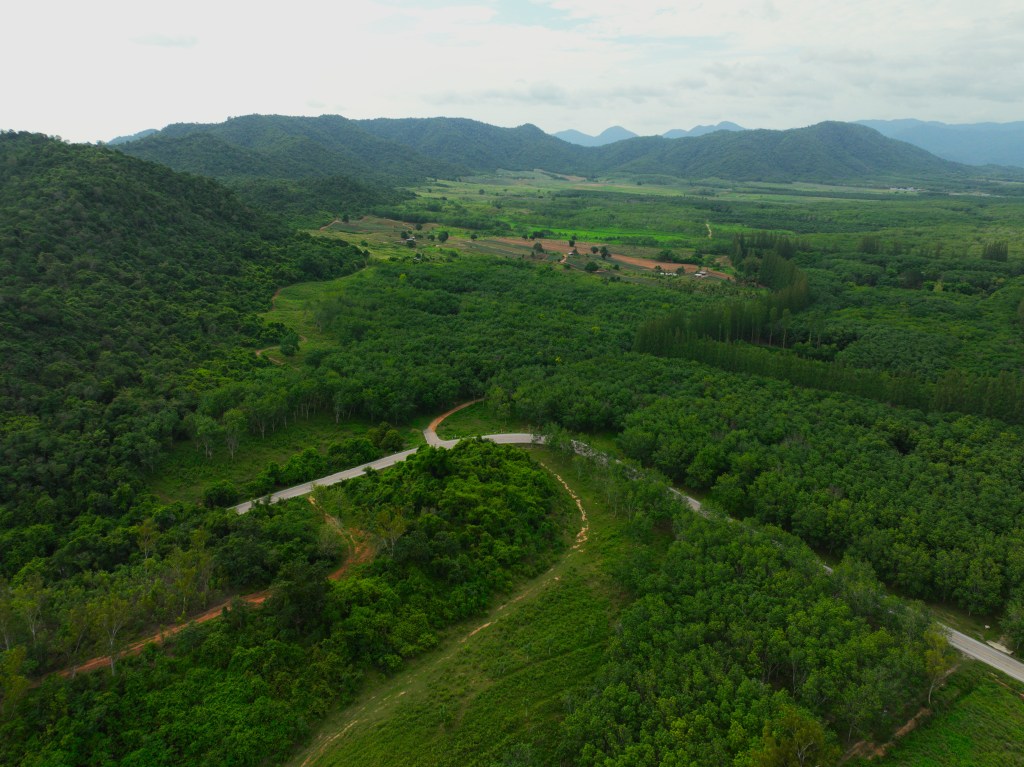
Ruam Thai village’s farming zones alongside Kui Buri National Park, Thailand.
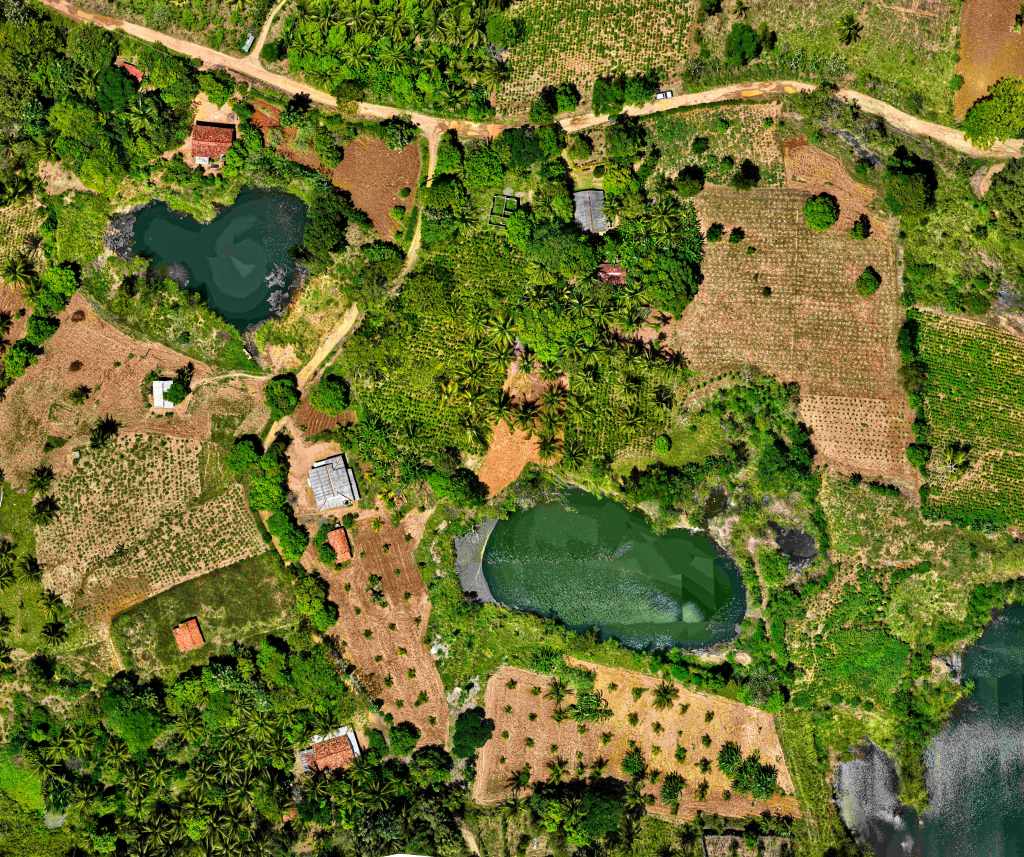
Patchwork farming plots around Udawalawe National Park, interspersed with houses and forest fragments.

These different historical trajectories have shaped distinct landscape patterns. Sri Lankan farms form a patchwork of individual plots interspersed with houses and fragments of forest, reflecting generations of land division and management. Ruam Thai’s layout is more structured, with a centralized residential area separated from a consolidated farming zone that borders the protected area. 

Elephant Memory and Cultural Heritage

Over an elephant’s 60-year lifespan, they build up an extensive catalog of experience across a vast landscape. Due to the social complexity of elephant culture individual experiences become part of a vast assemblage of experiential knowledge that crosses generations. We’re discovering that elephant populations may develop distinct “cultures” influenced by their interactions with human communities over generations. In Sri Lanka, for instance, elephant family groups demonstrate sophisticated knowledge of traditional movement corridors that predate current human settlements. Meanwhile, in this area of Thailand, elephants show different patterns of adaptation to the more recently established agricultural landscape. 

The concept of generational learning adds another layer to this complex relationship. Like humans, elephants can pass on behavioral responses to past experiences. In both locations, we’re observing how historical interactions influence current elephant behavior and how these learned responses might be transmitted to younger generations. 

Pathways to Harmonious Coexistence

While the challenges in each location are unique, our ultimate goal remains constant: creating environments where both humans and elephants can thrive together. In Sri Lanka, this means building upon generations of traditional knowledge about elephant movement patterns. In Thailand, it involves developing new strategies that account for the more recent nature of human-elephant interactions. 

Current initiatives in both locations show promise. Sri Lankan farmers are experimenting with crops less appealing to elephants that will allow them to use the same land, while maintaining historic elephant pathways through their lands. In Thailand, community-led initiatives in high-conflict areas are exploring converting pineapple fields to organic alternative crops that will reduce conflict and improve healthy farming.  

Looking Ahead

As our research continues, we’re working to understand what successful coexistence looks like in these different contexts. Can the traditional knowledge of Sri Lankan communities inform new approaches in Thailand? Might Thailand’s community-centered development model offer insights for Sri Lankan villages? By studying these questions across two distinct cultural and historical settings, we hope to develop more nuanced and effective approaches to fostering positive human-elephant relationships. 

The path to harmonious coexistence requires patience and understanding, but studying the shared histories of humans and elephants in each landscape provides crucial insights for future conservation efforts. As we continue our research, one thing becomes clear: successful conservation strategies must honor both the human and elephant histories that shape each unique landscape. 
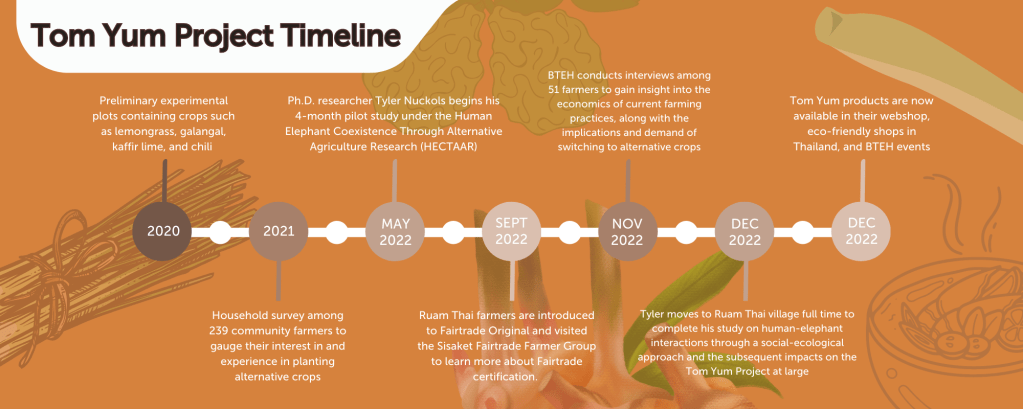
The Tom Yum project timeline: Facilitating human-elephant coexistence in Asia through planting unpalatable crops

Lemongrass, galangal, kaffir lime, and chili – these ingredients of the Tom Yum soup, a classic Thai dish, don’t simply remain in the bowl. They also play a role in facilitating human-elephant co-existence. Our partner in Thailand, Bring The Elephant Home (BTEH), began the Tom Yum project in 2020 to help support the local community by designing and implementing experiments using alternative crops that are unpalatable to roaming elephants. In 2022, we also welcomed PhD researcher Tyler Nuckols of The University of Colorado, Boulder in Ruam Thai for a first 4-month pilot study on the potential of alternative cropping as a method to promote human-elephant coexistence, which will contribute to the completion of their PhD dissertation. Three years after its conception, this project has grown from helping farmers alleviate economic losses to a profitable and eco-friendly venture. What’s going on in Ruam Thai nowadays?

Continue reading

Where The Elephants Roamed

By S. de Silva

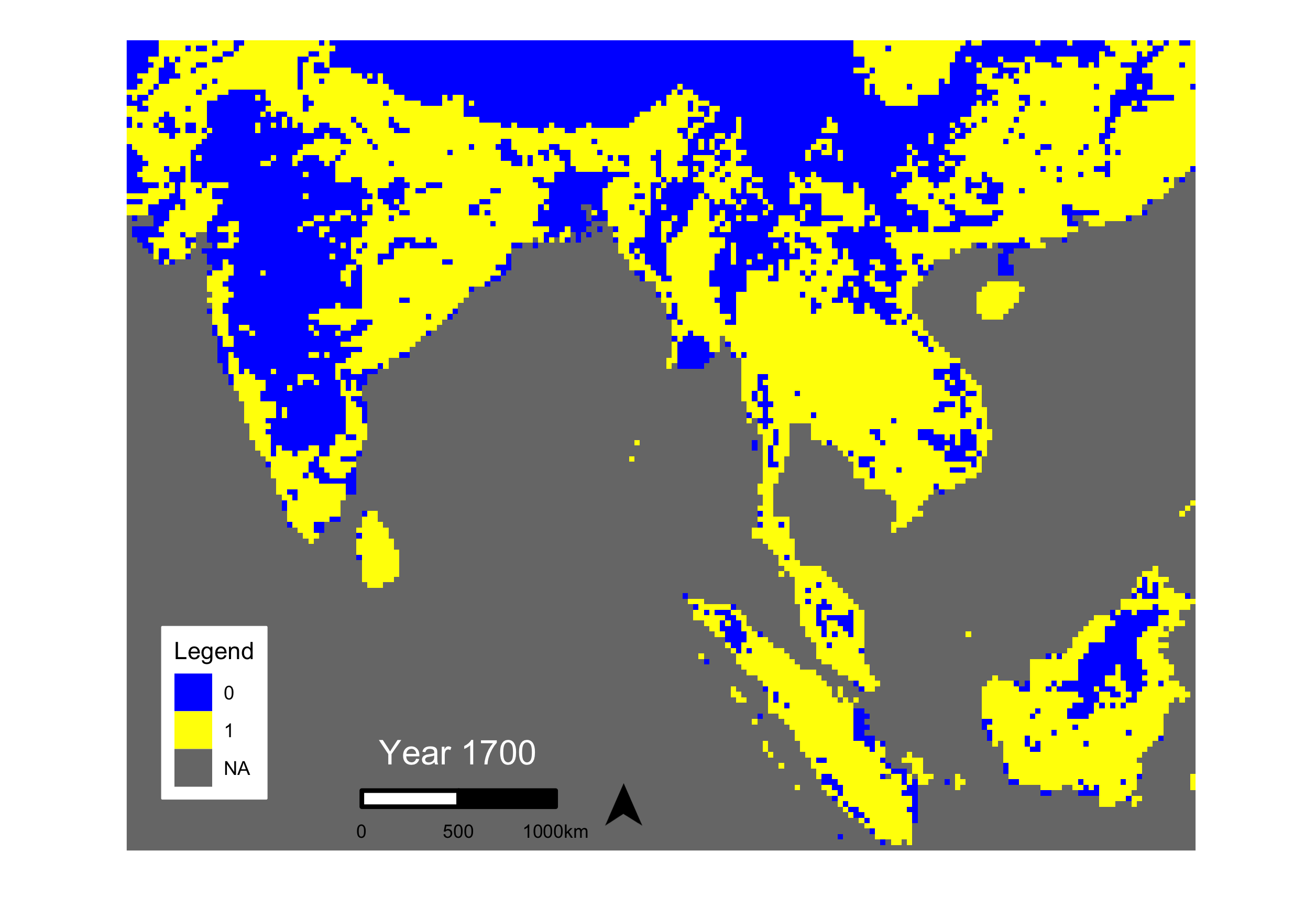
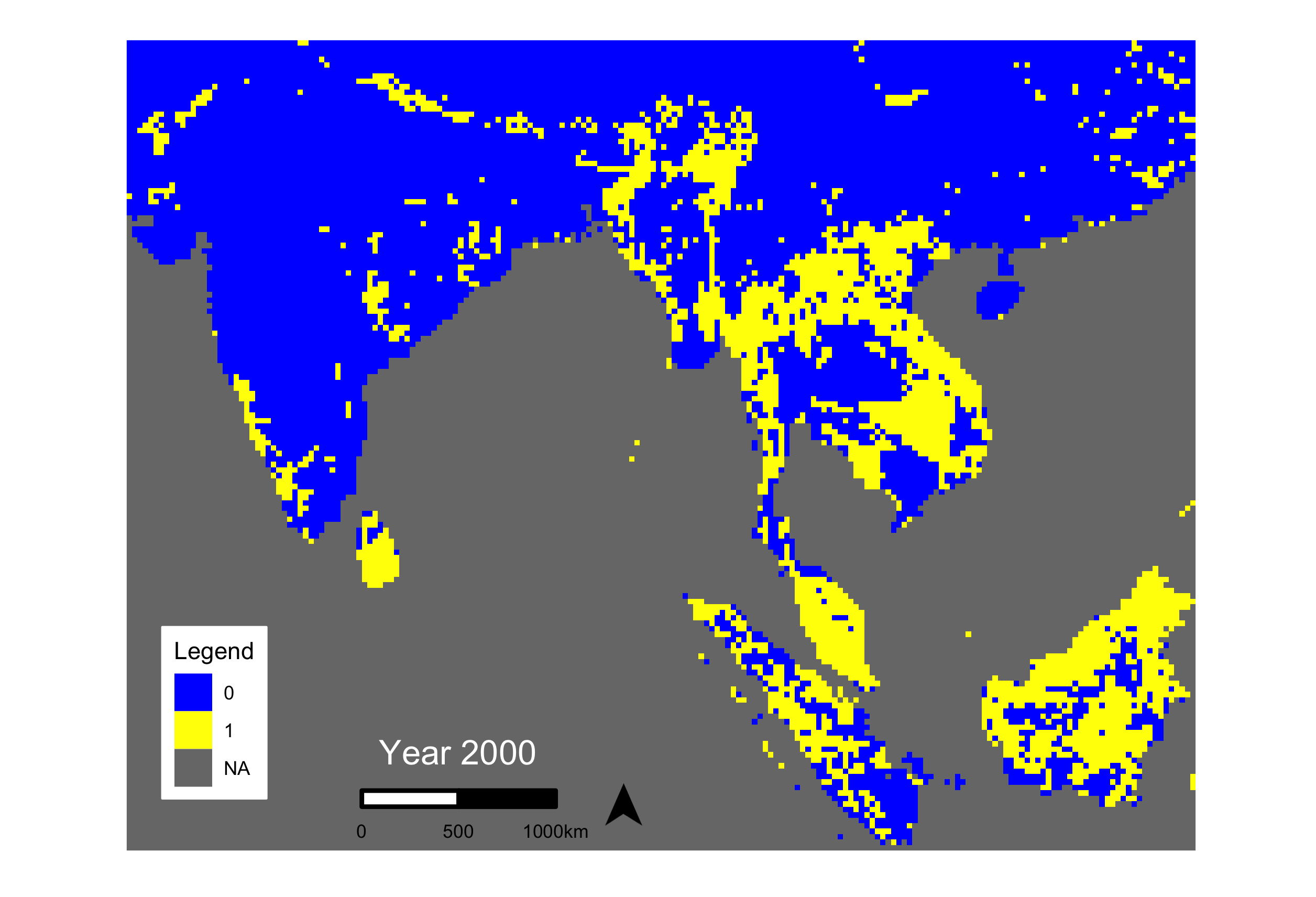
This slider shows areas containing habitat for elephants (yellow) in the year 1700 vs. 2000.

Where Did The Elephant Habitats Go?

The bulk of conservation efforts center around protected areas as the primary means of safeguarding wildlife and wild places. This is in response to recognizing that human activities are altering the face of the earth at an alarming pace, leading to the loss and fragmentation of habitat for numerous species. Often, our attention is on proximate threats and especially on particular biomes, such as forests. But over what sort of timescale and what sorts of ecosystems have these changes actually been taking place? In order to protect the biodiversity we have today, we have to really understand the processes that maintain them and how we got to where we are.

Asian elephants provide a good perspective on the problem. I’d heard some conservation organizations state that elephants had lost as much as 90% of their historic range, but I couldn’t find a single scientific reference that showed this. Was it true? When I first saw their distribution on a map, I got curious – though classified as a single species, Asian elephant populations occupy many different types of landscapes ranging from grasslands to rainforests that are now cut-off from another. At one time, these disparate populations must have been joined together and if we could reconstruct what happened to these habitats over time, we would have part of the answer. So, I enlisted a team of collaborators to find out exactly when and where elephant habitats started disappearing. In a way, you can think of elephants as being ambassadors for these ecosystems (a reason they’re referred to as “flagship” species). But we couldn’t know exactly where elephants or their habitats had been simply by looking at maps or records directly, so we needed a different trick.

Continue reading

Dry Rations Donations in Udawalawe

By Salik Ansar

At the beginning of 2022, no one would have anticipated Sri Lanka’s year to be so dire (and that’s saying something after the anguish from the global pandemic we all shared in!). The country suffered from one of its most severe economic crises – there was no fuel, extended power cuts, no fertilizer, no food crops, no tourism, and the list goes on… With no political and economical stability, Sri Lanka was looking over the precipice of a terrible crisis. Given Sri Lanka’s demographics, the majority of the people in rural areas are farmers and they were severely affected by these difficult times.

Continue reading

A tribute to our beloved Jasmine

Remembering a gentle spirit.

Jasmine, and Asian elephant.
Jasmine (center left with pink ears), in 2012 with her calf Josh.

From Shermin:

When I first started the project in 2005, I was touched to see the relationship between an inseparable pair of elephants. The elder, who I named Janet, was toothless and slender, clearly a grandmother who was peacefully nearing the end of her long life. The other, who looked almost exactly like a younger version of her, was in the peak of her life. I thought this must be her daughter, somewhere in her twenties perhaps. I named her Jasmine, after my favorite flower, because I thought her so pretty with her perfectly triangular and symmetric pink-edged ears. She was perfectly proportioned, a textbook example of elephant-ness. They went everywhere together, drifting in and out of a larger social group that I thought might be a single family.

Continue reading

How elephants in Sri Lanka use protected areas

By Annie Madsen

Elephant behavior has long endeared the public. From complex social structures to tool use, hearing stories about behavior not only teaches about fantastic ecological adaptations, it shows a window into elephant’s lives that we can understand and relate to on a personal level. Showcasing behaviors has often been used to help elephant conservation. However, behaviors are sometimes disconnected from how managers actually conserve elephant populations. In a new study, we examine elephant space use behavior in the hope that it can directly inform management practices.

Continue reading

Sri Lankan Economic Crisis: Why it Matters

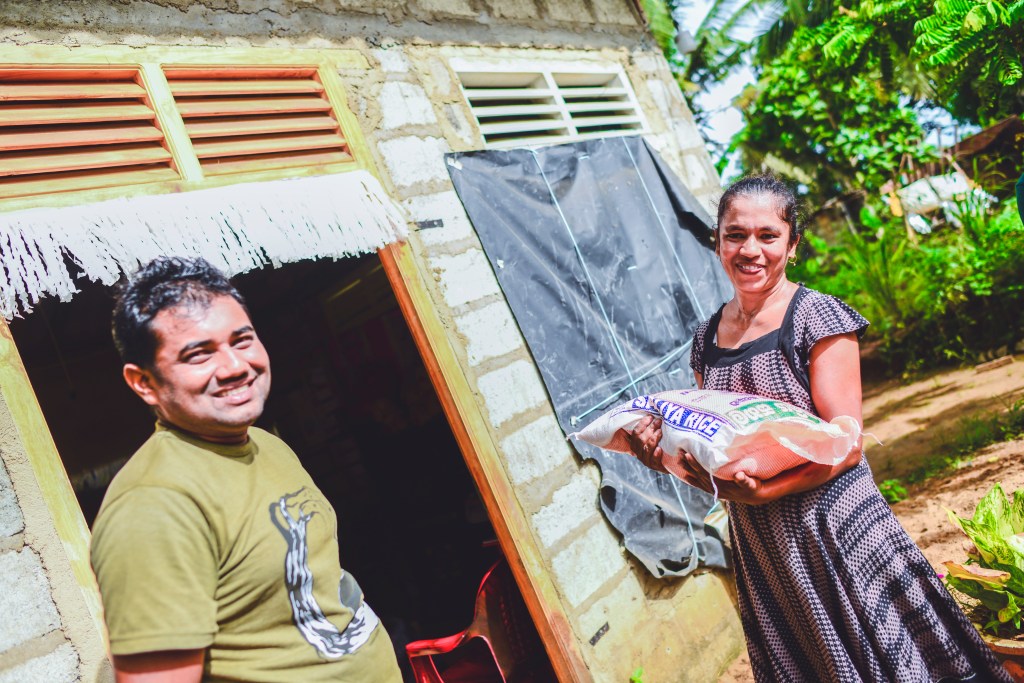
UWERP’s field technician, Janaka, delivering a month’s supply of dry rations to a rural Sri Lankan family

The story so far

Over the last few months, Sri Lanka’s economy crashed and the island nation is now facing its worst economic crisis in history. For Sri Lankans, the crisis has turned their daily lives into an endless cycle of waiting in lines for basic goods – many of which are being rationed. Why is this happening?

The main reasons are loss of foreign currency due to COVID’s impact on tourism, and mismanagement of the country’s predominantly agricultural economy. Foreign reserves have been reduced by roughly 85%, grinding daily life to a halt. There are huge lines for fuel (for transport) and gas (for cooking). The lack of fuel also affects the country’s power supply, with people facing up to 16 hrs of power cuts daily. The lack of fuel has created a shortage of vegetables in the market and thus the prices have shot up by 30-80%. Additionally, as the country cannot afford imports, products like butter and milk powder are now unavailable. The Sri Lankan Medical Association has also stated that medical supplies are running low and by the end of April, Sri Lanka ran out of key medicines and medical supplies. 

Continue reading

New pan-Indian study of elephant genetics reveals surprises

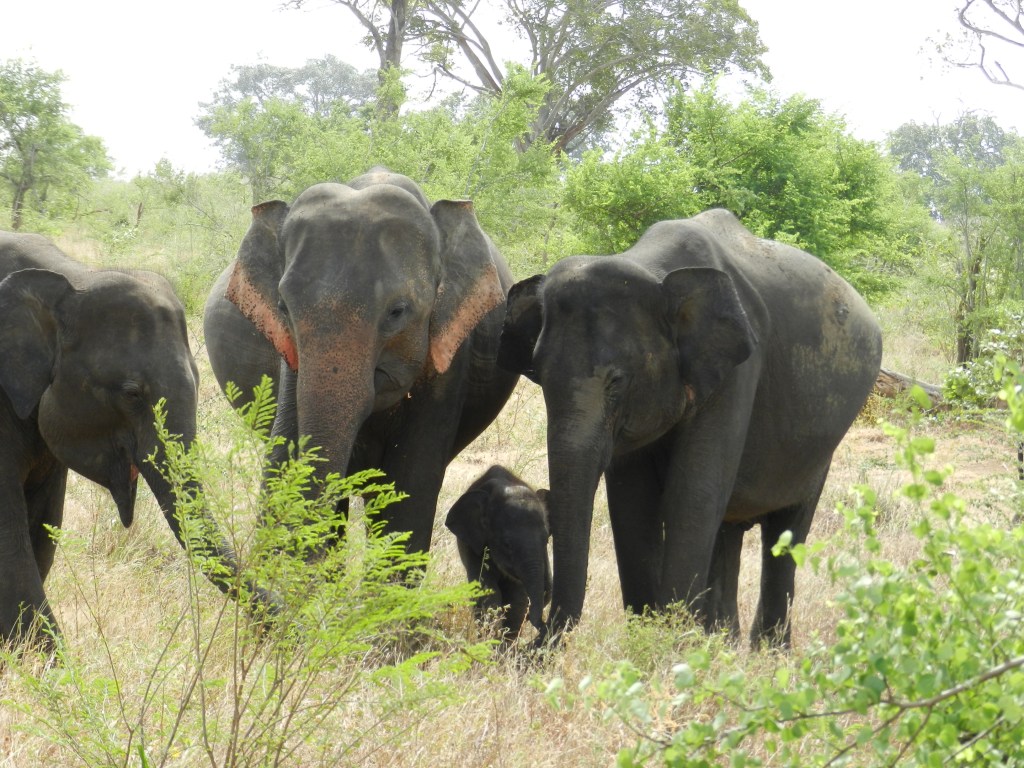
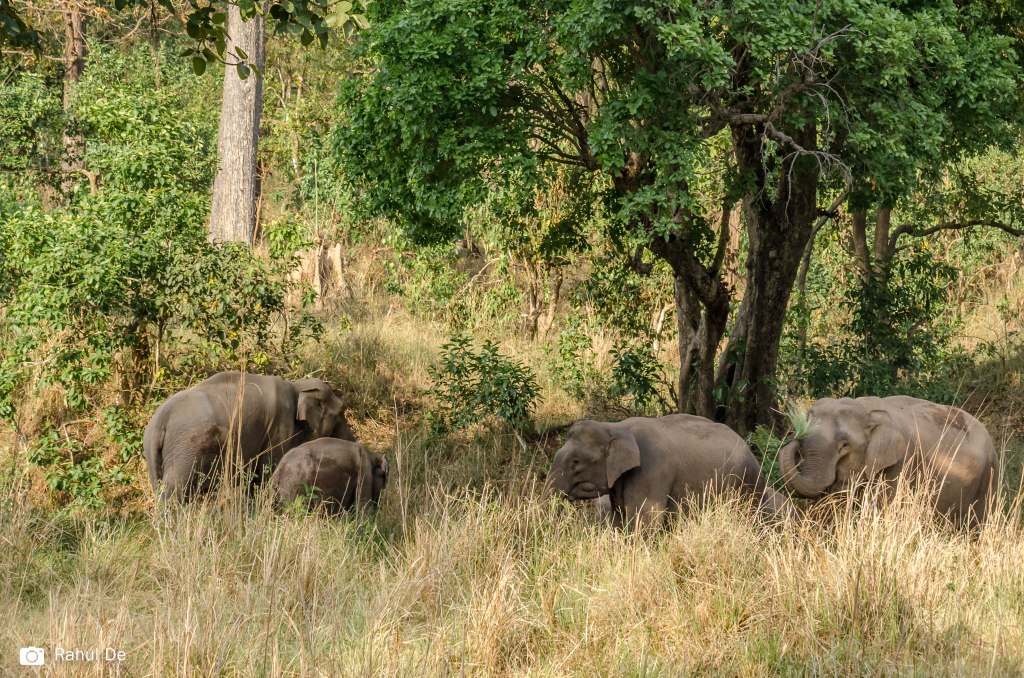
Herd of elephants in Terai Arc Landscape

Asian elephants were once widely distributed in India, but are now restricted to four widely separated regions: the north-western (NW), north-eastern (NE), east-central (ECI), and the southern India (SI). When you undertake the population genetics study of a wildlife species, the quality of the result is related to the design of the field sampling protocol. This is to ensure that the sampling is extensive covering different areas to avoid over-sampling of more accessible populations. When we started our population genetics study of the Asian elephant (Elephas maximus L.), we planned to collect fresh elephant dung samples from across the beats and various ranges of protected forests in India. This of course often involved traversing through inhospitable and difficult terrain with a forest staff in attendance. The first problem were the elephants themselves. To get fresh dung, one had to go close to elephants for collecting samples. This often did not go down too well with some individuals who responded to the invasion by a determined charge. We were fortunate not to have suffered any mishaps and ultimately it worked out well and we were able to collate an impressive database of elephant dung samples.

Continue reading

Camera Trapping Elephants in Agricultural Areas

In partnership with Bring The Elephant Home in Thailand, we’re excited to share this picture diary from the field, by Brooke Friswold, who is a PhD student at King Mongkut University of Technology Thonburi!


Written by Brooke Friswold

It has been another busy month in Ruam Thai Village! We have erected ten camera traps on pineapple farms with the consent of local farmers in areas with reported high frequency of visitation and five on lemongrass farmland rented by Bring the Elephant Home.

In speaking with the farmers they were very excited and enthusiastic to share their experience: some of the farmers say that the elephants are coming most nights to their land, while others say it can be weekly or also come in waves, with times of high visitation followed by lapses in appearance. The farmers were very eager and interested to share and discuss where the best placement would be for the camera traps, the trails the elephants use to enter, and the recent visitations they had.

Continue reading

Human-Elephant Conflict: Opportunities for coexistence

As the world grows more crowded, spaces inhabited by wildlife and humans tend to overlap resulting in human-wildlife conflict (HWC). While peaceful coexistence is possible, negative encounters due to various factors continue to be a challenge in conservation. Human expansion into wildlife habitat is especially problematic for Asian elephants that need a large area for their ecological needs[1]. As a result, these animals break into human settlements and cause significant losses to the community. 

Asian elephants are found to impose the highest damages with a probability of 35.1%.[4] Photo by Lokesh Kaushik on Unsplash
Continue reading