Musth, not tusks, confers advantage to duelling males

Tuskers fighting.

Two tusked bulls fighting. Photo by Karpagam Chelliah.

Bull Asian elephants come in two forms: tusk, and tuskless (this is termed dimorphism).  It’s long been thought that tusks must confer an advantage in competitions between males for dominance and mating rights.  However a recent study by Karpagam Chelliah and Raman Sukumar of elephants at Kaziranga National Park, India, puts a wrinkle on this common story. Continue reading

How will Asian elephants react to the sound of bees?

Guest post by Dr. Lucy King – Elephants & Bees Project, Save The Elephants

Apis Cerana, Photo by K. Raveendran

Apis Cerana, Photo by K. Raveendran

I’ve just returned home to Kenya after a fascinating month working with Dr Shermin de Silva and her team at the Uda Walawe Elephant Research Project in Sri Lanka. There have been several productive links between Dr de Silva’s project and ours at Save the Elephants over the years and key to the collaboration has been the ability to compare elephant population ecology between Kenyan and Sri Lankan elephants. However, I went to work in Uda Walawe National Park for an entirely different reason – bees! Continue reading

Wildlife-Viewing is Not Thrill-Seeking

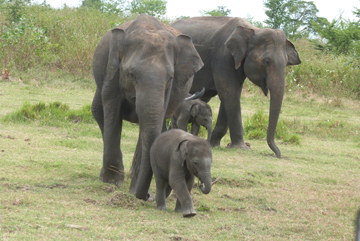
Baretail and Batik with their newborns.

Baretail and Batik with their newborns.

We sometimes forget how fortunate we are to be able to watch peaceful, calm, habituated elephants in Udawalawe.  It’s easy to take for granted when they stand there, threshing their grass en masse, as though it were the most natural thing in the world to have a horde of humans gawking at them from a few meters away. This post may seem self-evident to a younger generation of wildlife watchers, who have grown up in a world packed to the breaking point with human beings and who realize that wilderness is an increasingly rare and precious thing.  But it may challenge the thinking of some, particularly those of an older generation, for whom wilderness was a vast and ominous space teeming with dangerous things.  For the latter, seeing wildlife might satisfy the need for a thrill in the same way as watching a frightening movie or visiting an amusement park – especially if that wildlife acts fierce and ferocious, such as charging elephant might do. This view still prevails among more than a handful of people today, who might think that seeing the “tame” elephants of some national parks is not as much fun as getting a much more “wild” experience in more secluded areas where the animals elicit more mutual terror.

If this is you, or someone you know, then read on and share. This post is for you.

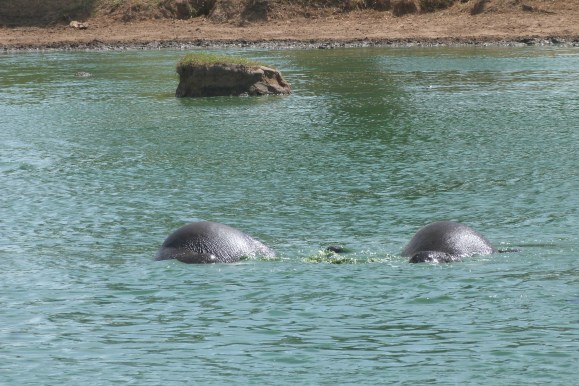
Loch Ness monster?

Loch Ness monster?

Continue reading

Facing The Threat Together

By Mickey Pardo, Cornell University & Open University of Sri Lanka

Down the Old Mau Ara Road we drove, my head swiveling left and right as I scanned for elephants on the grassy strips to either side.  Then we rounded a bend, and Lucy slowed to a stop in front of the herd standing thirty meters away.  It was a rather large group:  [472], [873], [075], and [151], along with a number of sub-adults and juveniles.  [151] and a sub-adult female approached slowly to within a few meters of our jeep.

Mickey_elephants1

RAAAAAAAHHHHHHH!  With no warning, they bellowed in our faces in deafening unison! Continue reading

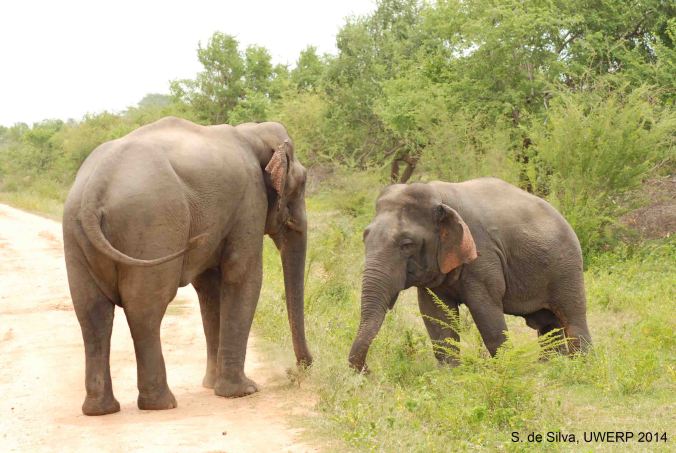
Dwarf elephant battles musth male!

16 June 2014 – S. de Silva

Battle1A clear sunny day, Lucy and Mickey are off in the park with Sameera while Kumara and I stay behind to catch up on office work. It’s mid-morning when Sameera calls to tell us Walawe Kota is back!  Walawe Kota is the nickname we’ve given the dwarf elephant of Uda Walawe.  This would be at least the third year now. What’s more, he’s in musth and reportedly fighting another male.  At first, the news is a bit confusing – there’s mention of a possible injury.

I’ve never seen him in the flesh though Kumara and Sameera have. I’ve only seen pictures and video clips, so I’m eager to try our luck. The park office reports he’s been spotted not far from the entrance, so we hop in our Jeep and dash off in hopes he’s still out in the open. Continue reading

My first playback trial!

Bashi_&calf

By Mickey Pardo – Cornell University & Open University of Sri Lanka

Friday, May 23, 2014

Doing playback experiments with Asian elephants is harder than it would seem.  The basic idea is straightforward:  I want to know whether Asian elephants can distinguish between the calls of familiar and unfamiliar individuals, so I will play back recordings of familiar and unfamiliar elephants and see if the subjects react differently to them.  But in order to do a playback, so many factors must align at the same time.  The right subject must be present, the original caller must not be present, the group can’t have been exposed to a playback for at least a week, the elephants have to be stationary, they have to be clearly visible and within 50 meters of the road, there can’t be any tourists nearby, and all of these requirements must hold true for at least 15 minutes straight.  Sometimes, it seems about as likely as having your winning lottery ticket reduced to cinders by a lightning bolt.

Continue reading

Elephant Ecosystems – An Earth Day Special!

Rob Nelson of Untamed Science helped us realize this long-time goal to create little animated eco-messages about elephants.  Here’s the first installment!

Elephant Ecosystems

Or: Why do we need large wild animals?

Teachers, students and would-be conservationists: you can download this video and translate it into your own language! Be sure to let us know so we can upload it to Trunks & Leaves’ channel on YouTube.  Get the animation and script hereYou’ll also find links to the scientific papers that inspired this video.

(See it in Malay here!)

Related post: Who misses the mega-fauna, if they dissappear?

Who misses the mega-fauna, if they disappear?

Guest post & graphics by Nitin Sekar, Princeton University

DSC03329

A seedling germinates from elephant dung.

All around the planet, the world’s largest animal species are becoming very rare. Whether we speak of giant tortoises, large wild cows like gaur, rhinoceroses, hippos, tigers, or whales, local extinction or extreme reductions in range size and population are the norm for species that are too big or too slow-reproducing to withstand human conflict or the human hunter. Most people would probably agree that it is a shame to lose these species. But what about functionally? Are the largest animals critical to any ecological processes? When there are declines in honey bee populations, human agriculture suffers; if nitrogen fixing plants are absent from a forest, other plant species may be affected. When the largest animal species go missing, do any other species miss them? Aside from a few cases, we don’t know! This is an active area of research.

We decided to explore the role of Asia’s largest land mammal—the Asian elephant (Elephas maximus)—in seed dispersal, which helps maintain the diversity of tropical forests. Continue reading

How does empathy help elephants?

By SdS

P1490826 P1490832

P1490840

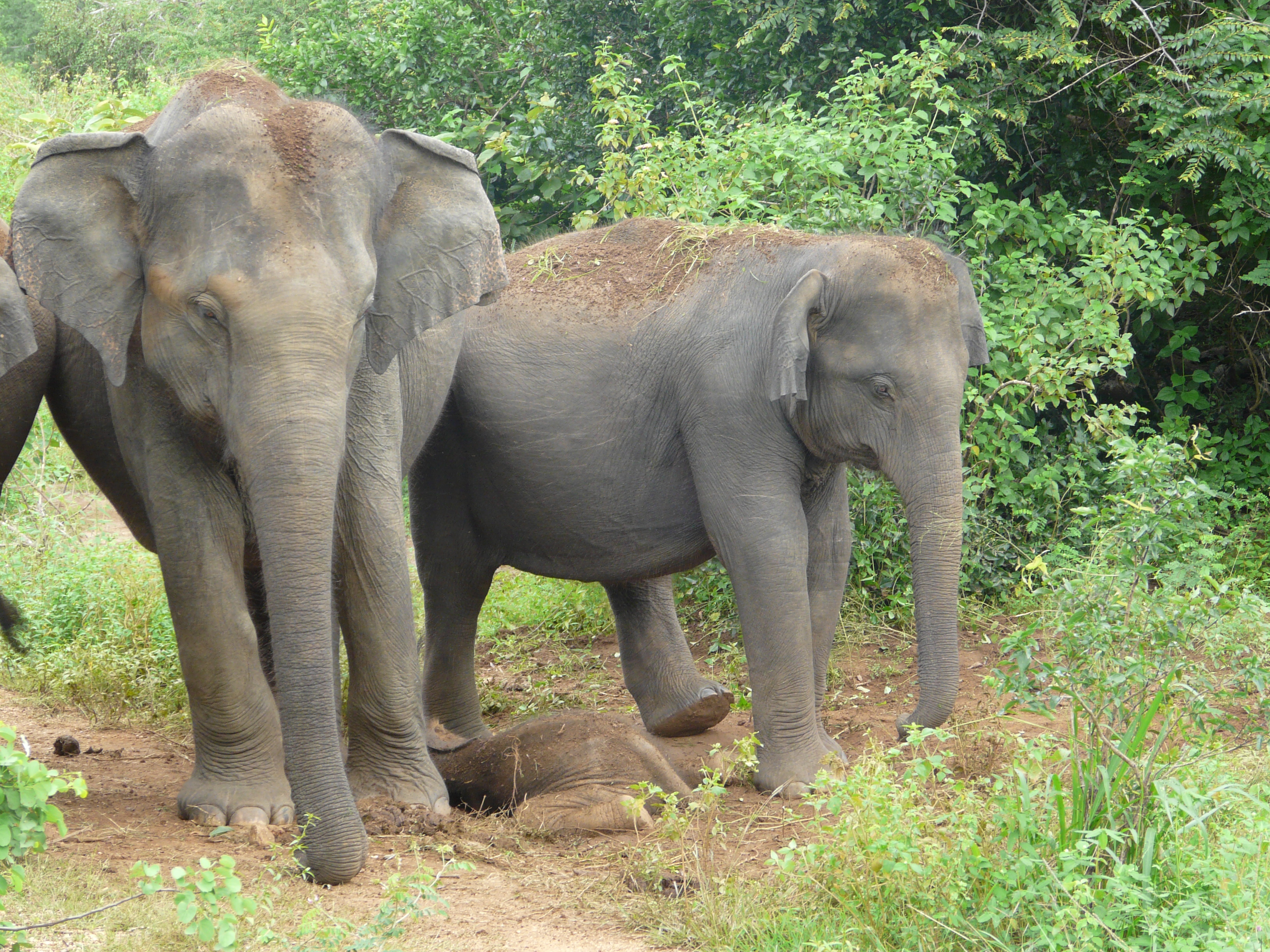
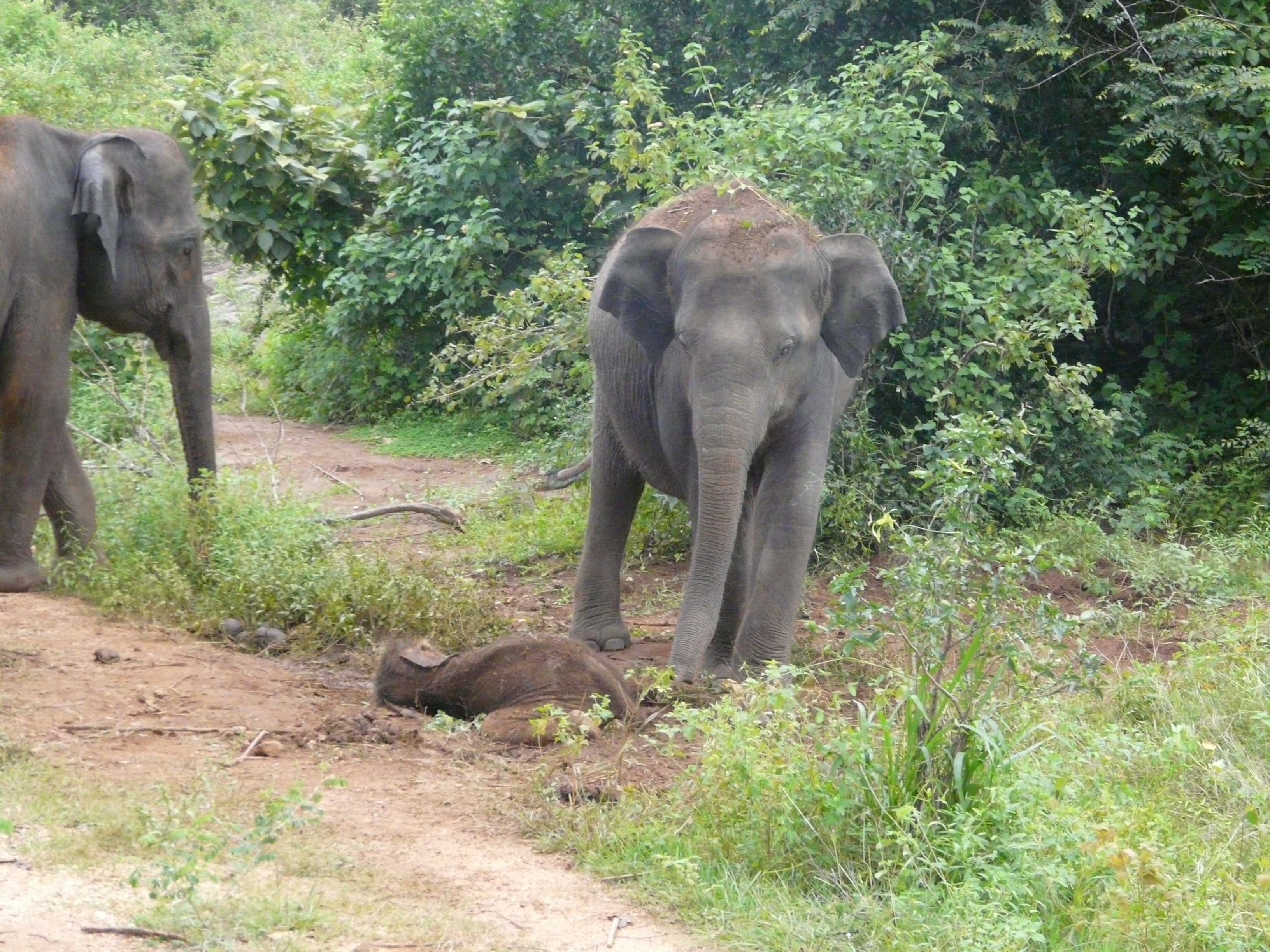
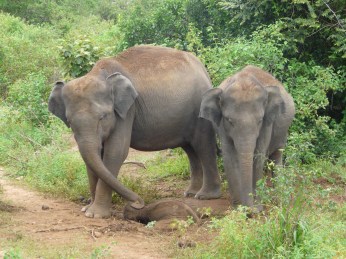
A small family of elephants in Uda Walawe wanders upon a dead calf which does not belong to them. Yet they show great interest, touching and hovering over the body for hours, refusing to let any observers near until they finally decide to move off. Photos: UWERP

In the past week a paper on reassurance behavior in elephants by Plotnik et al. in PeerJ has been generating quite a bit of buzz. The study, which you can learn more about from the researchers themselves here, collected a series of observations on a group of captive elephants in Thailand documenting how they reacted when one of their companions was distressed.  It showed that when some individuals were disturbed in some way and expressed their distress, other individuals approached them and interacted in ways (such as touching, vocalizing) that suggested that they might be trying to comfort or console their companion.  Such behavior would indicate that elephants have the capacity for empathy, along with a handful of other species.

The title of this post is meant to work on at least two levels. First, we might wonder at a biological level – what is the function of the curious  behavior elephants sometimes show toward others in distress? Why might it have evolved? Whom does it benefit? Second, we might wonder at a practical level – should the capacities of elephants endow them with additional conservation value? Should it matter on the ground? So today, the first ever World Wildlife Day, I’d like to examine these two sets of questions, which are very distinct. Continue reading