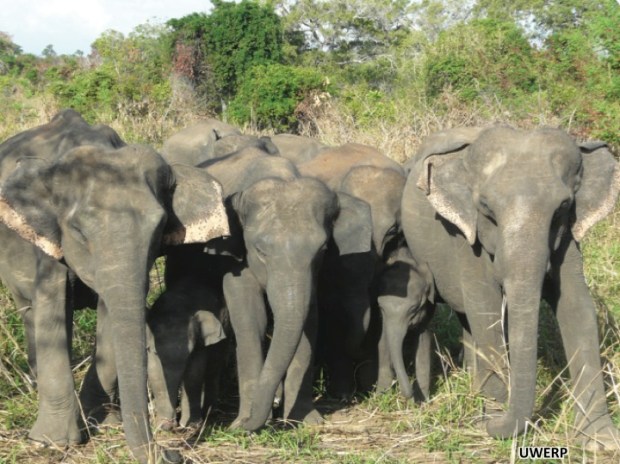
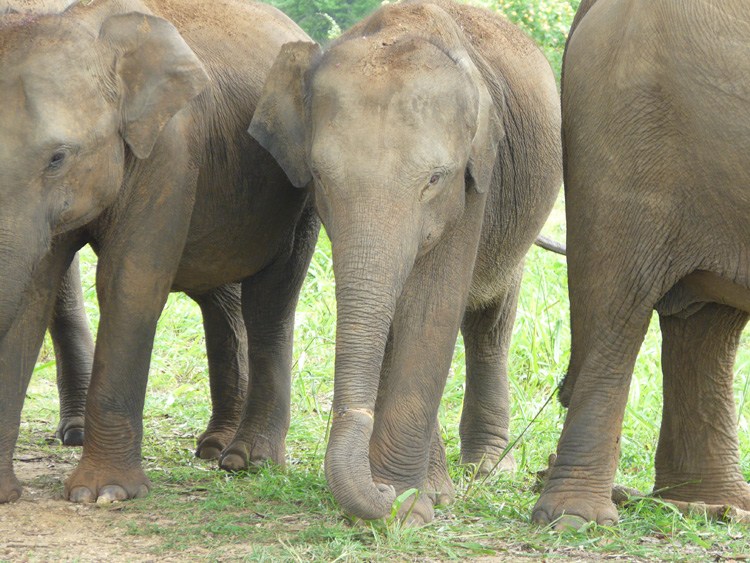
Kanthi (far left) and Kamala (far right) were the most inseparable pair of elephants we saw during the study. Members of their social group, the K unit, were often together whenever they were seen. Yet not all social units were so tightly knit, with individuals being scattered into small groups quite far apart.
Male and female Asian elephants form distinct parallel societies in which adult females and calves move together and form visible groups whereas adult males are typically more solitary. For many years there have been two somewhat conflicting characterizations of female Asian elephant society. The classic view, popularly held, is that Asian elephants form very tightly-bonded families centered around older adult females known as matriarchs. This view is adapted wholesale from the many excellent long-term studies of African savannah elephants [1-3], which do exhibit this type of social organization. Continue reading →
It’s 6:30 am when we pull up to the school, to be greeted by a gaggle of anxious students and parents. Today we’re taking four jeeps, five teachers, the four of us, and a little over thirty kids who are part in the schools new ‘Nature Society,’ into the park on a field trip. The youngest is just 11 years old, while most are 16 or 17. Continue reading →
For the past month I have been visiting rural villages around Uda Walawe National Park conducting a survey on home gardens, farming habits and elephant crop raiding events. The survey team consists of Sameera, Tharanga, myself and occasionally Kumari, Ashoka’s sister. Ideally, Sameera and Kumari administer the questionnaire to the heads of household and Tharanga and I scout out the property, taking GPS points of property boundaries and gardens, and pictures of important things such as tap lines and toilets. Tharanga and I also compile a list of the crops that are cultivated on the properties. At first my identification skills were quite limited: coconut, mango, papaya, spinach, rice, and banana. Thanks to Sameera and Tharanga, I am now familiar with manioc, sweet potato, jack fruit, pomegranate, lime, orange, tamarind, drumstick, jasmine, anoda (custard apple), wood apple, ugurassa , and bread fruit. Continue reading →
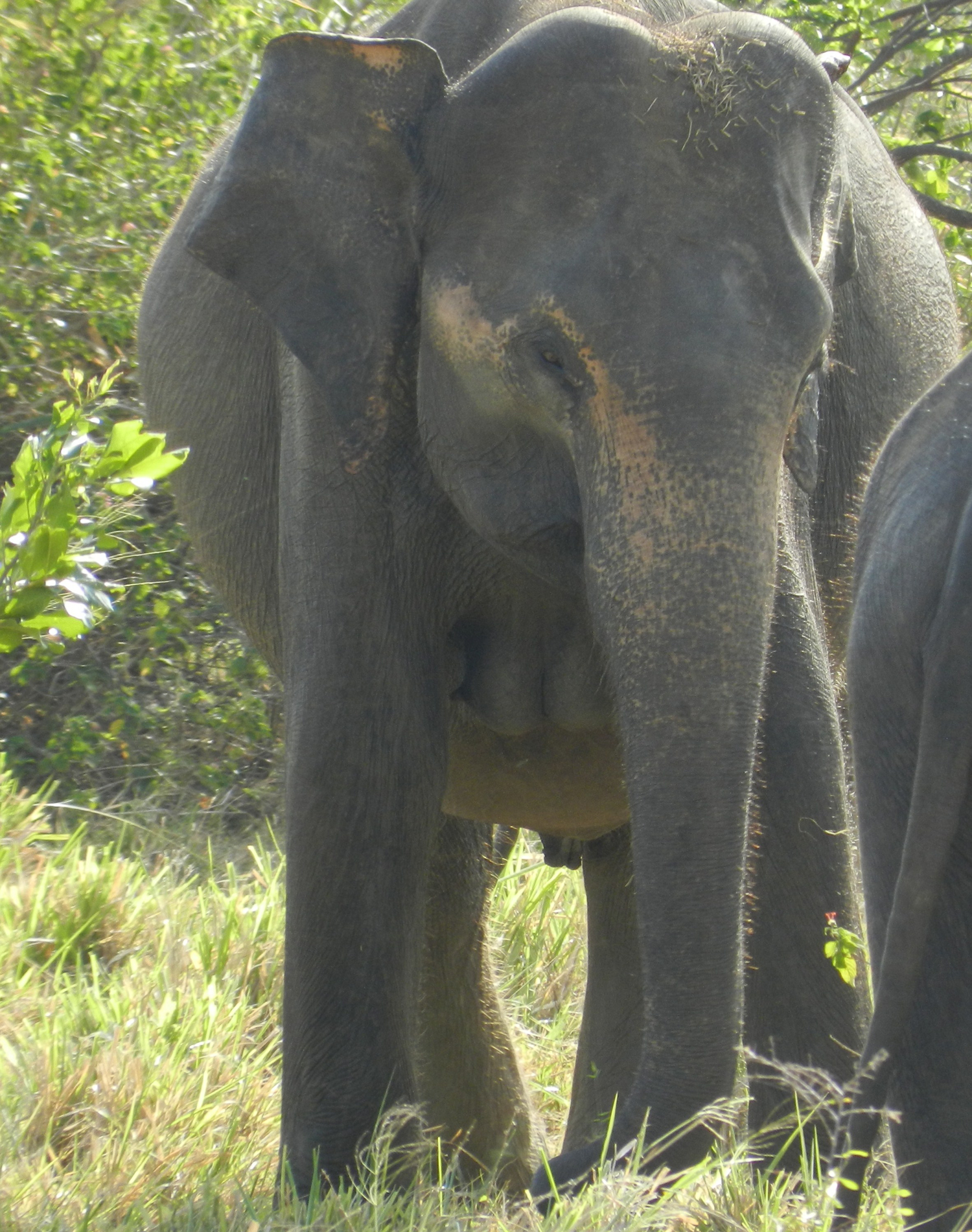
My favourite elephant has a deceptive disguise. By day, covered in mud, a pretty-looking elephant with a hairless tail, she goes (regrettably) by the name of Baretail – be careful what you nickname an elephant when you first meet, for it will stick! But by night, or after a good bath, Bare-tail’s gorgeous depigmentation is revealed, turning her into a super hero – a masked crusader!
Baretail’s mask is revealed after a bath.
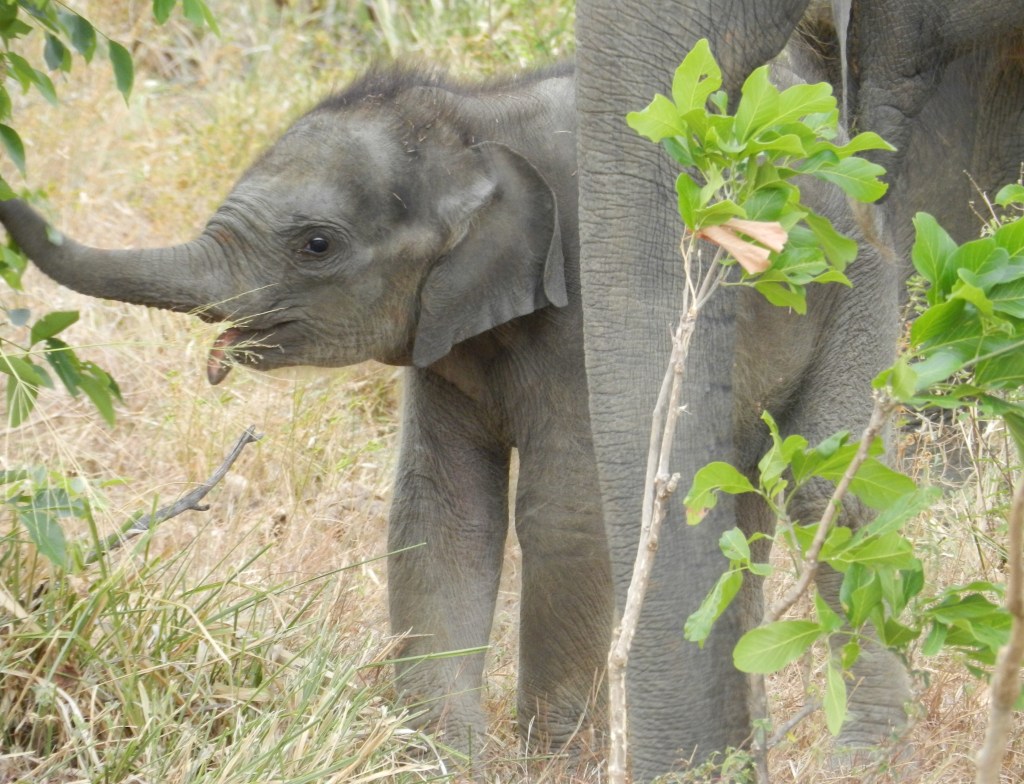
And that she is. Yesterday, the beautiful Baretail came to the rescue of the endangered Asian elephant. With extremely rough estimates of only 38,000 to 52,000 wild Asian elephants left globally, Bare-tail went through a 22 month pregnancy to give birth to a teeny little boy. The B-unit, and the elephant population, has grown by one!
Why is it that news about elephants is usually bad news? In light of recent posts and articles regarding injured animals, we thought it would be nice to post a happier tale and think about what it really takes to conserve elephants and the wilderness they inhabit.
A juvenile named Samanthi, with her trunk injured by a snair.
October 31 2008. We were on the main road inside Uda Walawe. There’s a little water hole alongside it called Ari Wala and on this day we saw some members of the Seenuggala elephants coming for a drink and a rest. The Seenuggala elephants are so named because they are often spotted at or around the Seenuggala reservoir. They inhabit one of the more densely forested parts of the park, where visibility is poor so we often only get to see them when they come out to get a drink. Continue reading →
Lizzie honing her elephant ID skills on Udawalawe’s calves
By Lizzie Webber
“Maybe your camera is as excited as you!!” Ashoka teased with a huge grin as I fiddled with my temperamental camera, trying to get it to work again. Tomorrow was to be my first day studying wild elephant calves, and after a year of planning, I just couldn’t keep my toes from wiggling in excitement!!
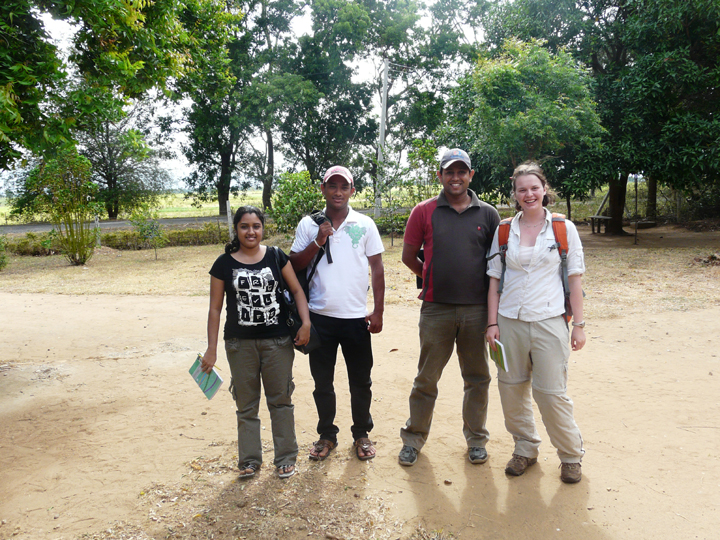
The Uda Walawe Elephant Research Project welcomes two new members: Tharanga and Lizzie.
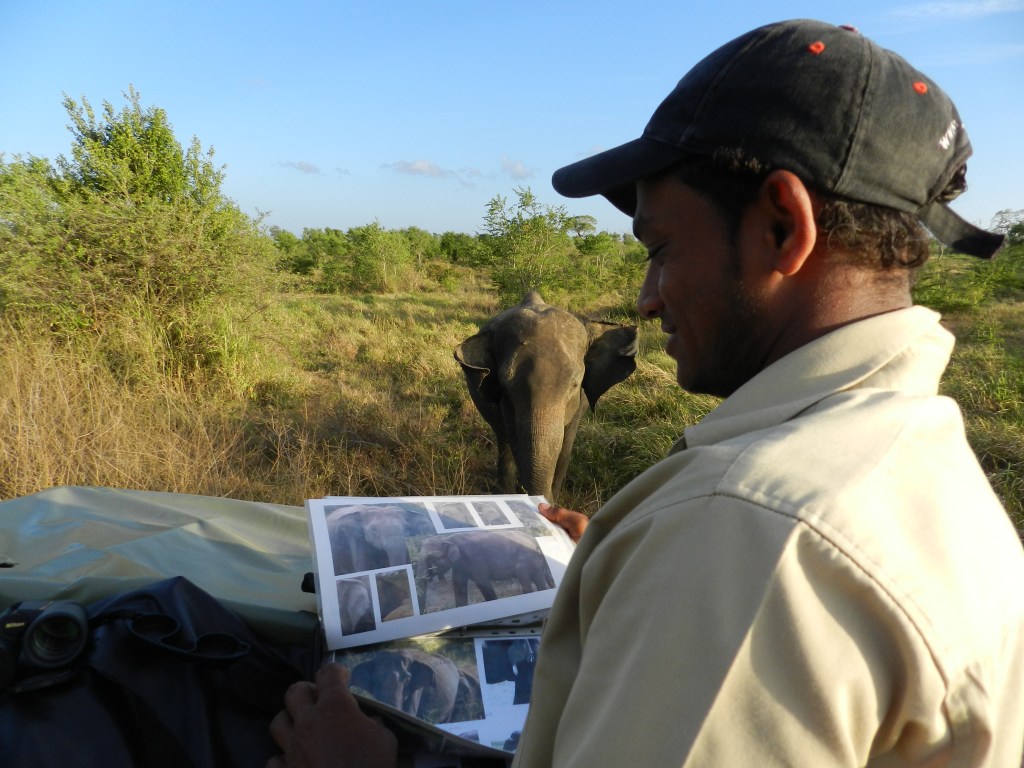
Tharanga lives just down the road from the field station, barely a kilometer from the entrance of Uda Walawe National Park. He grew up in Uda Walawe his entire life but, like many, had never been inside this park – or any other in Sri Lanka for that matter. He’s dreamed of exploring it. After finishing his A-levels, he asked his brother, who drives a safari jeep, if he could arrange some way of getting him work inside the park. His brother knew Sameera and Ashoka and about the research project, and one day when we were short-handed, sent Tharanga to accompany us into the field. He loved it, we needed an extra pair of eyes, and there you go – our new trainee. He’s quick at learning to recognize the animals (the most difficult part of the job) and it looks as though he’s going to be a great fit for the project.
This is just as well, since we’ve just started a new project with Lizzie (Elizabeth) Webber, from the University of Stirling. As a student of Phyllis Lee, one of the researchers who has dedicated decades to studying the Amboseli elephants, it’s quite appropriate that Lizzie join us now to help us sort out the demographic structure of Uda Walawe. Lizzie will be doing a fascinating study that compares the behavior and development of elephant calves, both in the wild and in captivity, Asian and African. We hope this research helps improve the lives of animals in captivity, as well as giving us comparative insights on the similarities and differences between the two elephant species. Like the Amboseli study, we hope this study can carry on for many years, providing a wealth of information on wild Asian elephant calves that has never before been systematically collected.
This is a question that has been frequently put to us. Typically, Asian elephant numbers have to be estimated through indirect evidence, usually dung. This is because they are often found in dense habitats where visibility is poor and tracking is difficult. In other locations, such as dry reservoir beds, elephants may be plainly visible but only at certain times of year. But Uda Walawe is an exception. Encompassing large tracts of savannah-like grassland as well as forest and scrub, and having a fairly well-maintained road network thanks to tourism, the park allows researchers to watch elephants directly all-year round. This is what has given the project an unparalleled view of the lives of wild Asian elephants as they naturally live.
Age classes by size, based on calves of known age. The ‘newborn’ in this picture is actually several months old, but less than one year (click for larger image).
In the past five years the Uda Walawe Elephant Research Project has been dedicatedly following the moves of practically every elephant ever to visit the national park. It is an ongoing collaboration between Dr. Devaka Weerakoon at the University of Colombo, and Dr. Shermin de Silva, formerly at the University of Pennsylvania and now full-time director of the research program. By painstakingly photographing and identifying each and every adult, the study keeps track of who was seen, where, and when. This has given us a detailed picture of not only how many elephants there are, but approximately how many individuals there are of different ages, and at which times of year they are present.
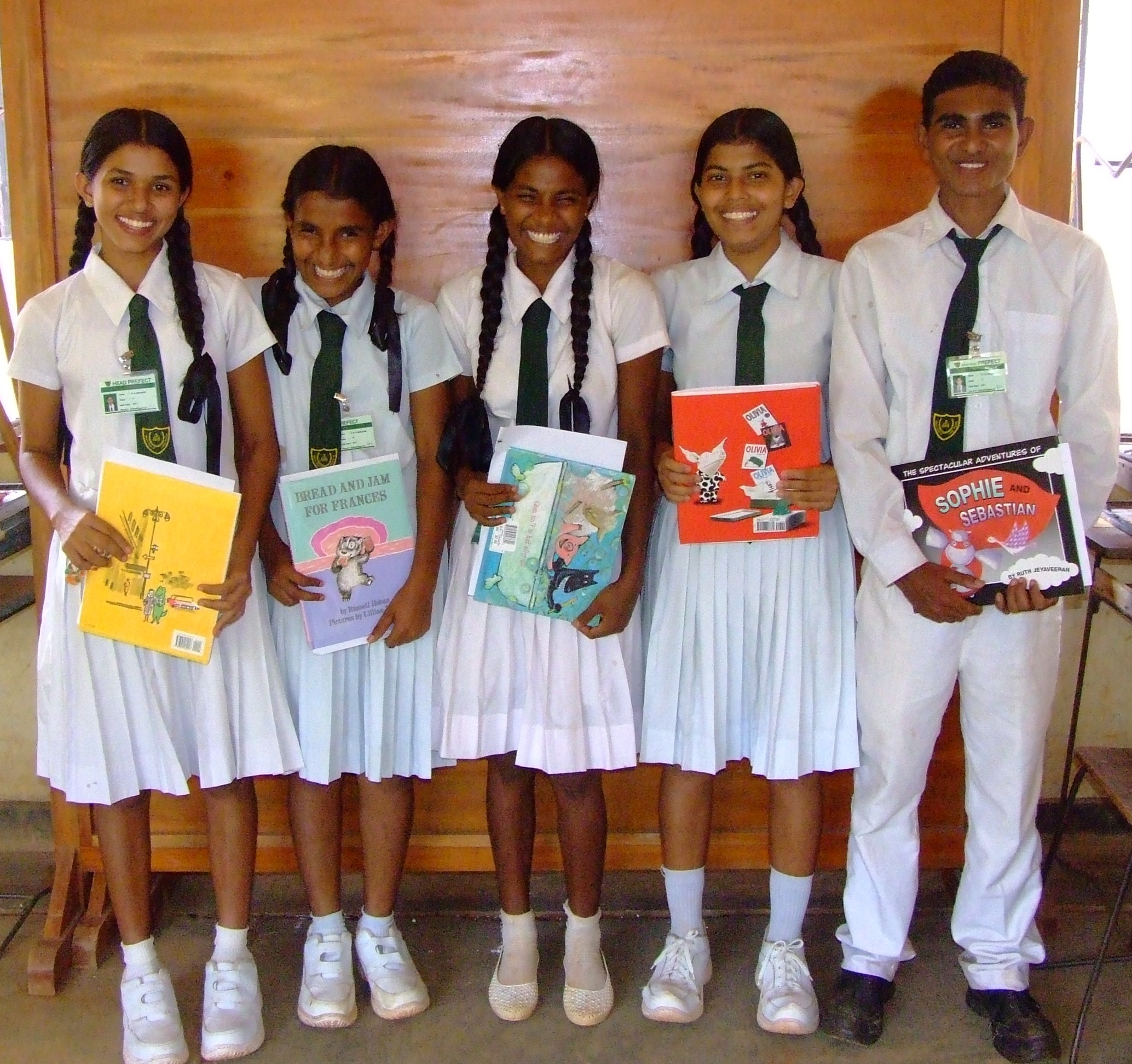
Students at Rathambalagamuwa (pictured below) and Uda Walawe have picked up the pen-pal project. We hope this will be the beginning of many exchanges, so that students develop a one-on-one relationship with their buddies overseas. We’ve got many ideas for future projects!
In a previous postwe mentioned a new project, “A Conversation About Conservation.” We asked students in the U.S. and Sri Lanka if they would like to learn about one another through good-old-fashioned letters. That’s right, pen-pals. We wanted students to exchange thoughts on their lives and views, especially about nature and wildlife. Happily, the response was quite enthusiastic! Learn more by clicking here.



 Maximus