EARS ID Database released

ears

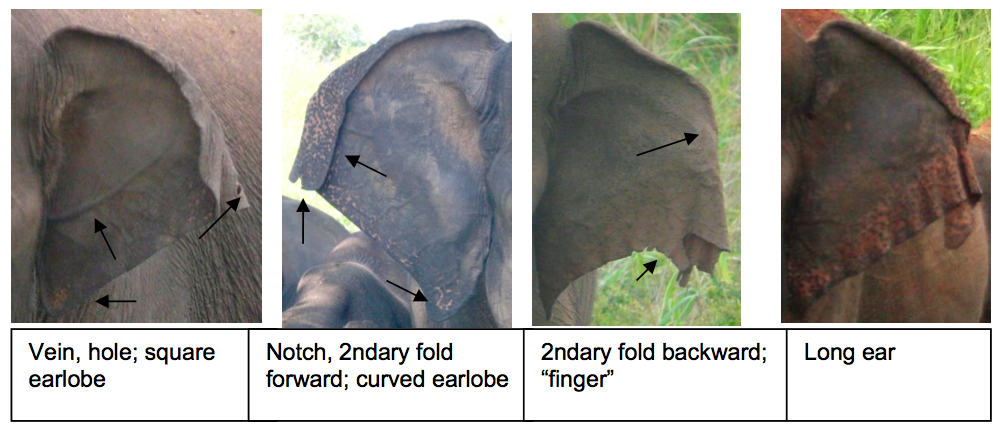
We are pleased to release EARS (Elephant Attribute Recording System), designed by intern Ilja Van Braeckel. EARS is an MS Access database that permits quick searching of elephant ID photos. Users enter new ID features using a simple Excel worksheet which can be copied directly into Access. They can then query the database with a set of check-boxes for prominent natural features of individuals, which returns matching IDs and photos.  This should narrow the search substantially and cut down search time.  We recommend that a separate set of high-resolution ID photo files are maintained in parallel at another location and that once the search is narrowed final identifications are confirmed using these external files. The idea is for the database to aid, not replace, more detailed photos and human memory.

We share this tool freely hoping it will help others conduct individual-based studies of Asian elephants, and modifications may be made as required. Variations of it may also be useful for other species and contexts.

The database, excel sheet and a user manual can be found at:

http://trunksnleaves.org/resources.html

de Silva S, Webber CE, Weerathunga US, Pushpakumara TV, Weerakoon DK, et al. (2013) Demographic Variables for Wild Asian Elephants Using Longitudinal Observations. PLoS ONE 8(12): e82788. doi:10.1371/journal.pone.0082788

Linnaeus’ Asian elephant – or not?

Very recently, an article from the Zoological Journal of the Linnaean Society was released regarding the mix-up of Linnaeus’ identification of the species Elephas maximus, or the Asian elephant. In 1764 Linnaeus documented a preserved elephant fetus (which is held today at the Swedish Museum of Natural History in Stockholm) as E. maximus in his studies. He believed it to have originated in Ceylon, now Sri Lanka, and this was long established as the so-called ‘type’ specimen of the species. Since Linnaeus never distinguished between Asian and African elephants, the true identity of the fetus has been in question and many suspected it to resemble the African species. Cappellini et al. decided to put the issue to rest and conducted ancient protein and DNA sequencing analysis to determine the true identity of the elephant fetus syntype. It just so happens that the fetus is in fact of the African elephant, in the genus Loxodonta.

An illustration of the elephant fetus from the Swedish Museum of Natural History referred to by Linnaeus

An illustration of the elephant fetus from the Swedish Museum of Natural History referred to by Linnaeus

This created quite a quandry because a new type specimen would have to be designated for reference, and according to the taxonomists’ rules, it could not be any arbitrary individual but preferably one that Linneaus had listed in his notes. At first it appeared a tooth fragment might be next possible canditate, which seemed rather unsatisfying since it was not an intact animal.  But luckily, Linnaeus had also cited a text by John Ray in which he describes the skeleton of an elephant. Apparently this skeleton, which had belonged to a touring performing elephant, is still intact at the Natural History Museum of Florence and was also thought to have originated from Sri Lanka. After analyzing the elephant skeleton’s DNA, Cappellini et al. were able to determine that the elephant was indeed the very specimen referred to in Linnaeus’ notes. E. maximus!

The E. maximus skeleton at the Natural History Museum of the University of Florence,

The E. maximus skeleton at the Natural History Museum of the University of Florence, the new type specimen if approved by the society.

Interested in learning more details on the Cappellini et al. article? Go here: http://www.nature.com/news/linnaeus-s-asian-elephant-was-wrong-species-1.14063

ResearchBlogging.org
Cappellini, E, A Gentry, E Palkopoulou, Y Ishida, D Cram, A Roos, M Watson,, US Johansson, B Fernholm, P Agnelli, F Barbagli, DTJ Littlewood, CD Kelstrup, JV Olsen, AM Lister, AL Roca, L Dalen, & MTP Gilbert (2013). Resolution of the type material of the Asian elephant, Elephas maximus Linnaeus, 1758 (Proboscidea, Elephantidae) Zoological Journal of the Linnaean Society, 1-10 DOI: 10.1111/zoj.12084

Asian elephants distinguish the calls of feline predator species

In September, Vivek Thuppil and Dr. Richard G. Coss from UC Davis published a paper in the journal Biology Letters regarding wild Asian elephant behavior towards pre-recorded tiger and leopard growls while attempting to crop raid. They found out that elephants silently retreat from tiger growls, but aggressively vocalize their presence when confronted with leopard recordings. According to previous research, tigers tend to prey on elephant calves while leopards are essentially harmless. This study is the first to investigate the inner-workings of elephant antipredator behavior at night.

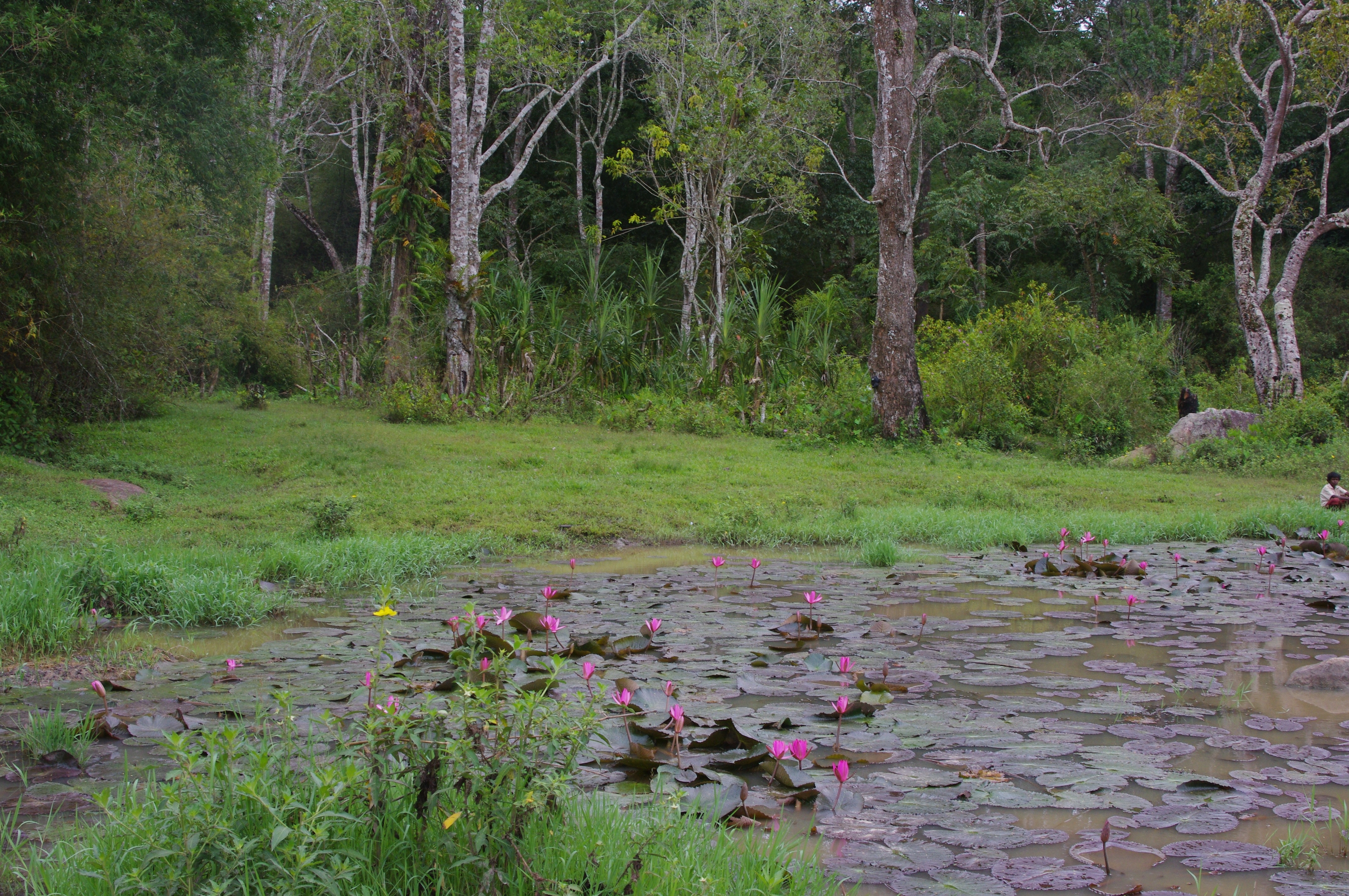
Direction in which elephants emerge from the forest to trigger playback (courtesy of Vivek Thuppil)

Continue reading