New Recruits

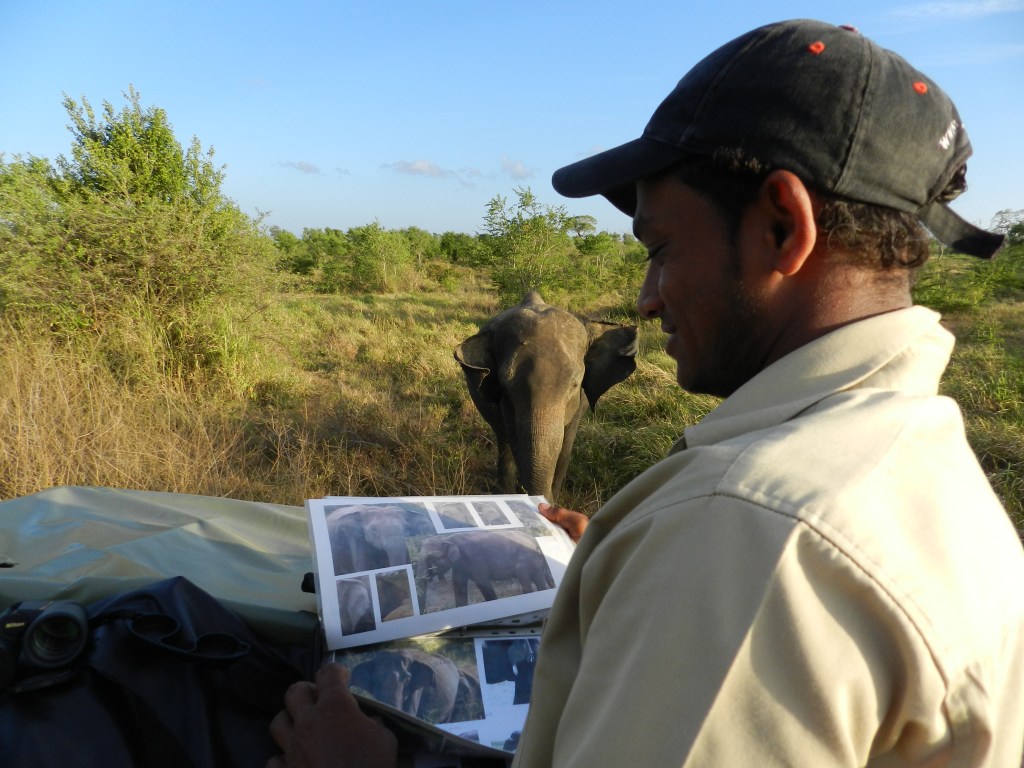
Tharanga searching in the ID catalogue

The Uda Walawe Elephant Research Project welcomes two new members: Tharanga and Lizzie.

Tharanga lives just down the road from the field station, barely a kilometer from the entrance of Uda Walawe National Park.  He grew up in Uda Walawe his entire life but, like many, had never been inside this park – or any other in Sri Lanka for that matter.  He’s dreamed of exploring it.  After finishing his A-levels, he asked his brother, who drives a safari jeep, if he could arrange some way of getting him work inside the park.  His brother knew Sameera and Ashoka and about the research project, and one day when we were short-handed, sent Tharanga to accompany us into the field.  He loved it, we needed an extra pair of eyes, and there you go – our new trainee.  He’s quick at learning to recognize the animals (the most difficult part of the job) and it looks as though he’s going to be a great fit for the project.

This is just as well, since we’ve just started a new project with Lizzie (Elizabeth) Webber, from the University of Stirling.  As a student of Phyllis Lee, one of the researchers who has dedicated decades to studying the Amboseli elephants, it’s quite appropriate that Lizzie join us now to help us sort out the demographic structure of Uda Walawe.  Lizzie will be doing a fascinating study that compares the behavior and development of elephant calves, both in the wild and in captivity, Asian and African.  We hope this research helps improve the lives of animals in captivity, as well as giving us comparative insights on the similarities and differences between the two elephant species.  Like the Amboseli study, we hope this study can carry on for many years, providing a wealth of information on wild Asian elephant calves that has never before been systematically collected.
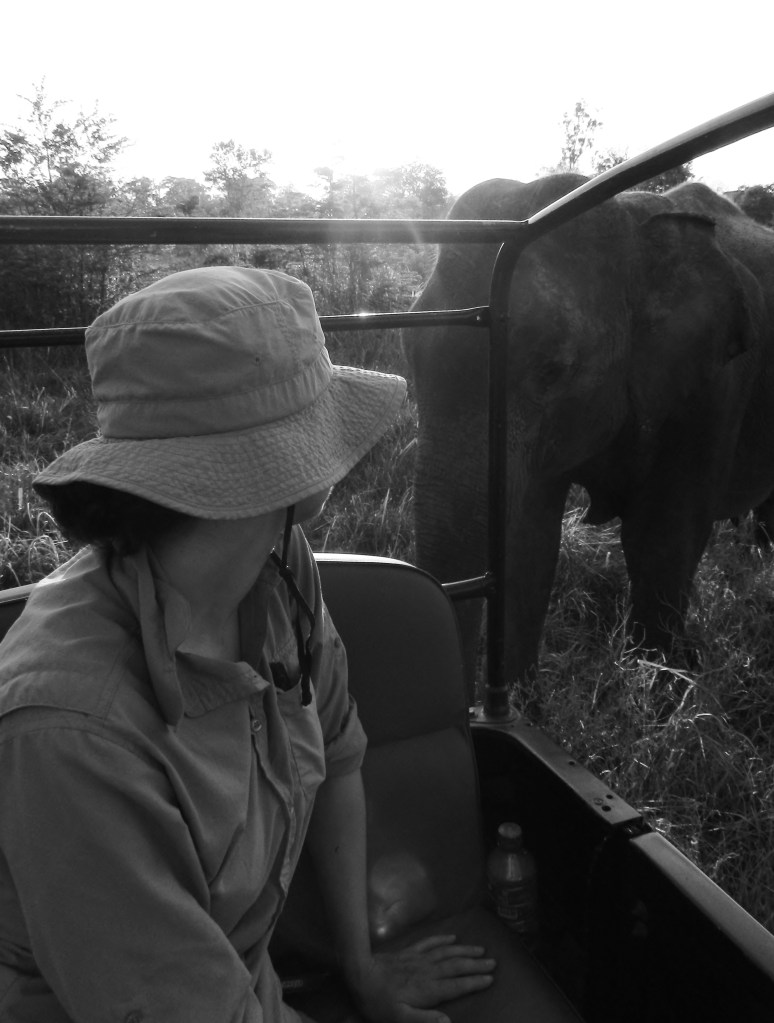
Lizzie at the end of her first week in the field

How many elephants in Uda Walawe?

This is a question that has been frequently put to us. Typically, Asian elephant numbers have to be estimated through indirect evidence, usually dung. This is because they are often found in dense habitats where visibility is poor and tracking is difficult. In other locations, such as dry reservoir beds, elephants may be plainly visible but only at certain times of year. But Uda Walawe is an exception. Encompassing large tracts of savannah-like grassland as well as forest and scrub, and having a fairly well-maintained road network thanks to tourism, the park allows researchers to watch elephants directly all-year round. This is what has given the project an unparalleled view of the lives of wild Asian elephants as they naturally live.

Age classes by size, based on calves of known age. The ‘newborn’ in this picture is actually several months old, but less than one year (click for larger image).

In the past five years the Uda Walawe Elephant Research Project has been dedicatedly following the moves of practically every elephant ever to visit the national park. It is an ongoing collaboration between Dr. Devaka Weerakoon at the University of Colombo, and Dr. Shermin de Silva, formerly at the University of Pennsylvania and now full-time director of the research program. By painstakingly photographing and identifying each and every adult, the study keeps track of who was seen, where, and when. This has given us a detailed picture of not only how many elephants there are, but approximately how many individuals there are of different ages, and at which times of year they are present.

Continue reading

Students in Sri Lanka start Pen-Pal program

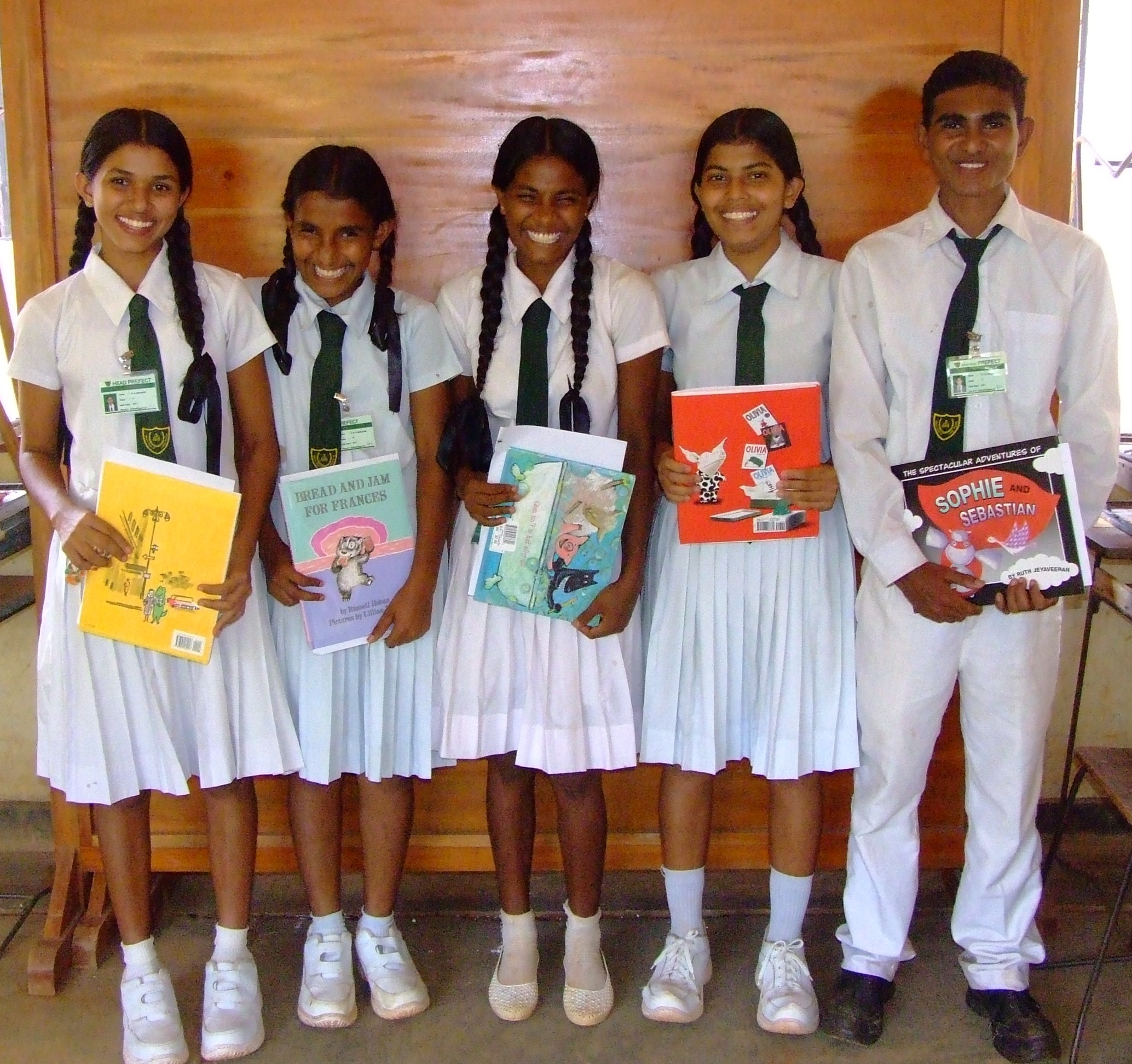
Students at Rathambalagamuwa (pictured below) and Uda Walawe have picked up the pen-pal project.  We hope this will be the beginning of many exchanges, so that students develop a one-on-one relationship with their buddies overseas.  We’ve got many ideas for future projects!

See more photos and learn about the program here!

The Pen Pal Team

Pen Pals Project Launched!

In a previous postwe mentioned a new project, “A Conversation About Conservation.”  We asked students in the U.S. and Sri Lanka if they would like to learn about one another through good-old-fashioned letters.  That’s right, pen-pals.  We wanted students to exchange thoughts on their lives and views, especially about nature and wildlife.  Happily, the response was quite enthusiastic!  Learn more by clicking here.

The Mystery Orphan Part 4 – The Mother Appears

By Ashoka Ranjeewa

— January 31st, 2011 —

From left to right: the teenaged ‘babysitter’ from the previous week, the newborn (no longer a mystery) and Raka.

Three days later we entered the park determined to find Fat-tail. I was overcome with curiosity to know what had happened, and the team went in prepared to stay the whole day and comb through every inch of the park if necessary.

Fortunately, we managed to find the group toward mid-day. This time, it contained several more of its members – Fat-tail, Right-hole, Rani, Ramani, Rita, and five other adults. I searched for the newborn anxiously.

Continue reading

The Mystery Orphan, Part 3 – Unexpected aid

By Ashoka Ranjeewa

– January 28 2011, 6:00PM –

Once again Fat-tail, the teenager, and two juveniles rushed to the newborn who had just collapsed. It was after 6:00 pm and getting dark too. The calf had not had any food for more than 3 hours. During this same period Fat-tail and Right-hole’s own calves nursed more than 10 times. Despite their apparent concern and protectiveness, we had never seen an adult nurse any calves other than their own during the five years of the study. Possibly this was because the physical demand of nursing two calves was just too high. On very rare occasions, we had seen a female nurse two calves simultaneously, but it was very likely to be two of her own calves.

After a few minutes the newborn managed to stand and move about10m, trying to nurse continuously from her caretaker. Evidently, the calf was very weak. But before long the baby again fell to the ground. As before, the teenager and two younger juveniles gathered around her. They touched her with their trunks and tried to raise her on her feet, but it didn’t work. The baby was feebly reaching out, trying to nurse.

Continue reading

The Mystery Orphan, Part 2 – Desperate Measures

By Ashoka Ranjeewa

– January 28th 2011, 3:45 PM –

Top photo shows Rani and her calf in 2007, while the bottom shows the same calf in 2009. We wondered if Rani might be the mother of the newborn since her last calf was getting quite big.

The distance between Rani & the calf narrowed to 20m and soon they were moving parallel to each other. The calf was trying to nurse from the subadult female while continuing to vocalize loudly. But Rani didn’t come to the calf, nor did the subadult female take the calf to Rani. With time, the distance between Rani & the newborn increased again. Meanwhile Rani, Fat-tail & Right-hole all fed their own  calves. The group was now moving quite briskly, possibly because the grass was very short in that area. The calf was still keeping up, but shakily.

The group then reached an open area where lots of fresh grass was available.  They stopped moving and fanned out 80m while grazing. The most peripheral individual was Rani. While everyone was busy grazing, Right-hole’s calf, who was about 4 months old, came up to the newborn and started trying to play with her. The latter was so weak, she fell on the ground and was trampled by other youngster. Suddenly, Fat-tail and a juvenile rushed over.  Fat-tail gently separated the two by bending her head down. The little newborn went to the juvenile while Right-hole’s calf slowly moved toward its mother.

Continue reading

The Mystery Orphan, Part 1

By Ashoka Ranjeewa

– January 28 2011, 3:00 PM –

The newborn calf stayed close to a subadult female, who was very attentive to her.

It was a rainy afternoon. I met Fat-tail with a group at the crest of the Teak waterhole. Amidst the heavy downpour, they were grazing and moving towards Old Mau-Ara Road which is located on the North-east side of the park. When we neared them, Fat-tail came over and stood right next to the jeep.  She was watching us, but it was a friendly look. Fat-tail and Right-hole were part of one of the largest social units we had documented in the past five years – the Rs, named after the oldest female among them, Ragged Ear.  This unit had quite a few adults in it, but the split up during wet seasons.  Fat-tail and Right-hole were a pair that were nearly always seen together and that day was no exception, they were both together along with the calves.

Fat-tail with her juvenile calf.

After few minutes I saw a newborn female calf who was being nursed by a subadult female. Lacking milk, the teenager was unable to actually feed calf. The calf was very tiny, still having the red skin and eyes characteristic of newborns, though covered by lots of hair. It was very active and always moved under the belly of the subadult, though she was definitely too young to be the mother of the calf. I wondered who the mother was. Neither Right-hole nor Fat-tail could be the mother – Right-hole had her own small calf with her.  Fat-tail had had a newborn calf, but sadly, it had died a few months ago though she still had her older calf. She couldn’t give birth to a new calf yet since its takes 22 moths for a pregnancy so the interval between calves is usually at least four to five years. I got  very curious about who the newborn could belong to.
Continue reading

Lending A Helping Trunk

Natural selection generally promotes the success of individuals who look out for themselves – that is, selfishly.  But, there are also lots of examples of cooperative behavior in nature: for instance, the care of offspring, hunting, and sometimes, even problem solving.  This is because cooperation can be beneficial as well – being able to raise young successfully and leave more descendants, or simply enhance one’s own survival by working together to obtain food or other resources.

The experimental set up, from Plotnik et al. 2011

Continue reading

A ConVersation About ConServation

This slideshow requires JavaScript.

As part of an initiative to encourage young people to think about elephants, environment and conservation issues, we’re launching a new project called “A ConVersation about ConServation.”  The first high school to participate was the Cambridge Ringe and Latin School in Cambridge, Massachusetts thanks to biology teacher Paul McGuinness and other enthusiastic teachers.  CRSL is one of those rare schools to offer courses on environmental science and ecology as well, and the students, aged 15-17, were very interested in hearing about elephants.
Continue reading