“In every walk with nature, one receives far more than he seeks.” – John Muir
Have you ever felt the quiet relief of standing beneath a vast open sky, the rustle of leaves only the mind can hear? Or the way your breath seems to soften if you’re lucky enough to watch a herd of elephants move gracefully across the plains, their massive forms swaying with serene certainty?
Nature, in all its rhythms and silences, has an extraordinary ability to soothe a restless mind, a truth that becomes even more relevant as we observe International Stress Awareness Day, 2025, on Wednesday, November 5th, during International Stress Awareness Week (November 3-7). This year’s theme, “Optimizing Employee Wellbeing through Strategic Stress Management,” reminds us that sometimes, the most strategic step we can take for our well-being is to pause and reconnect with the living world around us.
Understanding What Stress Is
Stress is often described as the price we pay for progress; a by-product of the fast-paced, hyperconnected lives we lead. The modern world thrives on urgency. From overflowing inboxes to constant notifications, from urban noise to the invisible weight of deadlines, our days are filled with stimuli that keep our nervous systems on high alert. A little stress can motivate us; it’s part of our biology. But when pressure becomes constant, it begins to erode our peace, cloud our focus, and affect our physical health.
According to psychologists, stress triggers a cascade of hormones, primarily cortisol and adrenaline, designed to prepare us for “fight or flight.” In ancient times, this response helped our ancestors survive immediate threats. But today, most of our battles are not with predators; they’re with time, expectations, and self-imposed demands. The body, however, doesn’t differentiate. It keeps sounding the alarm, even when we’re just sitting at a desk, thinking about unfinished tasks.
So how do we silence that internal alarm? How do we invite calm back into our lives?
The Healing Power of Nature
Nature has always been humanity’s oldest remedy, long before therapy sessions, wellness apps, or motivational podcasts. The Japanese call it “Shinrin-yoku” or “forest bathing”; the practice of immersing oneself in nature to reduce stress and improve overall well-being. Scientists have found that spending time in green spaces lowers blood pressure, reduces heart rate, and boosts serotonin, the “feel-good” neurotransmitter responsible for mood balance.
Even brief exposure to nature, a 10-minute walk in a park, tending to plants, or sitting under a tree, can reset the body’s stress response.
The sensory richness of the natural world engages our attention gently, without demanding it. The soft rustle of leaves, birdsong in the distance, the earthy scent after rain, these are nature’s ways of grounding us, pulling us away from stressful worries. But among the many wonders of the wild, there’s something unique about elephants, creatures that seem to embody calm, empathy, and quiet wisdom.
When Elephants Teach Us to Breathe
Watching elephants in their natural habitat is like witnessing mindfulness in motion. They move with a grace that seems to defy their size, every step deliberate and steady, as if time bends around them.
The sight of animals in their natural rhythms, feeding, playing, or caring for their young, activates a sense of connection and awe, reducing mental fatigue. In particular, elephants, with their intricate social bonds and quiet communication, remind us of the beauty of coexistence and patience.
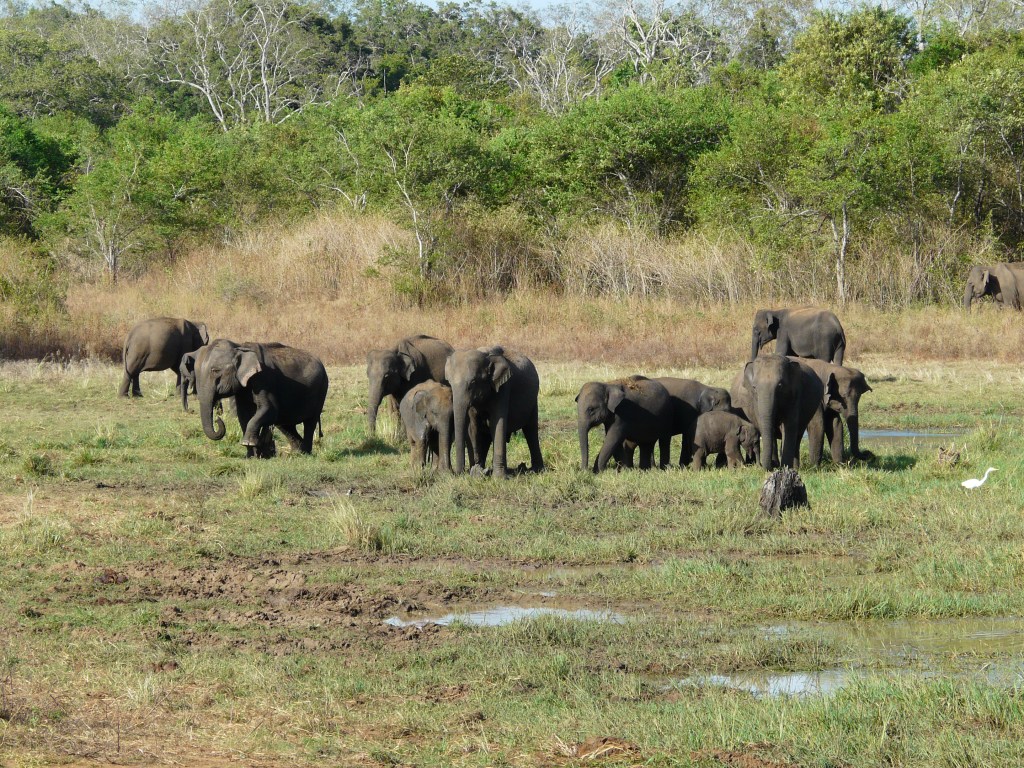
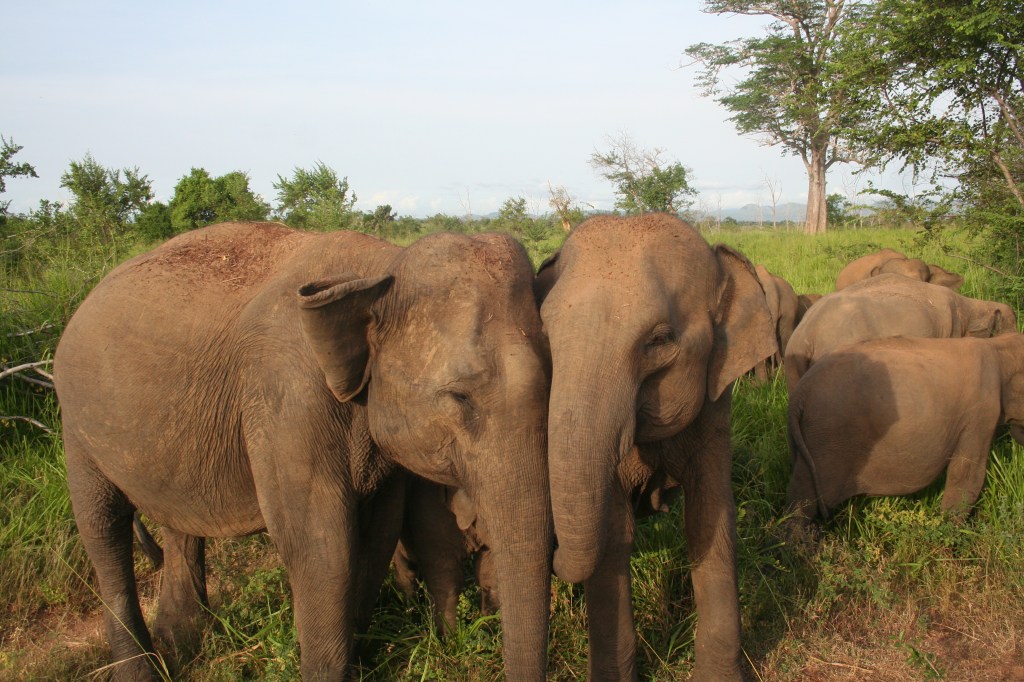
At Udawalawe National Park in Sri Lanka, where the Udawalawe Elephant Research Project (UWERP) conducts its long-term studies, these moments are part of everyday life. To sit quietly as the park wakes, watching a matriarch slowly lead her herd to the waterhole, both you and the elephants bathed in the same soft morning light; it’s more than research; it’s a meditation. Gazing at elephants, from a respectful distance, can be deeply restorative. The slow movements, the gentle rumble of communication, the way they nurture their calves, it all reminds us that life doesn’t need to be rushed. In the elephants’ world, there are no deadlines, only the steady pace of survival, connection, and care.
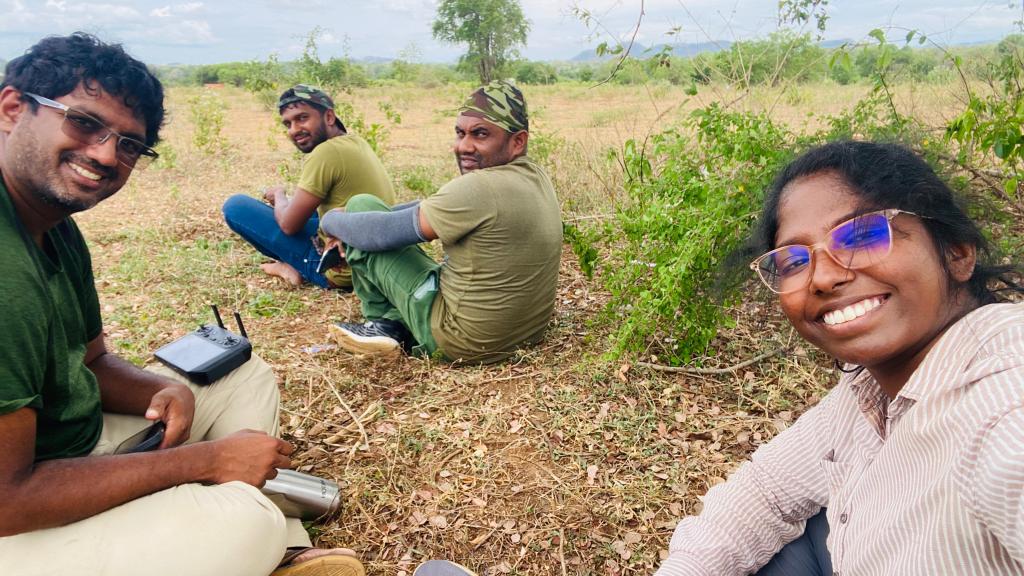
UWERP team connecting with nature
Nature as a Counterbalance
Modern psychology often emphasizes mindfulness as an antidote to stress, the act of being fully present. Nature, in her infinite wisdom, offers mindfulness effortlessly. When we immerse ourselves in natural environments, we’re invited to notice: the play of light on leaves, the pattern of ripples across a lake, the sound of wind weaving through grass. These details capture our attention just enough to quiet inner noise.
Moreover, being outdoors encourages physical movement, which releases endorphins and relieves tension stored in the body. It strengthens the immune system, improves sleep, and even enhances creativity. For those constantly surrounded by screens and concrete, stepping into nature is not a luxury; it’s a necessity.
Whether it’s the dense forests of Sinharaja, the golden plains of Udawalawe, or the tranquil shores of a hidden lake, every moment spent in nature becomes a small act of healing. And the best part? It costs nothing but time and attention.
The Office with No Walls
For most of us, stress management involves trying to carve moments of calm between office hours (or even brief pauses within them; research shows that short breaks actually enhance focus and well-being). But for the UWERP field team, nature is their office. Their days begin not with the buzz of alarms or emails, but with the call of an Indian-peafowl, the distant trumpeting of elephants, and the slow rise of sunlight over the forest canopy.
While demanding, with long hours in the field, unpredictable weather, and constant observation, this conservation work is also profoundly grounding. There are no concrete barriers or city noise, only open skies and wild company. The researchers’ “meetings” happen under trees, their “colleagues” are elephants, and their “reports” are written in tracks and behavior patterns across the dusty earth.
This patient work, understanding elephant behavior, documenting their social bonds, and supporting communities in coexistence, depends on long-term observations and dedication. It’s through this research that we learn not only how elephants navigate their world, but also how we might better navigate ours alongside them.
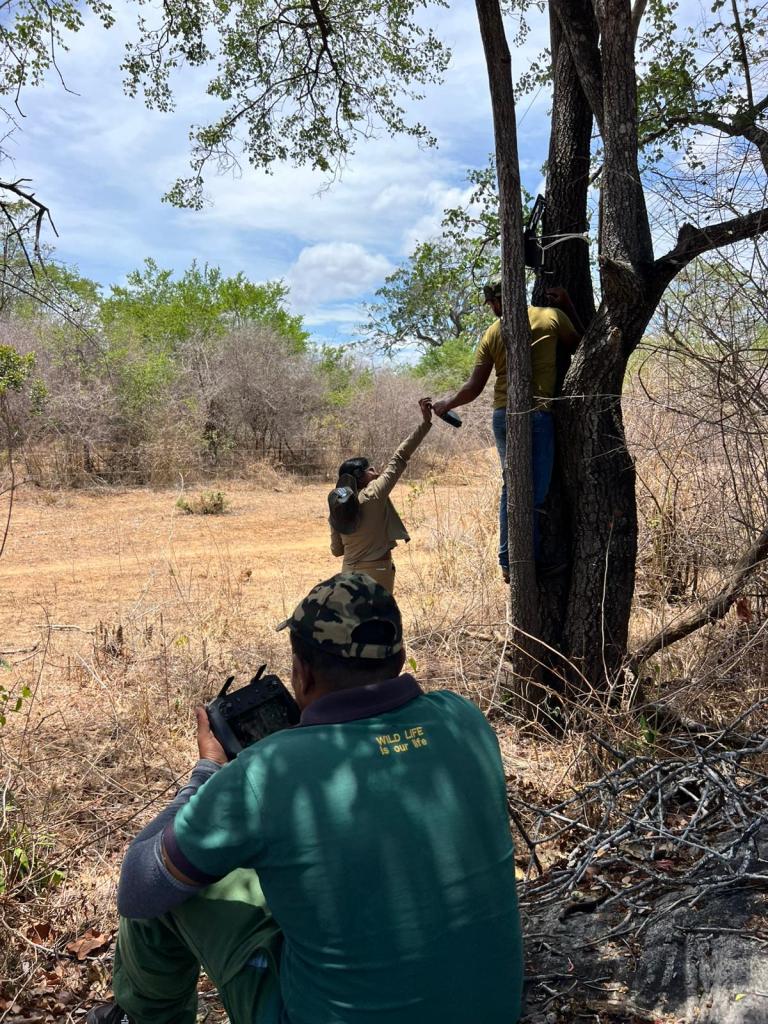
UWERP team in their ‘Office with No Walls’
A Call to Reconnect
As we observe International Stress Awareness Day, let’s pause to remember that well-being doesn’t always come from complex strategies. Sometimes, it’s as simple as listening to birdsong, watching clouds drift by, or, if you’re lucky enough, gazing at elephants wandering freely through the grasslands.
Stress is a part of life, but so is calm. Nature offers us both: challenges us and heals us, tests us and restores us.
So, the next time you feel the world pressing in, step outside. Find a patch of green, listen to the wind, breathe deeply. Even ten minutes can make a difference. Pull on an extra layer if you need to, but go – let the natural world remind you of its quiet rhythms.
This season, if you’re looking for a gift that gives back, consider supporting the work that keeps these moments of wonder possible. Our virtual elephant adoption kits connect you to a real calf in Udawalawe National Park, helping fund the research and community support that allows both elephants and people to thrive. Because when we protect nature, we protect our own well-being too.
References
Schilhab, Theresa & Esbensen, Gertrud. (2025). Wild animals connect us with nature: about awe, eco-pedagogy, and nature-connectedness. Frontiers in Psychology. 16. 10.3389/fpsyg.2025.1523831.
Albulescu, Patricia & Macsinga, Irina & Rusu, Andrei & Sulea, Coralia & Bodnaru, Alexandra & Tulbure, Bogdan Tudor. (2022). “Give me a break!” A systematic review and meta-analysis on the efficacy of micro-breaks for increasing well-being and performance. PLOS ONE. 17. e0272460. 10.1371/journal.pone.0272460.
Ideno, Yuki & Hayashi, Kunihiko & Abe, Yukina & Ueda, Kayo & Iso, Hiroyasu & Noda, Mitsuhiko & Lee, Jung Su & Suzuki, Shosuke. (2017). Blood pressure-lowering effect of Shinrin-yoku (Forest bathing): A systematic review and meta-analysis. BMC Complementary and Alternative Medicine. 17. 409. 10.1186/s12906-017-1912-z.
Polina, Yashvi. (2025). When the Body Mimics Illness: Linking Psychological Stress to Bodily Symptoms. International Journal For Multidisciplinary Research. 7. 10.36948/ijfmr.2025.v07i04.53930.
 Maximus