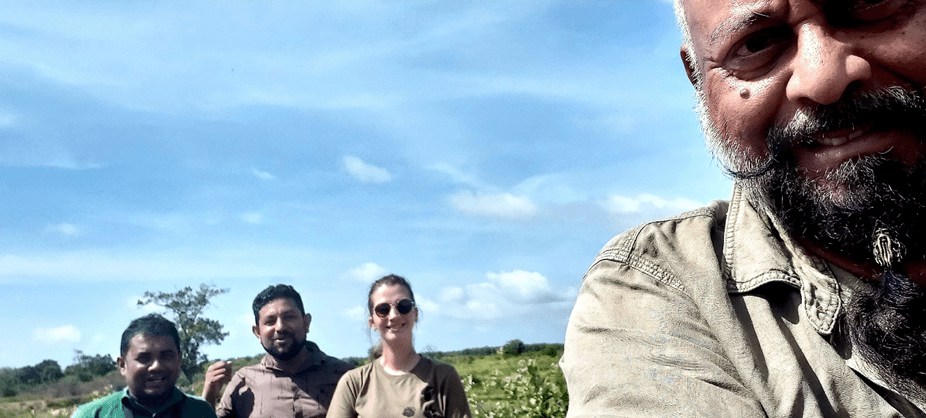
Hi! My name is Lianne Zonnebeld, and I’ve been a volunteer virtual assistant with Trunks & Leaves for the past year. In addition to my work with elephants, I’ve been conducting field research on primates in Sri Lanka since January 2024, gaining valuable insight into wildlife behaviour and conservation challenges. Working with these two iconic species has deepened my passion for conservation. In June 2024, I had the unforgettable opportunity to visit the Udawalawe Elephant Research Project (UWERP) which Trunks & Leaves sponsors. Over three days, I witnessed the challenges and triumphs of protecting elephants and fostering human-wildlife coexistence. Here’s a glimpse into what I experienced during this eye-opening journey.
Day 1: Exploring Udawalawe National Park and Witnessing New Beginnings
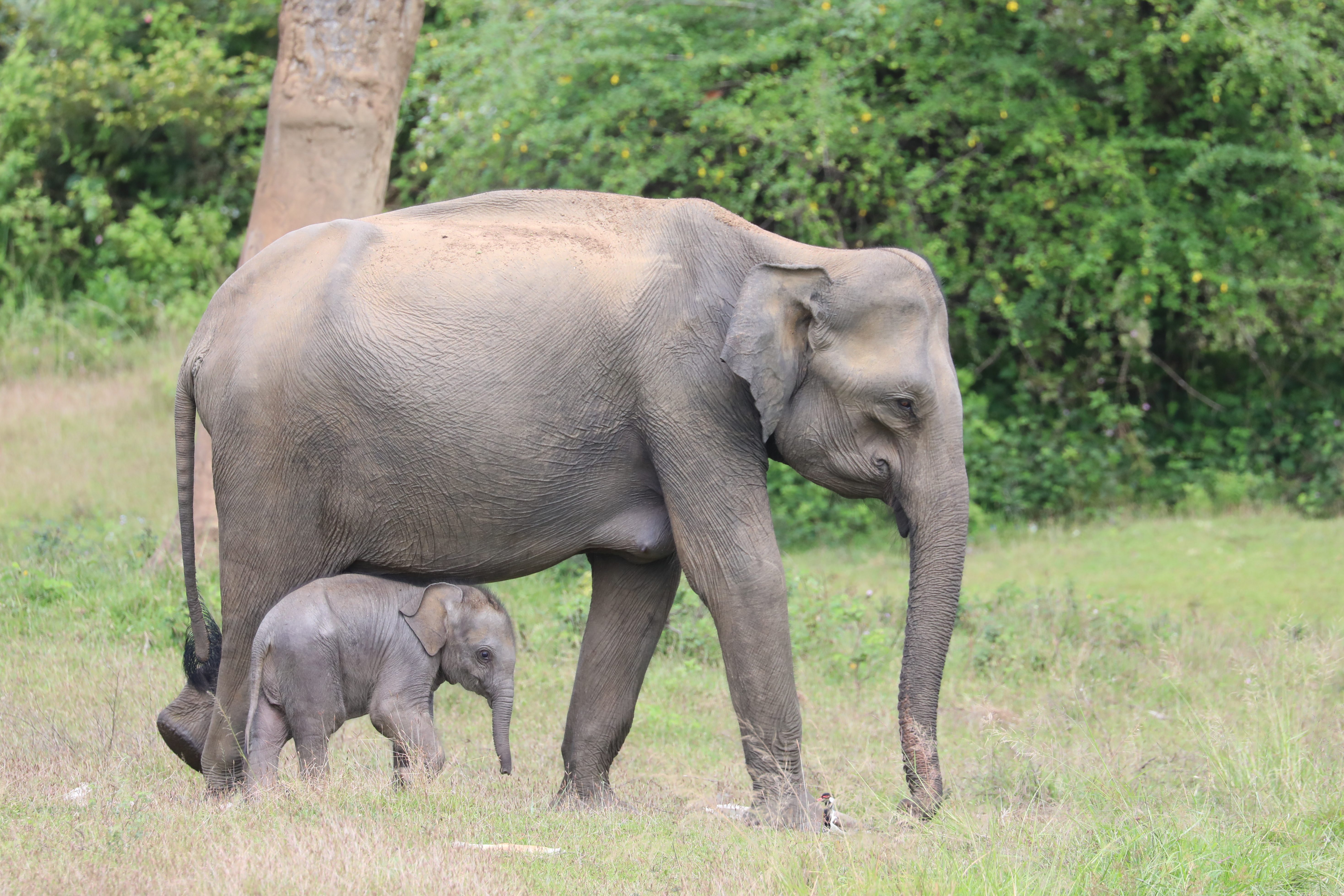
Our first stop was Udawalawe National Park, a vast area of approximately 30,821 hectares, vital for wildlife conservation in Sri Lanka. While UWERP has traditionally focused their work inside the park since 2005, over the years, they’ve expanded their efforts to also work with the farming communities around its borders. The research team, using an intricate photo-identification database, has catalogued over 2,000 individual elephants. Their findings reveal that ~3/4 of the elephant population aren’t permanent park residents. This discovery emphasises why working with surrounding farming communities is so critical. The park’s boundaries aren’t barriers for elephants, making it essential to develop solutions that help both farmers and elephants. As we drove through the park, we encountered a large herd known as the A-Group, including an exciting new addition—a baby elephant calf! This was a moment of hope for Sri Lankan elephants, whose population has plummeted by nearly 65% since the 19th century. Due to their slow reproductive rates, any new birth is a critical victory in the fight to conserve these majestic creatures. However, life as an elephant calf is fraught with challenges—some lose their herds, while others become victims of human-induced threats like snares.
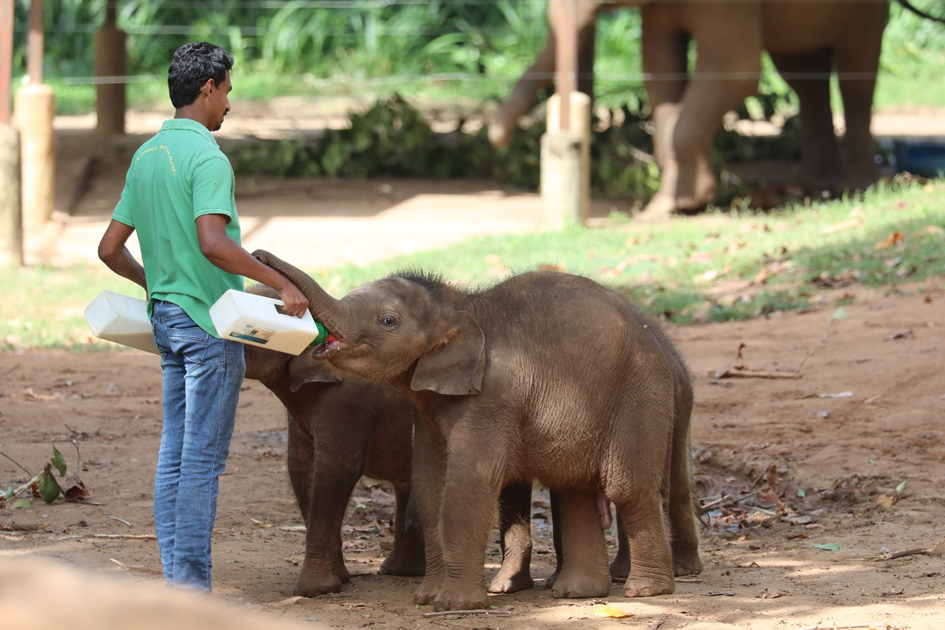
In the afternoon, we visited the Elephant Transit Home, a centre that rehabilitates orphaned elephant calves. Once ready, these elephants are released back into national parks like Udawalawe. When this happens the UWERP team is always available to assist smooth integration into the park by keeping track of the individuals through identification and reporting any injuries. Furthermore, whenever necessary the team can assist during veterinary interventions in or around the park.
Day 2: Tracking Elephant Movements and Bridging Human-Wildlife Conflicts
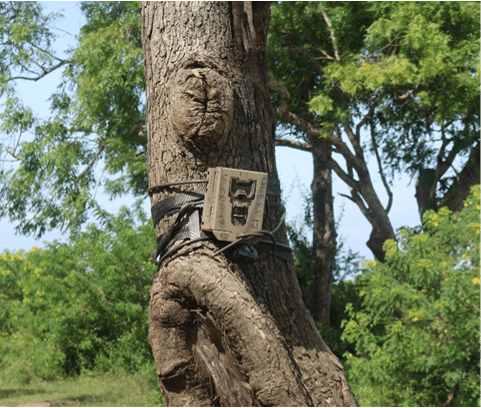
The second day took us outside the national park, where UWERP monitors elephant corridors—vital pathways for elephants to move between habitats. Camera traps are placed along these corridors to track elephant movements and ensure that they remain safe and undisturbed. Preserving green corridors is essential; when these areas are built up or encroached upon, the risk of human-elephant conflict escalates.
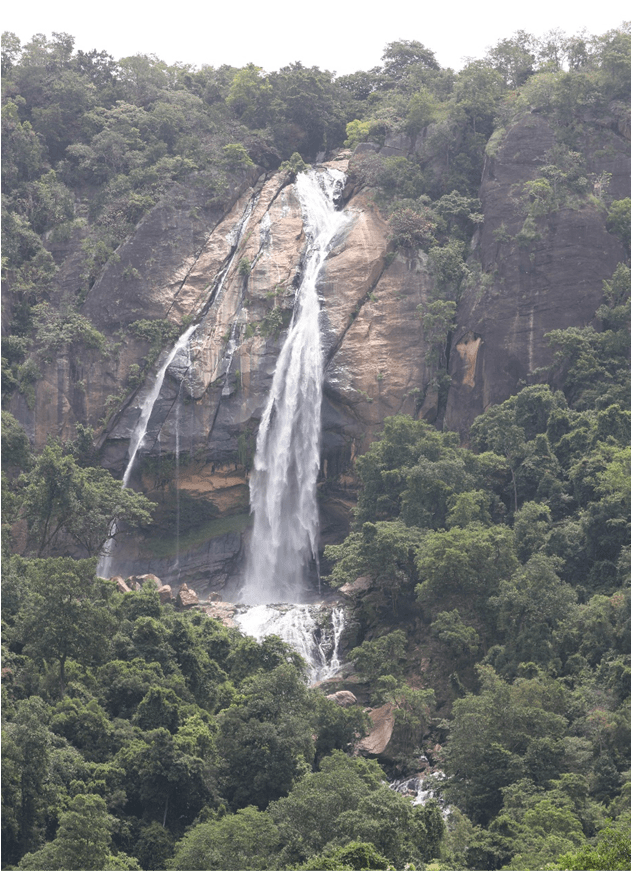
We also passed through breathtaking landscapes, including a stunning waterfall, showcasing the beauty of Sri Lanka’s natural environment. In the afternoon, we visited a farmer and his daughter, both of whom work with the project. UWERP collaborates with local farmers to mitigate human-elephant conflict by developing innovative strategies that support both livelihoods and conservation. The warm welcome and delicious lunch they prepared reflected the deep, positive relationship between the farmers and the research team.
Day 3: Meeting the Next Generation and Learning the Human Impact
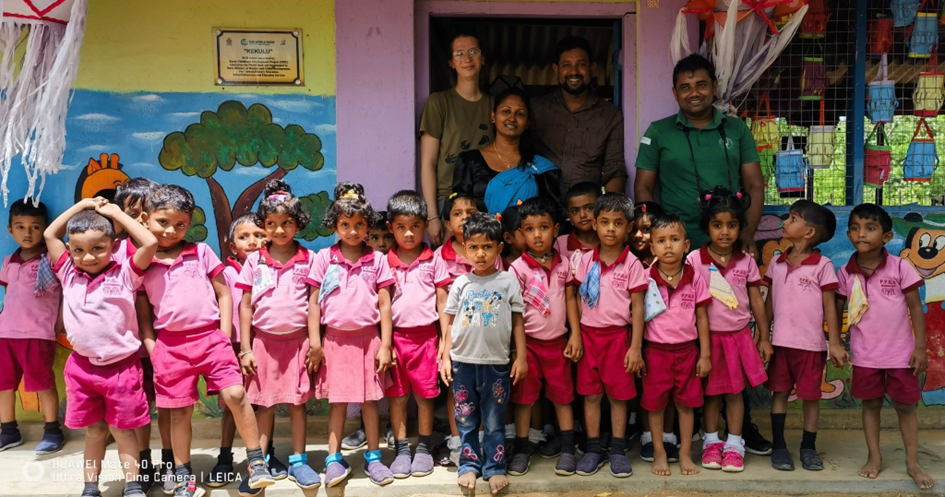
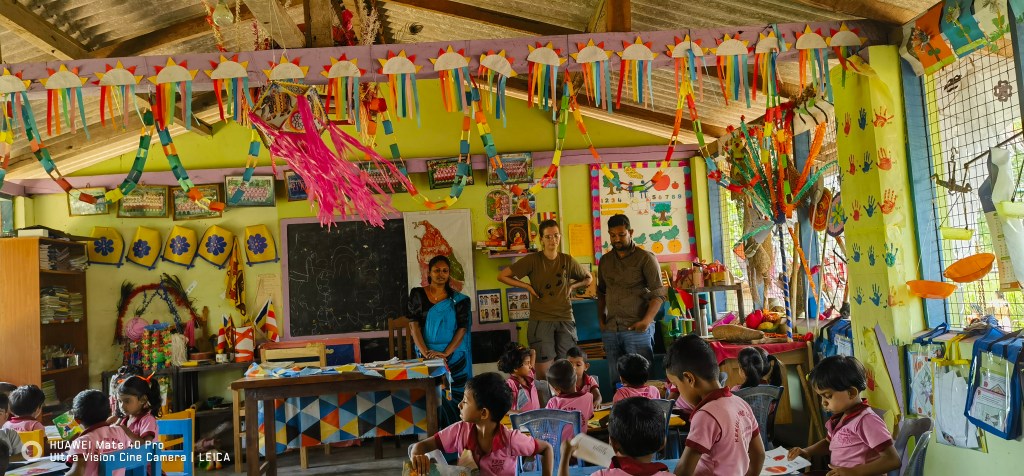
On my final day, we visited a Montessori and a primary school supported by the project. Many communities around the park are directly affected by elephants, and this hit home when I learned about a young boy whose grandfather lost his life to an elephant while walking him and his sister to school.
These experiences reinforced how deeply intertwined the local communities are with the elephants. By supporting schools and improving access to education, UWERP helps build better futures and opportunities for children, reducing the pressure on the land as not all children must follow their parents into farming.
For lunch, we visited another farm, and although the family didn’t have much, they welcomed us with open hearts. Sri Lankans, in my experience, are some of the kindest and most generous people I’ve ever met. Despite the hardships many face—often losing large portions of their livelihoods to elephants—farmers working with UWERP are resilient and willing to try new ideas that benefit both people and wildlife.
Throughout my three days with UWERP, and my ten months in Sri Lanka, I’ve had the privilege of seeing firsthand the dedication of the Trunks & Leaves team. Their work is not only about saving elephants; it’s about fostering coexistence between people and wildlife. From helping elephants to protecting critical habitats and supporting local communities, they are truly walking with giants—both the elephants and the incredible people working alongside them.
 Maximus